
Reviewed · PUNTA ARENAS TOURS
Punta Arenas: Fort Bulnes Historical Tour
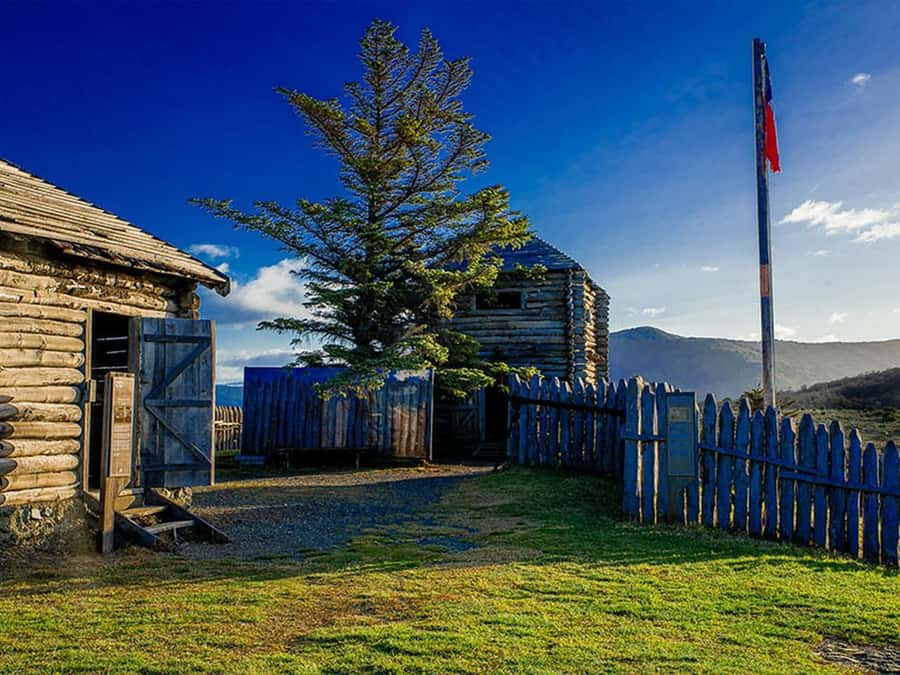
Fort Bulnes gives you a clear look at Chile’s effort to control the Strait of Magellan in the 19th century. The reconstructed fort, its lighthouse, church, jail, post office, and stables make the past easy to picture. I especially like the wide Strait views and the stop at Chile’s geographic midpoint, two details that make this more than a simple museum visit.
I also like the small group size, capped at 10 people, and the included pickup and return to your Punta Arenas accommodation. The main caution is timing: one traveler found there was not enough time to see every fort building and take the boundary lookout walk, so you may need to choose.
Key points to know
- Fort Bulnes sits 55 km south of Punta Arenas, making this a practical half-day outing.
- The reconstructed fort includes a lighthouse, church, post office, jail, and stables, not just one museum building.
- The Strait viewpoint offers one of the tour’s best moments, with broad views over the water.
- The geographic middle of Chile makes an unusual photo stop, measured from the country’s northern limit to the South Pole.
- Groups are limited to 10 people, with English and Spanish guiding available.
- Entrance tickets are not included, so carry cash along with warm clothing and your passport or ID.
Why Fort Bulnes matters on the Strait of Magellan
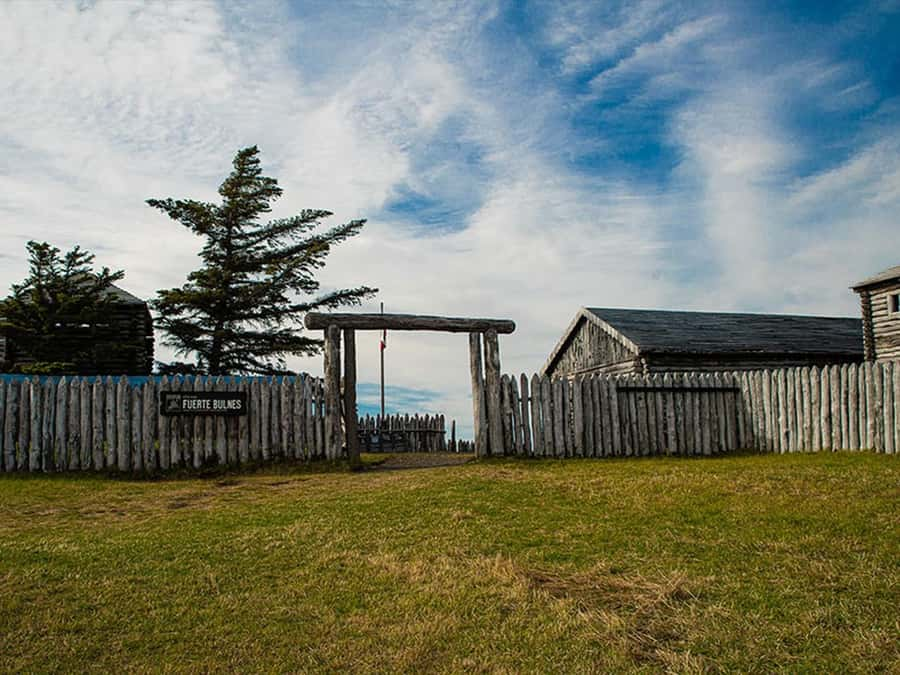
Fort Bulnes was founded in 1843 under the leadership of Manuel Bulnes, with the vision of Bernardo O’Higgins in the background. Its purpose was practical and strategic: Chile wanted to secure its position along the Strait of Magellan and protect the economic possibilities of this important sea route.
That context helps you read the fort correctly. This is not a grand European fortress with thick stone walls and polished rooms. It is a remote outpost, rebuilt to show how Chile tried to plant a permanent presence at the southern end of the continent.
I find the setting just as important as the buildings. The fort’s position gives you a direct sense of why the strait mattered. Ships passing through this route connected the Atlantic and Pacific before the Panama Canal changed global sea travel. From the viewpoint, the water is not just a pretty backdrop. It explains the entire reason the fort was built.
The present-day site is a historical reconstruction, so you should approach it as an interpretation of the original settlement rather than an untouched ruin. That makes the visit accessible, especially if you want a clear introduction to regional history without spending a full day at a large museum.
A few more trips around Punta Arenas worth a look
- Punta Arenas: Walk with Penguins on Magdalena & Marta Island
★ 4.6 · 611 reviews - Punta Arenas: Full-Day Whales, Penguins, and Glaciers Tour
★ 4.9 · 325 reviews - Punta Arenas: Full Day Tierra del Fuego & King Penguins
★ 4.3 · 179 reviews
The drive from Punta Arenas takes about 45 minutes
Your driver picks you up at your accommodation in Punta Arenas, then takes you south in a van. The drive to the fort takes about 45 minutes, and the total outing lasts roughly 270 minutes, or four and a half hours.
This transport is a real part of the tour’s value. You do not need to arrange a rental car, find the site yourself, or work out a return trip. The driver-guide provides commentary along the way, giving you some background before you arrive.
The small vehicle also keeps the outing personal. With no more than 10 people, you have a better chance of hearing the guide and asking a question than you would on a large coach. Guides Cristofer and Romina have both been singled out for being pleasant and interesting in their presentations, though the exact guide depends on the departure.
One practical warning: pickup details deserve your attention. A port pickup was not clear to one participant, and the group started late while collecting other people. If you are arriving by cruise ship, confirm the meeting point directly with the operator rather than assuming the ship terminal is covered in the same way as a hotel.
The tour is also bilingual in some cases. English and Spanish are available, but the guide may speak to a mixed group in both languages. If you want a fully English experience, ask about the language arrangement before booking.
The Chile midpoint is an unusual first photo stop
The route includes a stop at the Hito de la Mitad de Chile, described as the geographical middle of Chile. The measurement runs from the country’s northern limit to the South Pole, giving this marker a larger geographic meaning than a standard roadside photo stop.
You will have time to take pictures and consider the scale of Chile. The country stretches an extraordinary distance from north to south, and this marker turns that fact into something you can point to and remember.
It is not the main historical attraction, so keep your expectations in check. The stop is brief and symbolic. Still, I like it because it adds variety to the outing. You are not spending all four and a half hours inside one fort complex, and the midpoint creates a simple personal souvenir from the drive.
Bring your passport or another ID card, as well as cash. The official information specifically recommends both, and cash is useful because entrance tickets are not included in the tour price. The exact ticket cost is not provided here, so budget for that separately.
Estrecho Park sets the scene before the fort
The tour also visits Estrecho Park, which helps connect the fort to its wider setting along the Strait of Magellan. The park visit is part of the route rather than a separate long walk, so expect a short stop that adds geographical and historical context.
This is a useful part of the day for anyone who prefers to understand a place before looking at its buildings. The fort was not placed in isolation. Its location, the strait, and the surrounding coastal setting all shaped the daily life and strategic purpose of the settlement.
The area can be cold and exposed. Warm clothing is essential, even if Punta Arenas feels mild when you leave. A sunny start does not guarantee comfortable conditions beside the strait, and you will enjoy the viewpoints more if you are prepared for wind and changing weather.
Same base, a different sort of day:
- Navigation Magdalena Island and Marta
★ 4.0 · 164 reviews - Punta Arenas: Full-Day Torres del Paine Tour
★ 4.8 · 131 reviews - Walk alongside Penguins on Magdalene Island and navigate Marta Island
★ 4.5 · 116 reviews - Magdalena Island Penguin Tour by Boat from Punta Arenas
★ 4.0 · 107 reviews
The interpretive center explains the human and natural story
At the visitor center, you can see exhibits covering the human and natural history of the Strait of Magellan. This is where the day moves beyond a collection of reconstructed buildings.
The center gives you a framework for understanding the region. You can connect the fort’s founding to the larger story of exploration, settlement, navigation, and Chilean control of the strait. It also brings in the natural setting, which matters because the waterway and remote southern environment shaped every part of life here.
I would give this stop your attention rather than treating it as a quick prelude. The fort’s buildings show what people used, but the interpretive center explains why the site mattered and how it fits into the wider region.
The information is especially useful if you do not already know the basic story of the Strait of Magellan. The guide’s commentary adds another layer, and the amount of detail can vary depending on the guide and the mix of English and Spanish speakers in your group.
Reconstructed Fort Bulnes is the main event
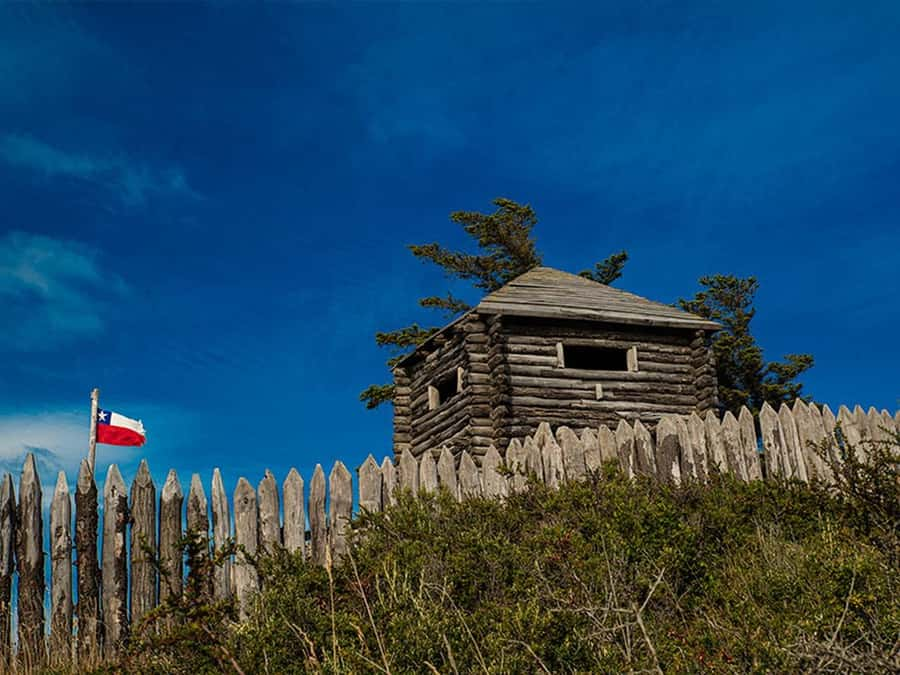
Fort Bulnes is the heart of the outing. The reconstruction lets you move through the settlement and see the practical spaces that supported the people stationed there.
The O’Higgins lighthouse is one of the memorable stops. It connects the fort to the demands of navigation and the dangerous waters around the strait. The church offers a look at the spiritual life of the settlement, while the post office points to the basic systems needed to keep a remote outpost connected.
You will also visit the jail and stables. These are modest features, but they help turn a general history lesson into a picture of daily routines. A fort needs more than defensive purpose. It needs animals, storage, worship, communication, and rules for dealing with people who broke them.
The reconstruction works best if you take your time with the small details. Look at how the different buildings relate to one another and imagine how isolated the settlement must have been. You are not simply checking off a lighthouse and a church. You are seeing the parts of a small community built around a strategic post.
The limitation is time. The full tour includes the midpoint, park, visitor center, viewpoint, and return drive. One person found there was not enough time to explore all the fort buildings and complete the boundary lookout walk. If you want to inspect every structure closely, this may feel brisk.
Ask the guide early how much time is available at the fort and which option matters most to you. You may need to choose between a more careful look at the buildings and a walk toward the boundary viewpoint.
The Strait viewpoint is worth protecting time for
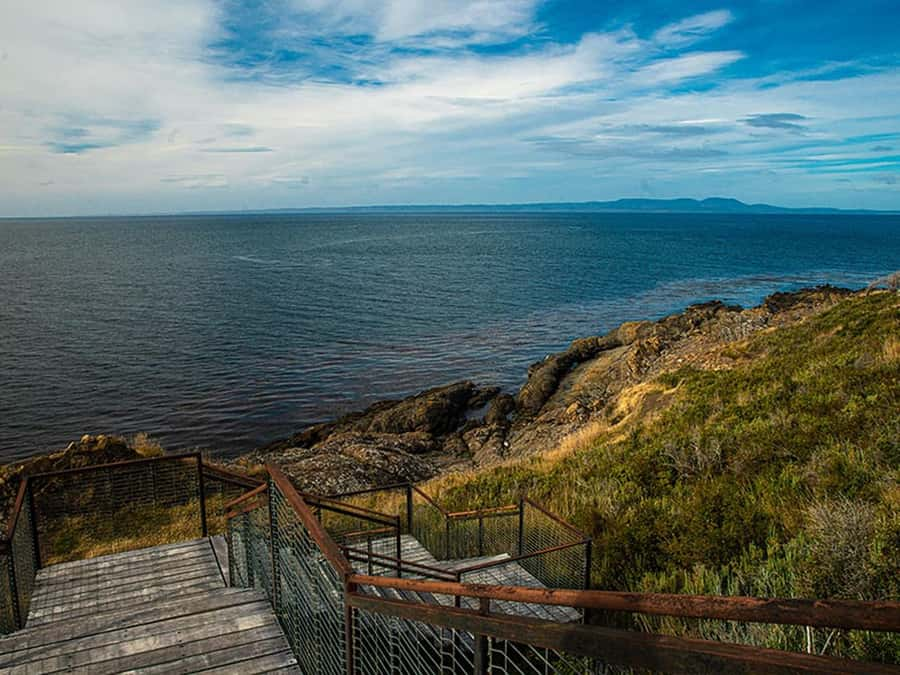
The Strait viewpoint is one of the strongest reasons to book this trip. From here, you get a broad view over the water and a clearer sense of the fort’s strategic position.
The view is not a decorative extra. It explains the site better than a paragraph of dates can. You can see the open route that made this place important, and you can understand why Chile wanted a foothold here in 1843.
Bring a phone or camera, but do not spend the whole stop looking through a screen. The combination of wind, water, and distance is part of the experience. If conditions are clear, this is likely to be one of your favorite images from Punta Arenas.
Because the tour has several stops, ask whether the lookout walk or the fort buildings will receive priority. The time available can affect how much you see, particularly if the group begins late or spends extra time collecting passengers.
Is the $46 price good value?
At $46 per person, the price is reasonable for a four-and-a-half-hour trip with pickup, return transportation, and a small group capped at 10 people. The included transport matters because Fort Bulnes is 55 km from Punta Arenas, and a self-arranged visit would require you to organize your own vehicle or transport.
The driver-guide is another part of the value. You are not simply being dropped at the fort. Commentary during the journey and explanations at the site help you understand what you are seeing.
The price is not all-inclusive. Entrance tickets are separate, and the amount is not stated in the available details. Carry cash so that the extra cost does not catch you unprepared.
I see this as good value for someone who wants a guided half-day trip and does not want to rent a car. It is less compelling if you only want transportation, prefer to spend unlimited time at the fort, or dislike bilingual guiding.
The small group is a useful middle ground. You get more structure than with an independent visit, but you avoid the feel of a large bus tour. Just keep in mind that a small group does not guarantee a private guide or a fully single-language presentation.
Who will enjoy this outing most?
I would recommend Fort Bulnes to you if you enjoy history, geography, and places that explain how a region developed. The fort is also a good choice if you have only one free half-day in Punta Arenas and want to combine a cultural site with coastal views.
It suits first-time visitors who want context about the Strait of Magellan before moving on to other parts of southern Chile. The visitor center and guide commentary make the site easier to understand than a quick independent stop.
You may want to skip it if your priority is a long nature walk. This tour focuses on historical buildings, interpretation, viewpoints, and transport. The boundary lookout walk may compete with time inside the fort, so it is not designed as a full hiking excursion.
It is also worth reconsidering if you need a clearly defined port pickup or a strictly English-only tour. Those details should be confirmed before purchase. A mixed-language group can work well, but the presentation may take longer or feel less focused.
Cancellation is flexible up to 24 hours before departure for a full refund. Confirmation arrives within 48 hours of purchase, and available starting times should be checked before booking.
Should you book Fort Bulnes?

Book this tour if you want an easy, well-organized introduction to one of the key historic sites near Punta Arenas. The best parts are the reconstructed fort, the O’Higgins lighthouse and other working-community buildings, the Strait viewpoint, and the unusual stop at Chile’s geographic midpoint.
I would book it for the combination of history and scenery, especially if you do not have a car. I would not book it expecting a slow, private examination of every structure. The schedule is fairly full, and you may need to choose between the fort buildings and the boundary walk.
Confirm your pickup point, ask about the guide language, bring warm clothing and cash, and protect enough time for the viewpoint. With those details settled, the $46 cost offers a practical way to reach Fort Bulnes and understand why this remote stretch of the Strait of Magellan mattered to Chile.
FAQ
How long does the Fort Bulnes tour last?
The tour lasts about 270 minutes, or four and a half hours.
How far is Fort Bulnes from Punta Arenas?
Fort Bulnes is located 55 km south of Punta Arenas. The van ride takes about 45 minutes.
Is transportation included?
Yes. The tour includes transportation from your accommodation in Punta Arenas and return transportation.
Are entrance tickets included in the price?
No. Entrance tickets are not included. Bring cash for this additional cost.
What languages are available?
The tour is available with a live guide in English or Spanish. Mixed-language departures may be possible, so confirm the language arrangement before booking.
How large is the group?
The tour is limited to 10 participants.
What should I bring?
Bring your passport or ID card, warm clothing, and cash.
Just added around Punta Arenas
- Mountain Bike Adventure in Punta Arenas★ 5.0 · 42 reviews
- Private Patagonian Forest Hike in Punta Arenas: 4 Hour★ 4.5 · 28 reviews
- Punta Arenas: Torres del Paine & Grey Glacier Full-Day Boat★ 4.8 · 6 reviews
- Punta Arenas: Magallanes National Reserve and City Tour★ 5.0 · 3 reviews
- Punta Arenas: City Tour★ 4.6 · 18 reviews
- Punta Arenas: Austral Dolphin & Wildlife Watching Boat Tour★ 5.0 · 4 reviews
- Punta Arenas: Fuerte Bulnes Shore Tour for Cruisers★ 4.6 · 6 reviews
- Magdalena Island: Walk with the penguins★ 4.6 · 17 reviews
Punta Arenas Tours, compared.

Walk with Penguins on Magdalena & Marta Island
Read our review →




Walk alongside Penguins on Magdalene Island and navigate Marta Island
Read our review →
Magdalena Island Penguin Tour by Boat from Punta Arenas
Read our review →
Private Torres del Paine & Milodon, departing from Punta Arenas
Read our review →Browse the lists this tour appears in