
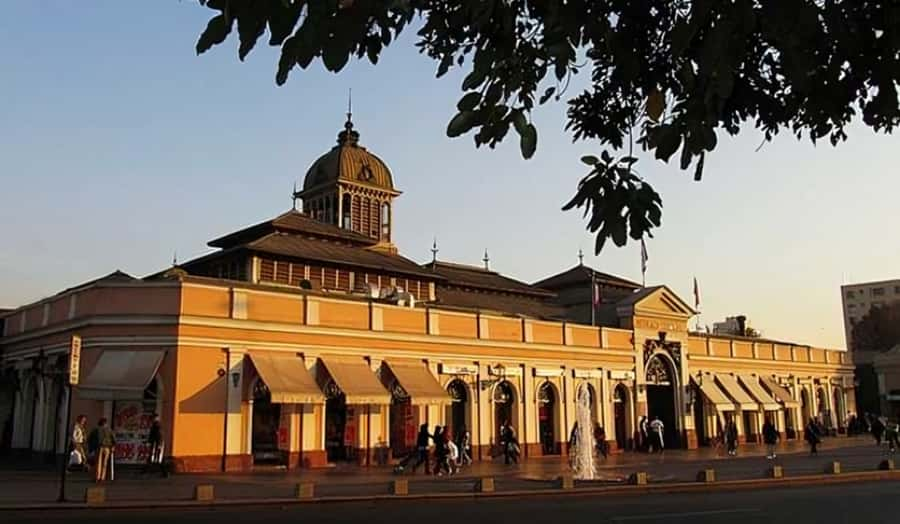
Reviewed · WALKING & BIKE TOURS
Santiago : Must-See Sites Walking Tour With A Guide
Santiago’s best first look comes on foot, and this tour links the city’s grand civic center with its art, food, and hillside districts. You start at Palacio de la Moneda, pass the 1893 Stock Exchange, and finish in Bellavista, giving you a useful outline of central Santiago in just two hours.
I like the flexible route, since you can tell your guide which places matter most. I also like the practical orientation: guides such as Mary Jean, Maria, and Carolina have helped visitors find places they might have missed alone. The drawback is that the experience can depend heavily on who leads it, with some bookings praised for strong guidance and others criticized for thin explanations or a late arrival.
Key points to know before you book
- The route covers a lot in two hours: La Moneda, Bandera Avenue, Plaza de Armas, Bellas Artes, Santa Lucia Hill, Lastarria, and Bellavista.
- The tour can be tailored: You can discuss your interests with the guide rather than follow a completely fixed walk.
- You finish in Santiago’s food and nightlife district: Bellavista is a useful place to continue your evening.
- Museum and monument tickets cost extra: The walking tour itself does not include food, drinks, or admission fees.
- Guide quality matters here: Mary Jean, Maria, and Carolina received especially warm praise, while several bookings raised concerns about preparation and information.
- The meeting point is simple: Meet your guide in front of Hotel Santa Lucia.
A brisk route from La Moneda to Bellavista
This is not a slow museum tour. The schedule gives you two hours to cover a long central-city route, so you should expect a purposeful walk with stops for explanation and photographs rather than long visits inside buildings.
The route begins in the area around Palacio de la Moneda, Chile’s presidential palace and a key symbol of the country’s democratic life. Starting here gives the walk a clear civic focus. You are not simply ticking off old buildings. You are seeing the part of Santiago where government, courts, finance, and public life meet.
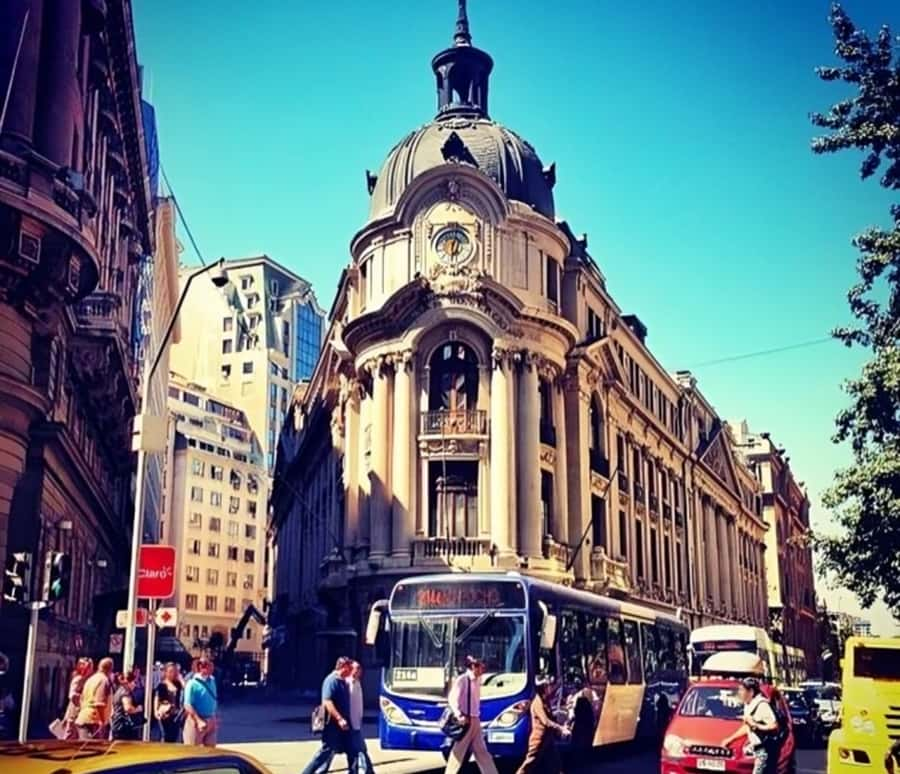
From La Moneda, you head along Bandera Avenue. This is one of the more useful downtown streets for getting a feel for Santiago’s everyday center. The route also includes the historic Stock Exchange Building, completed in 1893. It offers a good point of comparison with La Moneda: one building represents national government, the other the city’s commercial life.
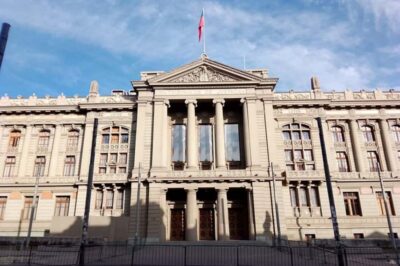
You then pass the Court Justices and the former National Congress. These stops add political and legal context to the walk. I would pay close attention here, since the value of the tour depends on how well your guide explains what you are seeing. The buildings are interesting on their own, but a strong guide should help connect them to Santiago’s public life and Chile’s past.
More Walking & Bike Tours in Santiago
- Santiago: Guided Walking Tour of the Historical Old Town
★ 4.8 · 459 reviews - Santiago Half-Day Walking Tour with Hotel Pick up & Brunch
★ 4.7 · 148 reviews - Santiago: Markets Bike Tour
★ 4.8 · 107 reviews
Plaza de Armas and Santiago’s central landmarks
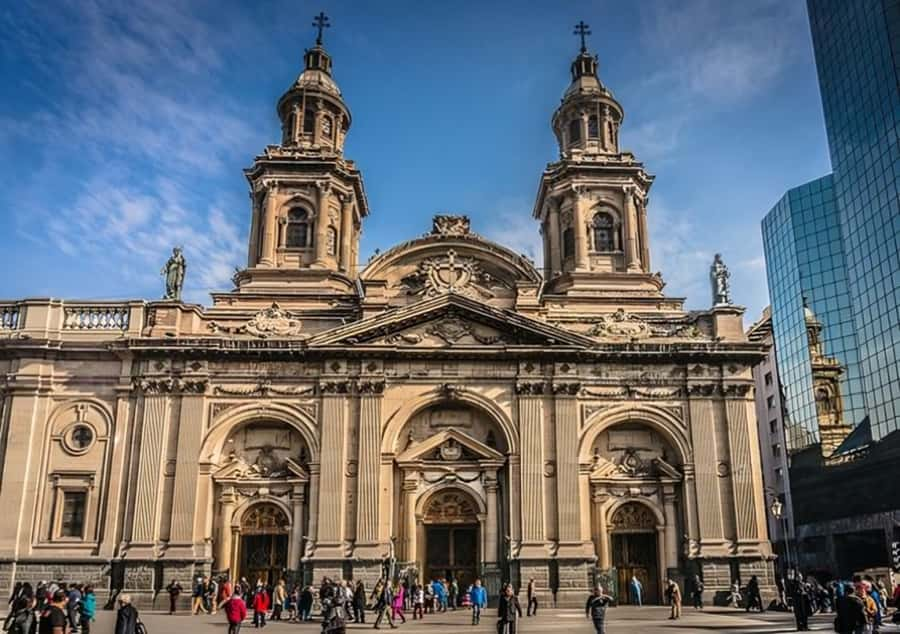
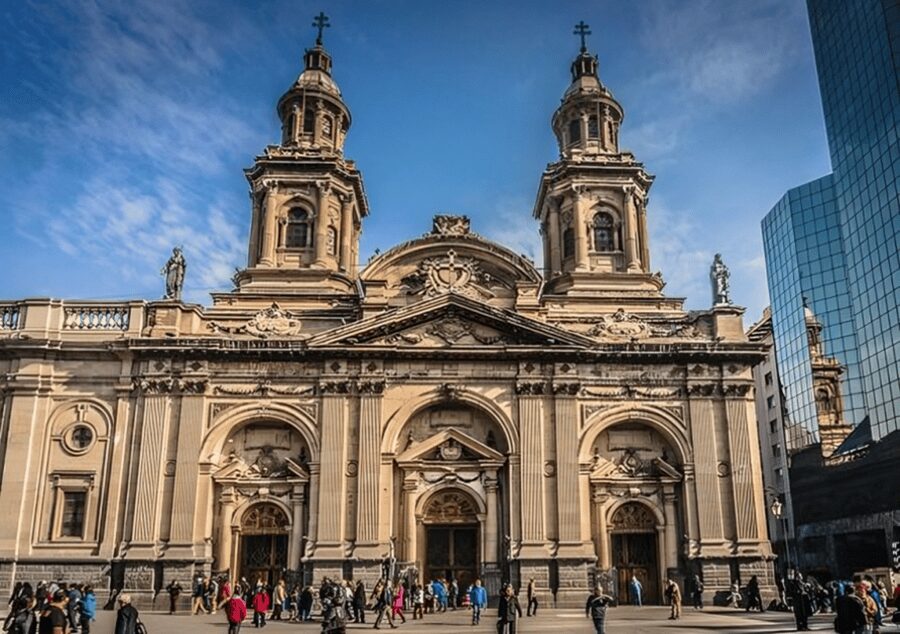
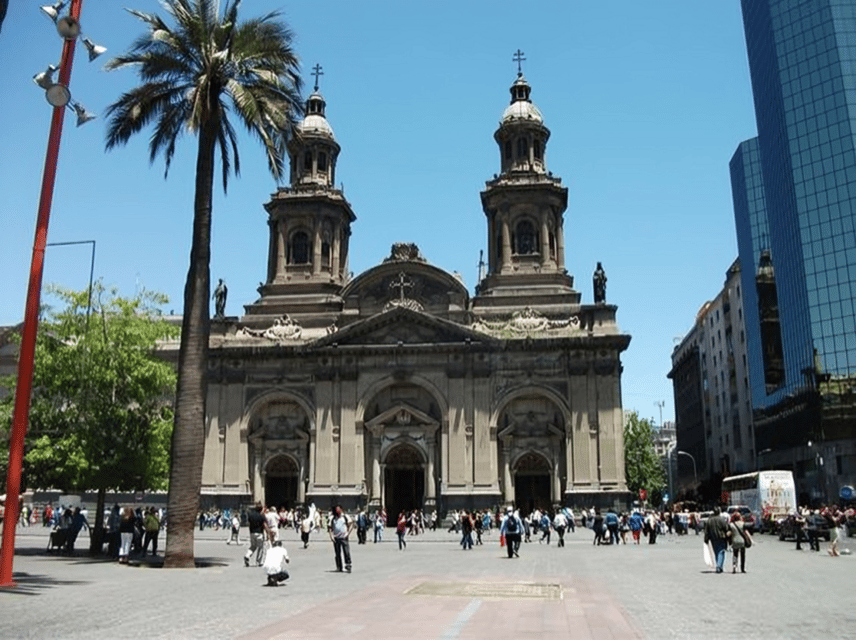
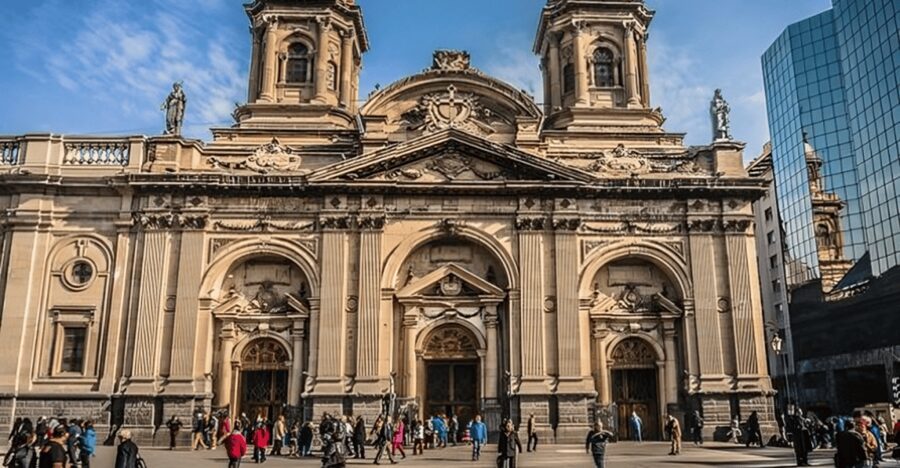
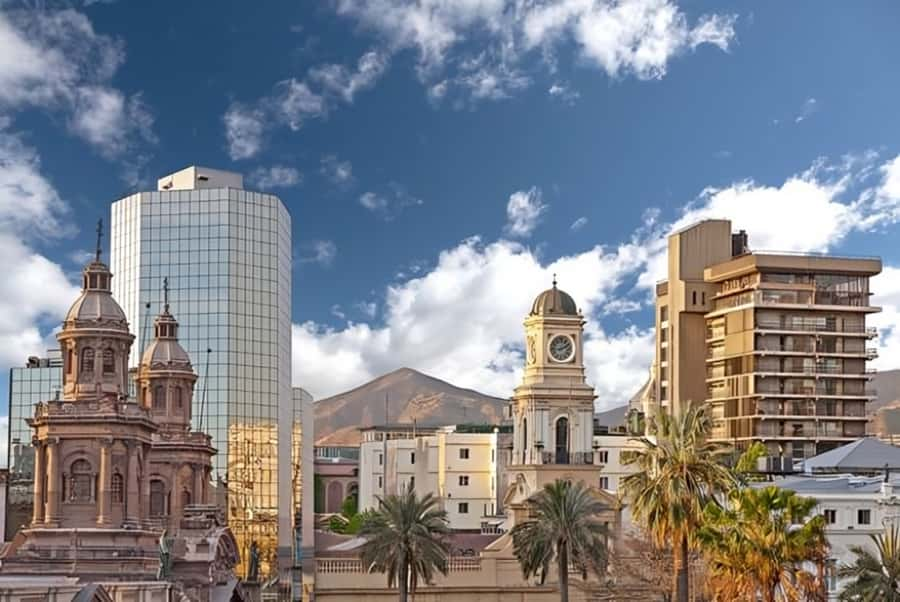
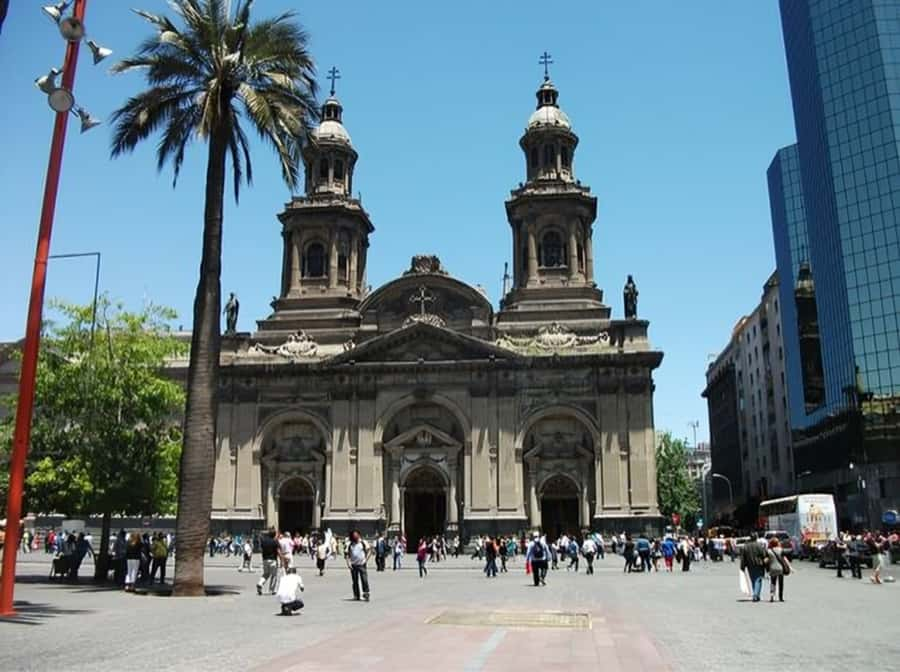
Plaza de Armas is the natural heart of the walking route. This large central square brings together several of the city’s most recognizable sights, including Santiago’s City Hall and the Metropolitan Cathedral.
The Cathedral dates from 1748 and is the most important church stop on the route. Even if you are not planning a long interior visit, the building gives the square much of its character. Ask your guide what you can see inside and whether a visit fits the timing. Admission to monuments and museums is not included, and the tour description does not promise entry to any particular site.
The City Hall adds another civic building to the sequence. By this point, you have seen the presidential palace, the financial district, the courts, Congress, the cathedral, and the municipal center. That makes the walk useful for first-time visitors who want to understand how the main parts of central Santiago fit together.
You should keep your expectations realistic. With so many stops packed into two hours, some explanations may be brief. If you want a detailed architectural study of every building, this is not the right format. If you want a broad first orientation, the route makes sense.
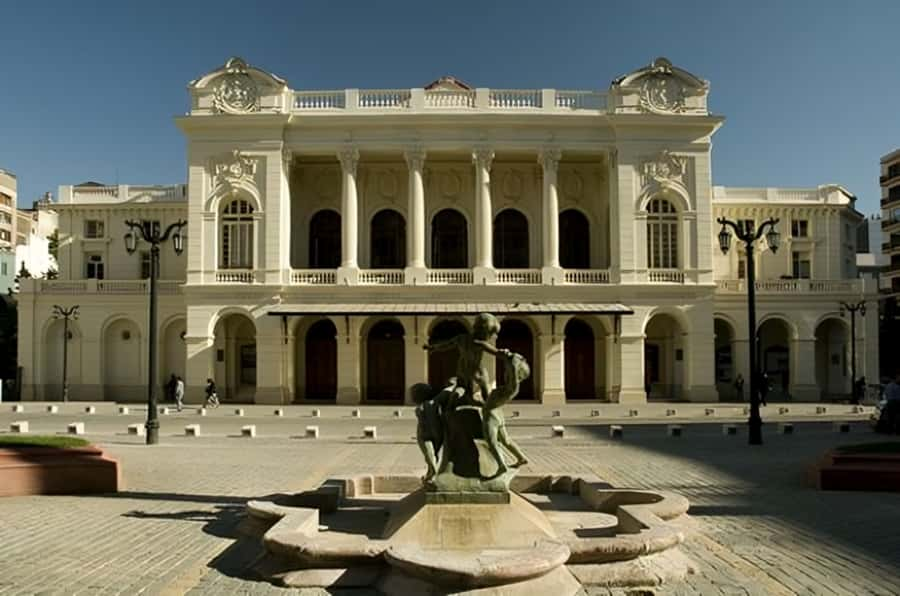
Bellas Artes brings art into the walk
After the main square, the tone changes in the Bellas Artes neighborhood. This area is associated with art and culture, and the route includes the Bellas Artes Museum.
The museum is one of the more obvious places where you may want extra time. A two-hour walking tour cannot also serve as a full museum visit, especially since entry is not included. You can ask the guide for help booking tickets for desired visits, which is useful if you want to return later or fit in a short visit during the same day.
I see the Bellas Artes stop as a bridge between Santiago’s formal center and its more creative districts. It also gives you a chance to ask for recommendations beyond the route. The guide’s local advice may be most useful here: ask which museums, galleries, cafes, or nearby streets suit your interests.
The walk is designed to show you places, not simply explain them from a vehicle. That matters in this part of town. You get a sense of how the central district changes as you move from government buildings to cultural spaces.
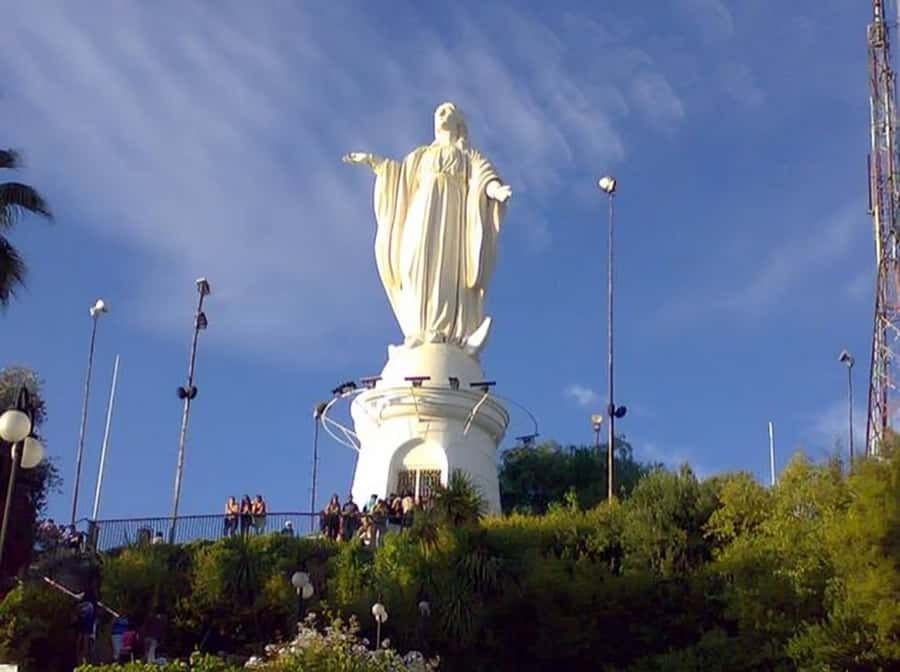
Santa Lucia Hill and the city view
The climb up Santa Lucia Hill is one of the tour’s strongest moments. From higher ground, you get views across Santiago and a break from the close-up streets of the center.
The wording of the itinerary says to climb the hill, so this is not a fully flat stroll. If you use a wheelchair or have trouble with inclines, mention that when arranging the tour, even though the experience is listed as wheelchair accessible. The exact route and how much of the hill you cover may depend on the guide and your needs.
The hill is also a good place to pause the civic and architectural commentary. A view helps you understand the scale of Santiago in a way that a street corner cannot. Ask your guide to point out the parts of the city that matter for the rest of your stay.
Because the tour has many stops, you may not have a long time at the viewpoint. I would treat it as a scenic orientation rather than a dedicated hill visit. If Santa Lucia is a priority for you, ask early in the walk how much time the guide plans to allow.
More walks and rides around Santiago
- Santiago De Chile: Private Custom Walking tour with A Guide
★ 4.4 · 88 reviews - 2-Hour Walking Tour of Yungay The Coolest Neighborhood in Chile
★ 5.0 · 85 reviews - Santiago de Chile Private Walking Tour-5 Hours with Hotel Pick-up
★ 5.0 · 77 reviews - Santiago: Highlights, Parks and Politics Bike Tour
★ 4.6 · 75 reviews
Lastarria adds cafés, culture, and an easier pace
From Santa Lucia Hill, the route continues into Lastarria. This neighborhood is one of the most appealing parts of the itinerary for anyone who enjoys art, food, and a more relaxed city atmosphere.
Lastarria works well after the formal center because it feels less focused on official buildings. You can ask your guide for advice on places to eat, cultural venues, and things to do after the tour. Since food and drinks are not included, this is also a sensible area for your own stop once the walking portion ends.
The route is especially useful if you have only a short time in Santiago. Steven James wrote that the two-hour format worked well during a brief stay, and that is easy to understand. You get a quick look at several different districts without spending half a day on one site.
Still, do not confuse a neighborhood introduction with a full exploration. Lastarria has more to offer than a quick pass through, so note down recommendations and return later if something catches your interest.
Bellavista is a practical finish
The tour ends in Bellavista, Santiago’s main food and entertainment center. This is a smart finish because you can continue your day without retracing your steps.
Bellavista is also linked with Pablo Neruda’s house, La Chascona. The route lets you explore the area and seek advice about visiting the house, but admission is not part of the walking tour. If you want to go inside, ask about tickets and timing before the tour ends.
Ending here gives the experience a useful practical edge. You are not dropped at an isolated landmark with little to do afterward. You finish near restaurants and other city activities, and your guide can suggest where to continue.
The food component remains your responsibility. No dish, drink, or tasting is included in the $36 price. Think of the final stop as a chance to choose your own meal rather than as part of a packaged food tour.
What the $36 price really buys you
At $36 per person, the main value is time and local direction, not admission. You are paying for a two-hour walking route, an English- or Spanish-speaking guide, explanations along the way, and help deciding what to see next.
That can be good value if you have just arrived in Santiago, have only a day or two, or prefer a person to help you make sense of a large city. Antonia said that Mary Jean helped her feel welcome and safe shortly after arrival, while also taking her to interesting places she might not have found alone. That is exactly where a local walking tour earns its price.
The value is weaker if you expect a polished lecture at every stop. Several low-scoring bookings describe little explanation, weak preparation, or a guide who kept asking the group what it wanted to see without offering enough direction. One group also waited 45 minutes for the guide, although the full tour time was eventually provided.
The overall score is 3.6 from nine ratings, which tells you to book with sensible expectations. The positive experiences are quite positive, especially when the guide is prepared and engaged. The negative experiences point to inconsistency, not a problem with the route itself.
If you select a private option, you should have more room to shape the walk around your interests. The private format can be especially useful if you want to spend more time at the cathedral, Santa Lucia Hill, the museum area, or Neruda’s house. Ask about your priorities before the walk begins rather than waiting for the guide to guess.
The guides can make or break the experience
The strongest praise goes to individual guides. Mary Jean is described as very good and well informed, and she helped one person feel comfortable and safe while showing several worthwhile places. Maria was called fantastic, and Carolina received praise for her city knowledge. David also gave his guide a full mark for an excellent experience.
Those comments point to the tour’s best feature: a good guide can turn a list of buildings into a useful introduction to Santiago. The guide can adjust the route, explain what you are looking at, and give you advice for the rest of your visit.
The less positive experiences are important too. One group felt the walk offered almost no information about the city’s past. Another ended the tour early after finding the guide unprepared and unable to answer basic questions. A separate booking described the walk as pleasant but said it provided little new information.
I would send a short message before booking or immediately afterward with your interests: architecture, Chilean politics, museums, food, Pablo Neruda, or city orientation. The tour allows adjustments, but clear requests may help prevent a vague walk.
Timing, walking, and practical details
The listed duration is two hours, with starting times available based on the date you choose. The meeting point is in front of Hotel Santa Lucia. Arrive early and make sure you can identify the hotel clearly, since one booking involved a long wait for the guide.
The route is entirely a walking experience. Wear shoes you can use comfortably for central streets and the climb at Santa Lucia Hill. The itinerary includes many landmarks, so you will likely spend much of the time moving between stops rather than sitting.
English and Spanish guides are available. The activity is listed as wheelchair accessible, but the hill and the number of stops make it wise to discuss your route needs in advance.
You can cancel up to 24 hours before the start for a full refund. You can also reserve now and pay later, which helps if your Santiago schedule is still shifting. Food, drinks, monument tickets, and museum admission are not included.
Who should book this Santiago walk?
I would recommend it to a first-time visitor who wants a quick map of central Santiago, especially someone staying near the center or arriving with limited time. It also suits you if you like asking a local what to do next rather than planning every hour yourself.
The tour may work well for solo visitors and couples who want a private option. Families and older visitors should consider the walking distance and Santa Lucia climb, while museum fans should plan separate time for the Bellas Artes Museum and La Chascona.
I would be more cautious if you want a detailed, formal history lecture or a guaranteed tightly managed experience. The mixed results show that the guide’s preparation is crucial. Ask for a private option and state your interests clearly if you want the best chance of a focused route.
Should you book it?
Book this tour if you value a fast city orientation, local recommendations, and the chance to shape the route. The sequence from La Moneda through Plaza de Armas, Bellas Artes, Santa Lucia, Lastarria, and Bellavista covers a lot of Santiago’s character in two hours.
I would not book it expecting museum entry, a food tasting, or a guaranteed expert lecture at every stop. The price is fair when you get a prepared guide such as Mary Jean, Maria, or Carolina, but the uneven feedback means you should communicate your priorities and keep your expectations practical.
FAQ
How long does the Santiago walking tour last?
The tour lasts two hours.
What is the price?
The listed price is $36 per person.
Where does the tour meet?
Meet your guide in front of Hotel Santa Lucia.
Which languages are available?
The tour is available with a live guide in English or Spanish.
Is the tour private?
A private group option is available. The standard booking details do not specify that every departure is private.
What sights are included in the route?
The route includes Palacio de la Moneda, Bandera Avenue, the 1893 Stock Exchange Building, the Court Justices, the former National Congress, Plaza de Armas, the Cathedral, Santiago City Hall, the Bellas Artes neighborhood, Santa Lucia Hill, Lastarria, and Bellavista.
Are museum and monument tickets included?
No. Entry to monuments and museums is not included.
Are food and drinks included?
No. Food and drinks are not included.
Can I cancel for a refund?
Yes. You can cancel up to 24 hours in advance for a full refund. You can also reserve now and pay later.
Just added around Santiago
- Walking City Tour with Funicular, Cable Car and Tasting★ 4.3 · 6 reviews
- VIÑA DEL MAR AND VALPARAISO TOUR★ 4.8 · 20 reviews
- Valle nevado Sunset★ 5.0 · 40 reviews
- Valparaiso & Casablanca : Wine, Gastronomy and Living Culture★ 5.0 · 37 reviews
- Coast and Color: Discover Viña and Valparaíso in a Day★ 5.0 · 58 reviews
- Traditional Dinner Show in Santiago★ 4.5 · 41 reviews
- Private Cruise Transfer : Santiago → Valparaiso or San Antonio★ 4.5 · 51 reviews
- Sunset Alyan + 6 wines + individual snack + rustic dinner★ 4.5 · 51 reviews
Walking & Bike Tours, compared.
Santiago Half-Day Walking Tour with Hotel Pick up & Brunch
Read our review →

Bike Tour in San Pedro de Atacama – Devil’s Throat
Read our review →
Santiago De Chile: Private Custom Walking tour with A Guide
Read our review →
2-Hour Walking Tour of Yungay The Coolest Neighborhood in Chile
Read our review →
Valpo in 1 day: Authentic + Famous! Semi-private walking tour & public transport
Read our review →Browse the lists this tour appears in