
Reviewed · TICKETS
Santiago: 2-Day Hop-On Hop-Off Bus Ticket and Cable Car
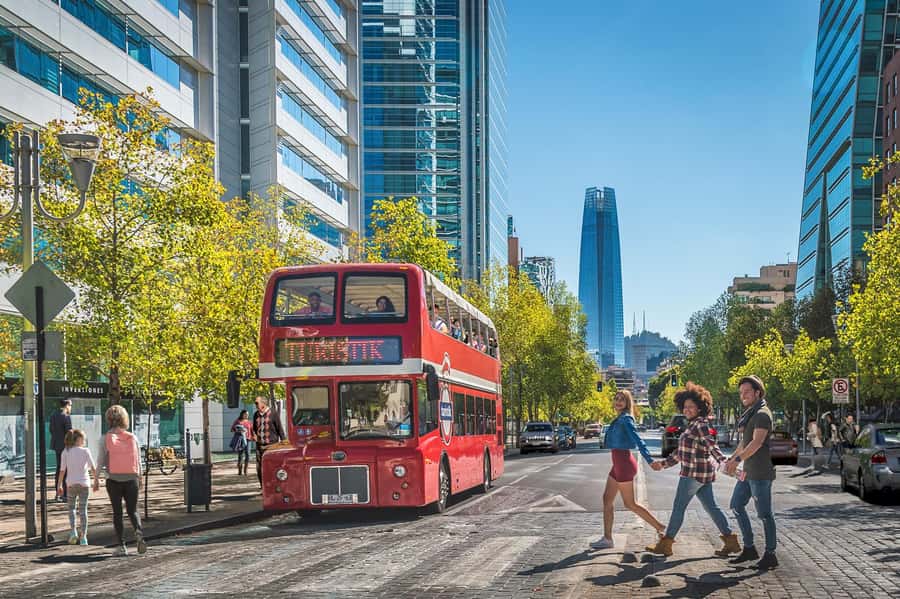
The best reason to book this Santiago tour is the combination of city transport and mountain rides. You can see the old center, modern Las Condes, Parque Bicentenario, Bellavista, and San Cristóbal Hill without piecing together separate fares or guessing which direction to go next.
I especially like the two-day validity and the included cable car, funicular, and panoramic buses. That gives you time to stop for lunch, walk around Plaza de Armas, or linger on Cerro Santa Lucía instead of racing through the city. The main drawback is finding some pickup points, since stops are not always clearly marked and the published operating times need careful attention.
Key points at a glance
- Cable car and funicular included: Use both for two days, along with unlimited panoramic buses in Metropolitan Park.
- Ten useful stops: The route links malls, parks, the historic center, Bellavista, Providencia, and Las Condes.
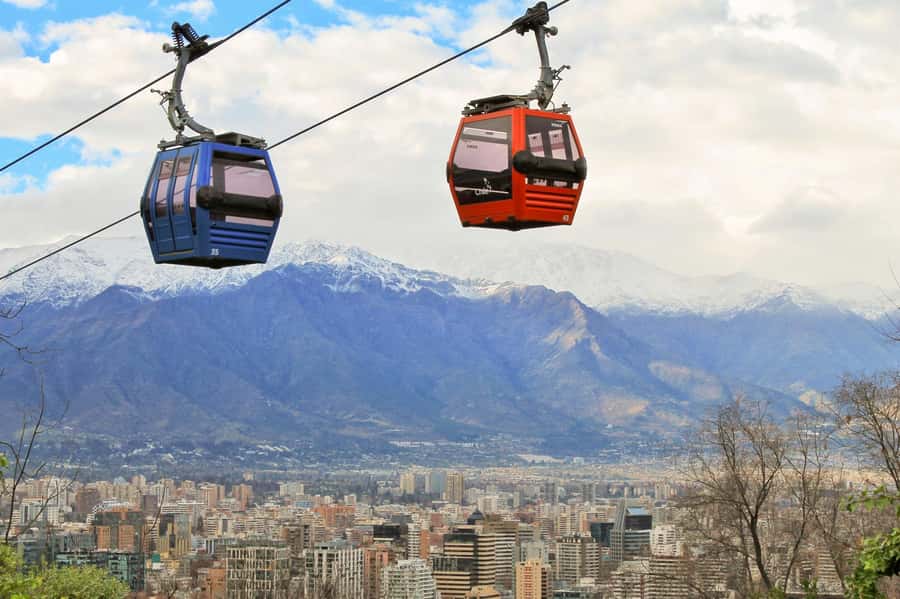
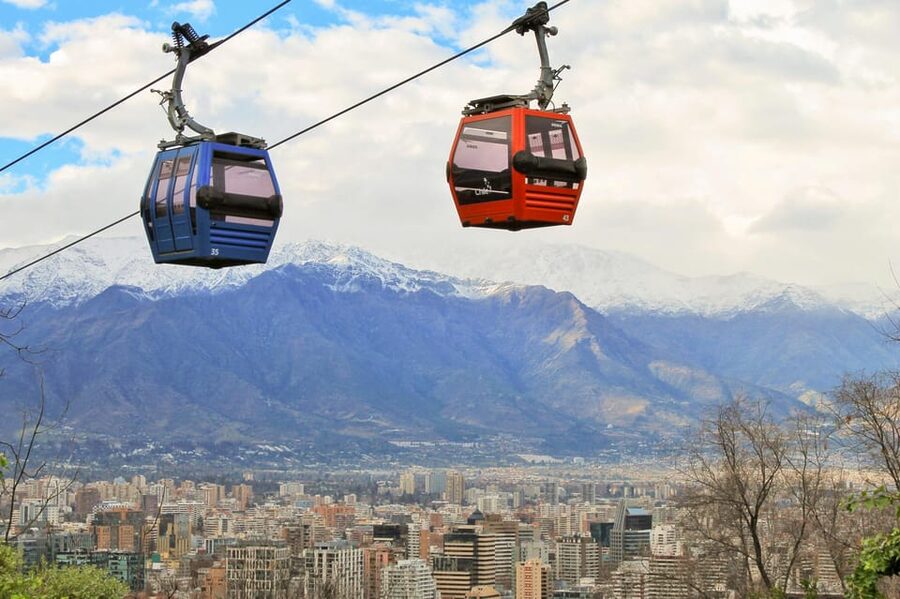
- Best views come from San Cristóbal Hill: The cable car offers broad views across Santiago, with the Andes visible when conditions are clear.
- Buses run about every 20 to 30 minutes: That is frequent enough for short stops, but you should allow extra time for longer visits.
- Start early for a full circuit: Catch the last complete circuit before 4:00 PM if you want to see the whole route in one day.
- Mondays are different: The cable car, funicular, and panoramic buses at Cerro San Cristóbal do not operate.
Why this two-day pass works well in Santiago
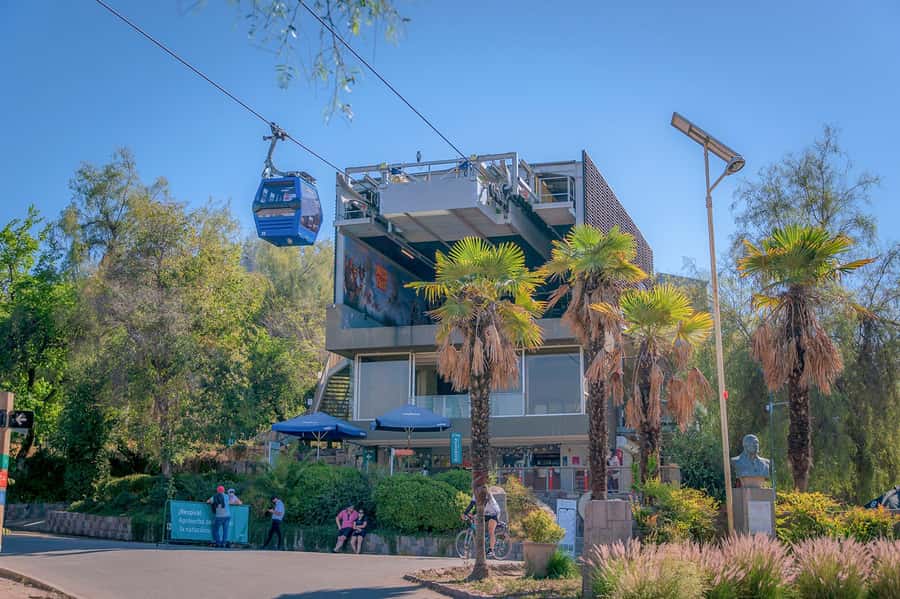
Santiago spreads across a broad valley, with newer districts to the east and the historic center farther west. The hop-on hop-off route helps you cover that distance without spending your first day learning the city’s bus and metro system.
You can begin at Parque Arauco, ride toward Parque Bicentenario and San Cristóbal Hill, then continue into the old center. On another day, you can focus on the stops you liked best. That flexibility matters because several stops deserve more than a quick photograph.
At $69 per person, the pass is not simply a bus ticket. Its value depends on how much you use the cable car and funicular. If you ride both, take the panoramic buses in Metropolitan Park, and make several stops, the price becomes easier to justify. If you only remain on the bus for one circuit, the value is weaker.
The recorded commentary adds useful context as you move between districts. It is available in Spanish, English, French, German, Portuguese, and Chinese. The commentary is automated rather than a live guide, so you get information at a steady pace but cannot ask questions along the way.
Staff service is another strong point. Daniela Torres and Nicole are among the staff members praised for being especially friendly and helpful. That matters when you need help locating a stop, understanding the cable car connection, or working out where to rejoin the route.
A few more trips around Santiago worth a look
- From Hanga Roa: Easter Island Highlights 2-Day Tour
★ 4.3 · 205 reviews
Start at Parque Arauco and move through modern Santiago
The starting point is beside Parque Arauco at Avenida Kennedy Lateral 5059, near the Ripley department store. Parque Arauco is more than a shopping stop. It gives you restaurants, international shops, and an easy place to begin with coffee or a meal.
The route operates daily, with the first departure listed at 9:30 AM. Another set of instructions gives the hop-on hop-off period as 10:00 AM to 6:30 PM, while the bus service is also described as running from 9:30 AM to 6:00 PM. These differences are worth noting. For a relaxed day, begin in the morning and plan around the last full circuit before 4:00 PM.
Stop 2 is Parque Bicentenario in Vitacura. This is a welcome change from the traffic and buildings. The park has lagoons, walking paths, and wildlife, making it a good place for a stroll and photographs. Allow more time here than you would for a quick viewpoint, especially if you want to walk rather than simply look around the bus stop.
From the park, the route continues toward San Cristóbal Hill. You can use the bus to cover the distance between the eastern districts and the mountain without paying for a separate taxi or working out a new route.
Take the cable car up San Cristóbal Hill
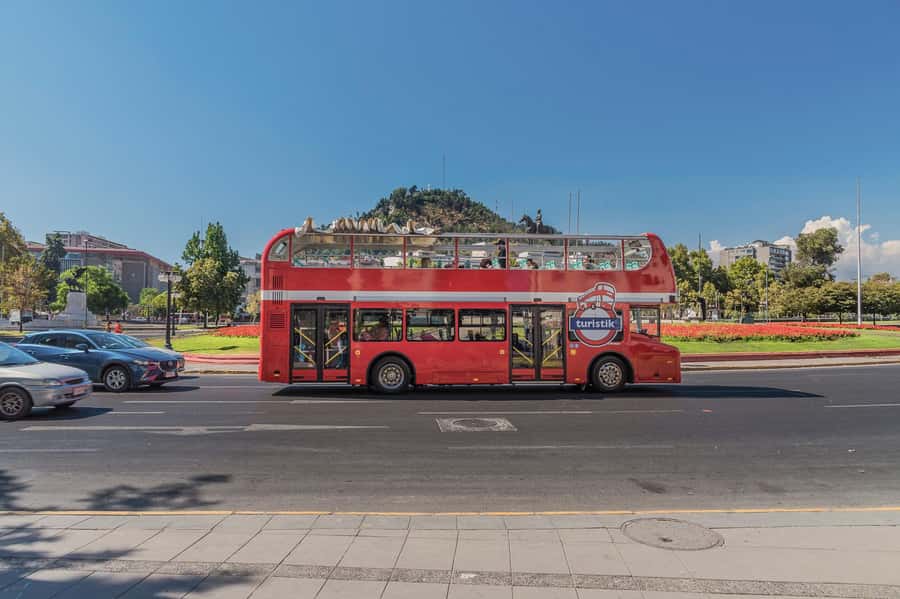
Stop 3 serves the Santiago Cable Car near Los Conquistadores and Pedro de Valdivia Norte. The stop is about a five-minute walk from the cable car entrance, so do not expect to step directly from the bus onto the boarding platform.
This is one of the strongest parts of the package. The cable car gives you a different view of Santiago as it climbs above the city. From San Cristóbal Hill, you get wide views across the valley and a clear sense of how the city sits between the mountains. Conditions affect what you see, so bring sunglasses and a camera, but keep expectations realistic on hazy days.
Your cable car ticket is valid for two days, not just one ride during one circuit. That gives you useful flexibility. You could ride it on your first day for orientation, then return for another look if the weather improves.
The cable car, funicular, and panoramic buses are closed on Mondays. This is the single most important scheduling detail in the entire experience. If the mountain rides are a major reason for booking, avoid Monday or plan to use that day for the city stops only.
Pair the cable car with the historic funicular
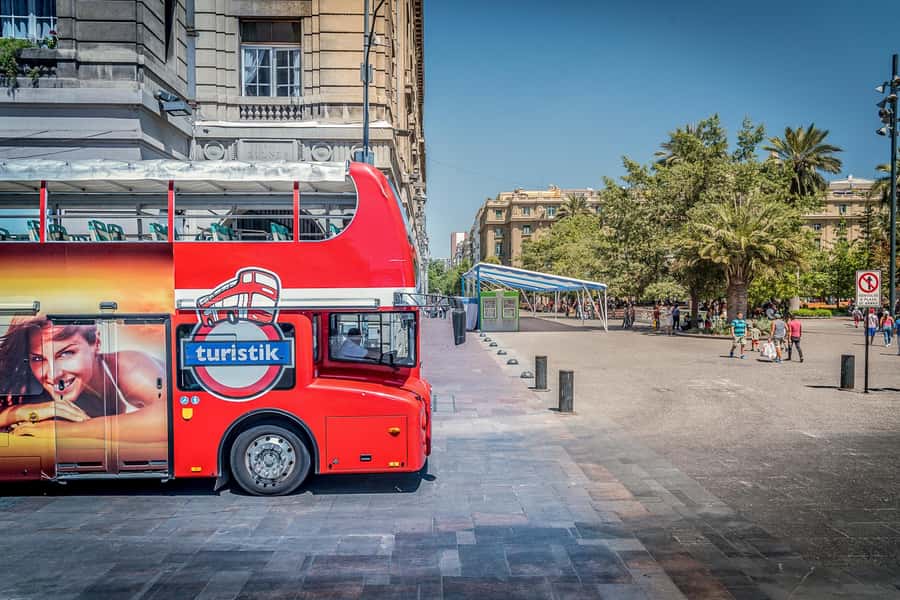
Stop 4 is in Bellavista, at Pío Nono 445. From here, the historic funicular connects the Bellavista area with San Cristóbal Hill. Many people find it practical to take the cable car up and the funicular down, though you can arrange the mountain section in the order that suits your route.
The funicular is included for two days, along with unlimited panoramic buses within Metropolitan Park. This combination gives the pass much of its value. You are not only looking at Santiago from a bus window. You are using three different forms of transport to see the city from street level, above the rooftops, and from the hillside.
Pay attention to your ticket or wristband when entering the mountain attractions. Earlier instructions have caused confusion about validation, and one piece of practical advice is simple: show your pass at each entrance and confirm that it has been accepted before moving on. That can prevent paying twice.
Bellavista also makes a sensible lunch stop because restaurants are located near the funicular area. The route does not require you to rush straight back onto the next bus.
Same base, a different sort of day:
- Santiago: Cajon del Maipo/Embalse del Yeso Tour with Picnic
★ 4.3 · 3,789 reviews - Santiago: Vina Del Mar, Valparaiso, Casablanca & Reñaca Tour
★ 4.2 · 2,838 reviews - Small-Group Cajón del Maipo Full-Day Tour and Picnic
★ 4.5 · 2,277 reviews - Santiago: Cajon del Maipo & Embalse El Yeso Trip with Picnic
★ 4.5 · 1,859 reviews
Walk through Plaza de Armas and the old center
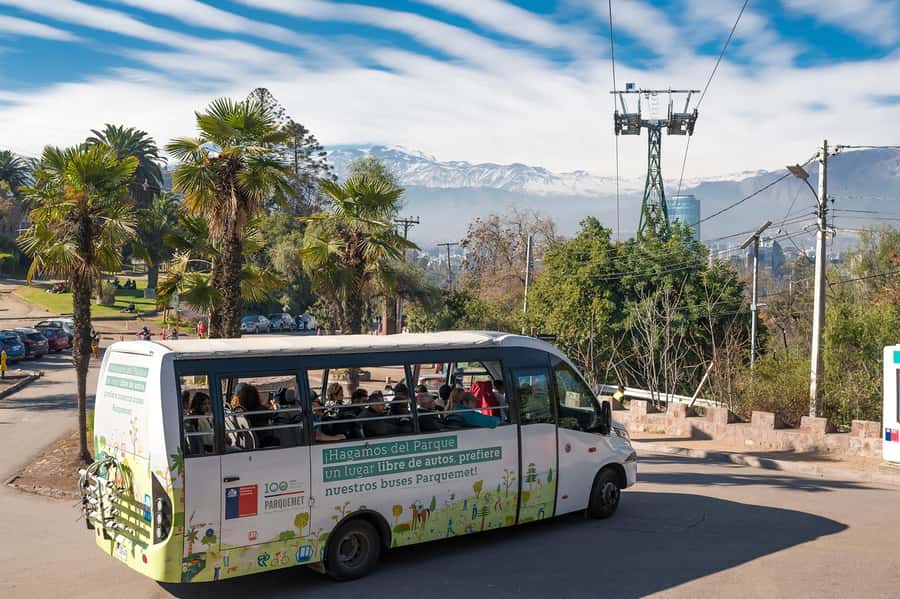
Stop 5 is Plaza de Armas, the heart of Santiago’s historic center. This is where you leave the bus and explore on foot, with colonial-era buildings, civic landmarks, and busy public spaces close together.
The stop is especially useful for first-time visitors who want an initial sense of Santiago’s older core. You can walk at your own pace, take photographs, and return to the bus when ready. The recorded commentary helps explain what you are passing, but the real value here comes from getting off and walking.
Stop 6 is Plaza de la Constitución, directly in front of La Moneda Palace, Chile’s government headquarters. La Moneda gives the route a strong civic and political focus. You can combine this stop with Plaza de Armas on the same day because they sit in the central area, though you should allow time for walking between them.
Stop 7 is Cerro Santa Lucía, a historic urban hill beside the Alameda and near the Lastarria district. It is smaller and more central than San Cristóbal Hill, but that is part of its appeal. You can reach terraces and viewpoints without committing to a long mountain outing.
Santa Lucía is a good place to slow down. The hill provides photographs, city views, and a break from the main streets. Nearby Lastarria adds cafés, restaurants, and cultural stops, though the pass itself does not include separate admission to attractions in the area.
See Providencia and Las Condes at a slower pace
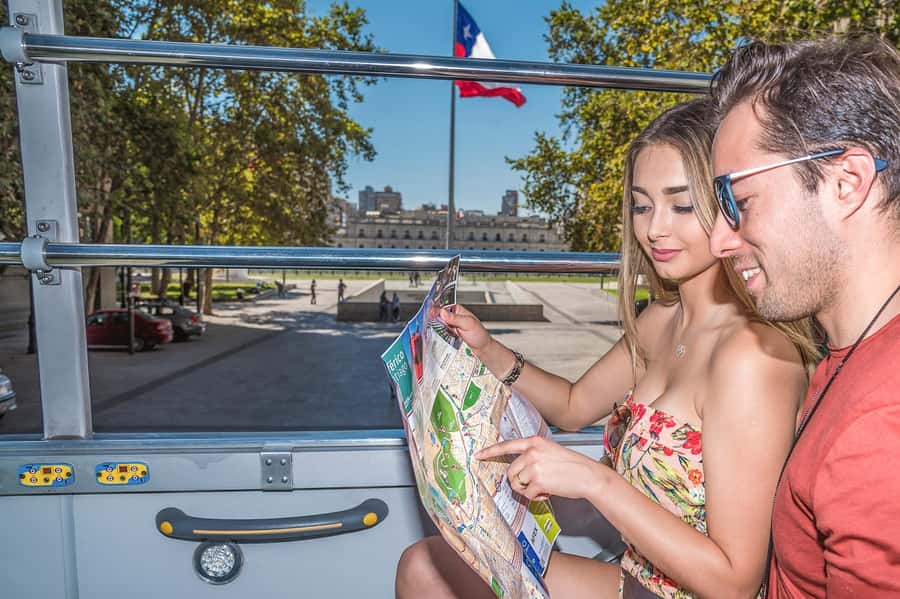
Stop 8, Plaza de la Aviación, sits by the Mapocho River in Providencia. It is known for its fountain and green areas, and it gives you a look at a more modern side of Santiago. This stop works well as a short walk or photo break rather than a full-day destination.
Stop 9 is Costanera Center, one of the city’s largest shopping centers and a practical place for food, shopping, and souvenirs. The Sky Costanera observatory is nearby, but its entry fee is not included. That distinction matters if you are comparing the pass with a package that includes more paid attractions.
Stop 10 is the Las Condes Interactive Museum on Isidora Goyenechea. The area is modern, with restaurants and business-district streets. The museum offers interactive experiences, but entry fees for attractions beyond the included transport are not covered.
These eastern stops show a different Santiago from the old center. Parque Arauco, Las Condes, Providencia, and Costanera Center are useful for seeing the city’s newer commercial districts. If you only visit the center, you miss this contrast.
How to plan the two days
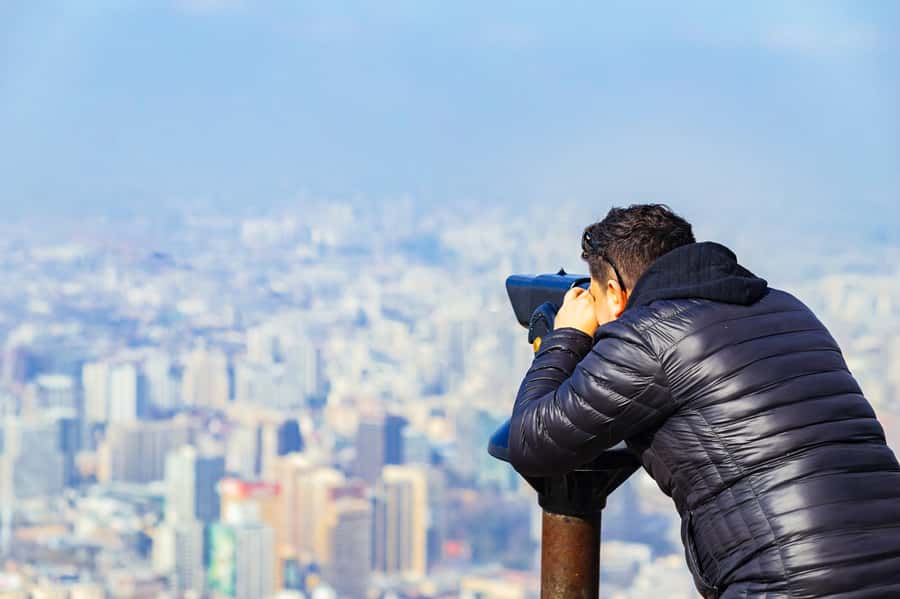
I would not try to visit every stop in depth on a single day. A better plan is to use day one for orientation and the mountain section, then use day two for the stops where you want more walking time.
A practical first day could look like this:
- Start at Parque Arauco in the morning.
- Stop briefly at Parque Bicentenario.
- Continue to the cable car.
- Take the cable car and funicular combination.
- Have lunch near Bellavista.
- Continue to Plaza de Armas and La Moneda if time allows.
Use day two for Cerro Santa Lucía, Lastarria, Plaza de la Aviación, Costanera Center, and any eastern stop you skipped. You can also repeat the cable car if you want another view and the weather is better.
Buses are generally reported at about 20 to 25 minute intervals, with some accounts allowing 25 to 30 minutes. That is reasonable for a hop-on hop-off route, but it is not a city bus you can assume will arrive in five minutes. Keep an eye on the time, especially near the end of the afternoon.
The final full circuit should be caught before 4:00 PM. If you board late, you may reach a stop after the last practical departure and need another way back. The route information gives several different end times, so ask staff for the day’s exact last bus when you board.
Finding the stops without frustration
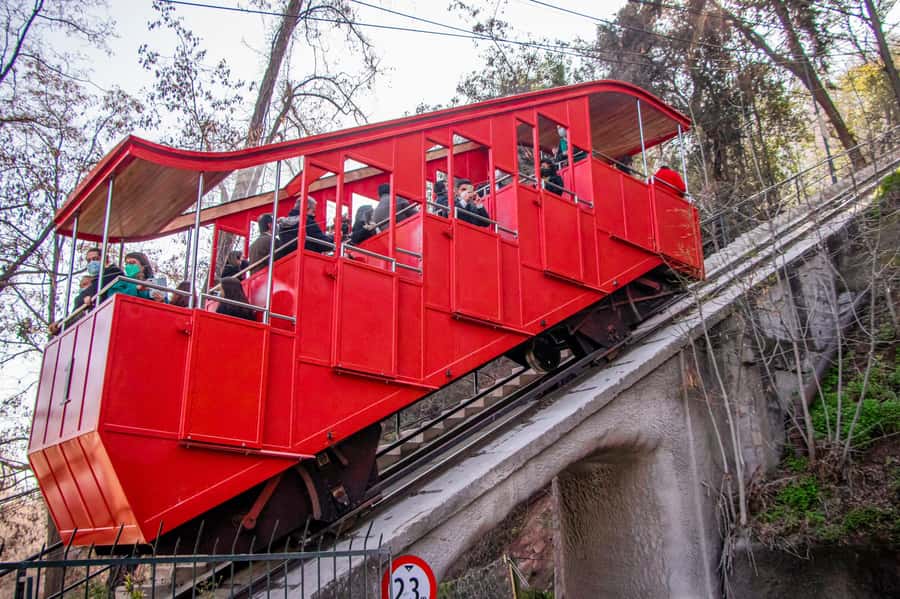
The largest weakness is stop signage. Some pickup points are not marked as clearly as you might expect, and there may be several red buses nearby. Remember where you got off, and use the route map and app if available.
At the funicular, older map information has pointed to a pickup point several blocks away. The more useful location is near the funicular entrance. After taking the cable car and funicular, look for the bus close to that entrance rather than relying blindly on the old map.
The starting point at Parque Arauco is also worth confirming before you arrive. It is on Avenida Kennedy Lateral 5059, next to Ripley, rather than simply somewhere inside the mall. The booking voucher can be scanned at different stops, and some passengers have received an electronic ticket by email or WhatsApp. Keep the barcode accessible on your phone.
Bring comfortable shoes, water, sunscreen, sunglasses, and clothing suited to the weather. You will walk between some stops and attractions, particularly at the cable car. Keep valuables with you because the operator is not responsible for items left on the buses.
Who should book this Santiago tour?
This pass suits first-time visitors, short-stay visitors, families who want a simple route, and anyone who prefers a broad introduction before exploring independently. It is also useful if your hotel is in Las Condes, Providencia, or another district away from the historic center.
You will get the most from it if you plan to use the cable car and funicular, make several stops, and return on the second day. The ticket is less convincing for someone who wants a detailed guided walk, museum admissions, or a tightly timed private itinerary.
The audio guide works well for background information, but it cannot replace a local guide for questions or deeper discussion. Headphones are supplied, although one bus has used a QR code audio system instead of the usual setup. Bringing your own headphones is sensible, especially if you use an iPhone.
Free cancellation is available up to 24 hours before the activity, and you can reserve now and pay later. Those terms help if your Santiago schedule is still changing, but the bigger booking decision is simple: make sure your two days include a non-Monday mountain day.
Should you book it?
Book this tour if you want an easy overview of Santiago with the cable car and funicular already included. The ten stops cover the main visitor districts, and two days give you enough time to explore instead of staring at the city through a bus window.
Skip it if you prefer walking every neighborhood, using local public transport, or choosing each attraction separately. For most first visits, though, the pass offers a practical mix of transport, views, and orientation, provided you start early, confirm the bus times, and plan around Monday closures.
FAQ
How long is the Santiago hop-on hop-off ticket valid?
The ticket is valid for two consecutive days. You can get on and off as many times as you want during those two days.
How many stops are included?
The route includes ten stops, covering Parque Arauco, Parque Bicentenario, San Cristóbal Hill, Bellavista, Plaza de Armas, La Moneda, Cerro Santa Lucía, Plaza de la Aviación, Costanera Center, and the Las Condes Interactive Museum.
Is the cable car included?
Yes. The ticket includes two days of cable car access at San Cristóbal Hill.
Is the funicular included?
Yes. Two days of funicular access are included.
Are the panoramic buses in Metropolitan Park included?
Yes. You receive unlimited use of the panoramic buses inside Metropolitan Park for two days.
Does the ticket include entry to other attractions?
No. Other tickets and entry fees are not included. For example, the nearby Sky Costanera observatory requires a separate ticket.
Does the tour operate on Mondays?
The hop-on hop-off bus operates daily, but the cable car, funicular, and panoramic buses at Cerro San Cristóbal do not operate on Mondays.
What languages are available for the audio guide?
The audio guide is available in Spanish, English, French, German, Portuguese, and Chinese.
Where can I start the tour?
You can start at Parque Arauco Shopping Center at Avenida Kennedy Lateral 5059, next to the Ripley department store. You can also board at any of the other nine designated stops.
Just added around Santiago
- Santiago: City Highlights Walking Tour★ 4.2 · 51 reviews
- Santiago: The Essentials City Tour & Optional Concha y Toro★ 3.4 · 40 reviews
- Horseback Private Wine Tour and Country Grill from Santiago★ 5.0 · 52 reviews
- Traditional City Tour★ 5.0 · 58 reviews
- Private Horseback Adventure in the Andes, with Picnic & Wine★ 5.0 · 61 reviews
- Skiing in Farellones Park: Ski Tickets, Lessons, Transportation and More★ 4.5 · 86 reviews
- Nevado Valley Tour with Lunch in Hotel★ 5.0 · 73 reviews
- Andes Day Lagoon: Embalse El Yeso Tour from Santiago★ 4.5 · 75 reviews
Tickets, compared.

Tour Parque Farellones Ticket+Transportation, optional Snowwear
Read our review →
Museo Chileno de Arte Precolombino Admission Ticket
Read our review →
Skiing in Farellones Park: Ski Tickets, Lessons, Transportation and More
Read our review →Browse the lists this tour appears in