
Reviewed · TICKETS
Santiago: Hop-on Hop-off Bus Day Ticket with Audio Guide
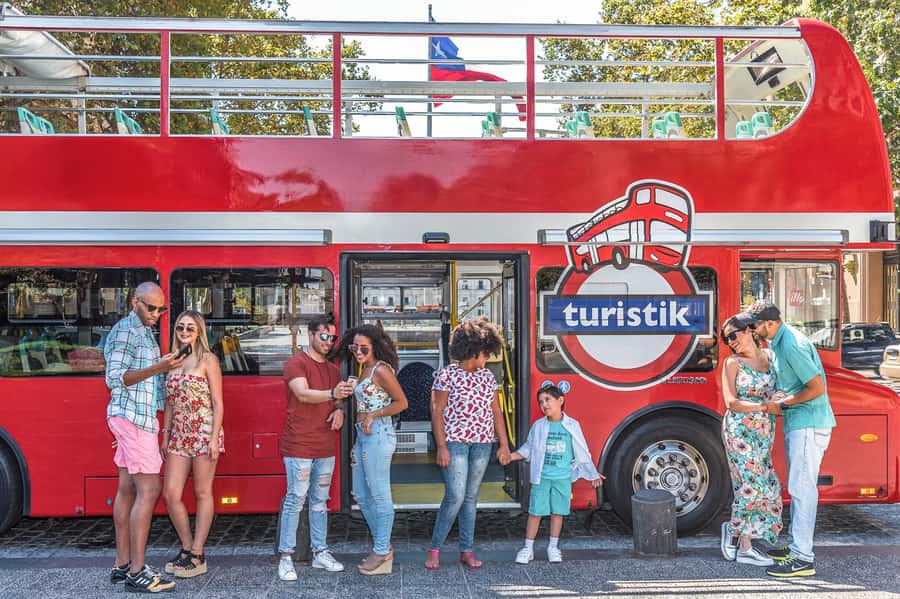
Santiago’s best feature is its variety, and this bus route gives you a quick way to connect the historic center, modern east side, and Cerro San Cristóbal without arranging separate taxis. You can start at a shopping center, stop for a park walk, then reach the city’s old core and hilltop views on one ticket.
I like the freedom to get off at any of the 10 stops, and I like that the audio guide comes in English, Spanish, Portuguese, French, German, and Chinese. The main tradeoff is time: buses run from 9:30 AM to 6:00 PM, and you need to board by 4:00 PM to complete the full circuit.
Key points before you board
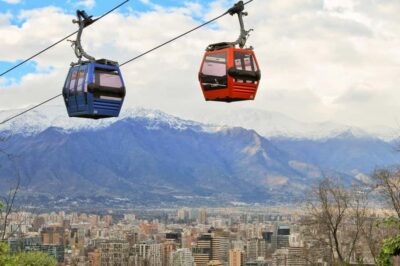
- Cerro San Cristóbal adds the best viewpoint: The cable car and historic funicular connect the bus route with broad views over Santiago.
- Ten stops cover very different parts of town: You move from Parque Arauco and Las Condes to Bellavista, the old center, La Moneda, and Santa Lucía Hill.
- The eastern stops suit a slow morning: Bicentenario Park, Costanera Center, and Parque Arauco offer shopping, food, green space, and modern city views.
- The audio guide gives you independence: You can listen in one of six languages instead of following a fixed walking group.
- Nathaly and Carlos help with the practical details: Their clear explanation of the bus system and schedules is useful when you first board.
- The schedule rewards an early start: A late afternoon ride may show you the route, but it leaves little time for stops.
The route gives you Santiago in three different acts

This is not just a ride past monuments. The route links Santiago’s polished eastern districts, its central civic area, and its hilltop recreation zone. That matters because the city is spread across a large urban area, and walking between these sections would take too much of your day.
You can ride the complete loop first to get your bearings, or you can use the bus as transport between a few carefully chosen stops. I would not try to visit every stop in one day. Ten stops sounds generous, but once you add a hill ride, a park walk, lunch, and the historic center, the day fills quickly.
The bus runs Monday through Friday from 9:30 AM to 6:00 PM. To complete the full circuit, board before 4:00 PM. For the best use of the ticket, begin in the morning and treat the final two hours as a backup window rather than your main sightseeing time.
A few more trips around Santiago worth a look
- Santiago: 1-Day Hop-On Hop-Off Bus and Cable Car Ticket
★ 4.3 · 332 reviews - Tour Parque Farellones Ticket+Transportation, optional Snowwear
★ 4.5 · 248 reviews - Santiago: Sky Costanera Observatory Admission Ticket
★ 4.3 · 208 reviews
Parque Arauco starts the day with shops and food
Parque Arauco is a practical starting point if you are staying in Las Condes or nearby. It is one of Chile’s leading shopping centers, with international brands and an open-air dining area. That makes it more useful than a simple bus stop, especially if you want coffee, a meal, or a little shopping before sightseeing.
I would use this stop as a short opening pause rather than spend half the day indoors. The attraction here is modern Santiago, not old Santiago. If your main goal is churches, government buildings, and city viewpoints, board early and save more time for the central stops.
Bicentenario Park offers a calmer break
Bicentenario Park in Vitacura changes the pace. Its lagoons, wildlife, paths, and open areas make it a good place to stretch your legs after riding through the eastern districts. You can take photographs here and enjoy a quieter setting without leaving the city.
This is one of the stops that works best in daylight. The park is an easy choice for families, photographers, or anyone who wants a break from shops and traffic. Keep an eye on your watch, though. A long park walk can make the rest of the circuit feel rushed.
Cerro San Cristóbal brings the biggest views
The Santiago Cable Car stop is about a five-minute walk from the bus stop at Los Conquistadores and Pedro de Valdivia Norte. From here, the route connects you with Cerro San Cristóbal, the hill that gives you the broadest city outlook on this tour.
The cable car provides the memorable part of the visit, with a high view across Santiago. The package information says the stop includes a ticket to San Cristóbal Hill and its 360-degree views. Since other entry fees are listed as excluded, confirm exactly which cable car or hill services are covered when you board.
Plan more time here than at a normal photo stop. You need to walk from the bus, use the hill transport, enjoy the views, and return to the route. Sunglasses, water, comfortable shoes, and weather-appropriate clothing are sensible choices. The height and open views also mean that bright sun can be tiring.
Same base, a different sort of day:
- Santiago: Cajon del Maipo/Embalse del Yeso Tour with Picnic
★ 4.3 · 3,789 reviews - Santiago: Vina Del Mar, Valparaiso, Casablanca & Reñaca Tour
★ 4.2 · 2,838 reviews - Small-Group Cajón del Maipo Full-Day Tour and Picnic
★ 4.5 · 2,277 reviews - Santiago: Cajon del Maipo & Embalse El Yeso Trip with Picnic
★ 4.5 · 1,859 reviews
The funicular connects Bellavista with the hill
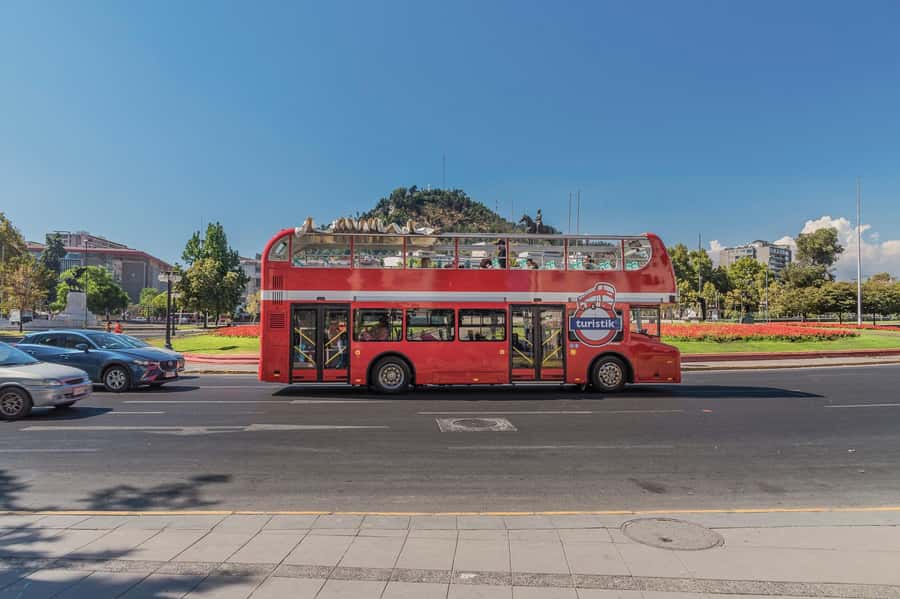
The Santiago Funicular stop is at Pío Nono in Bellavista. This historic lift connects the neighborhood with Cerro San Cristóbal, giving you another way to reach the hill. It is especially useful if you want to pair a hill visit with Bellavista rather than approach from the cable car side.
The funicular and cable car are not interchangeable in practical terms. Choose your approach based on which side of the hill you want to see first, and allow time for the return connection to the bus. The bus ticket does not automatically mean every outside service or admission is covered, so check before using an additional attraction.
Bellavista itself adds a different feel to the route, with restaurants and a more social neighborhood setting. The stop works well for lunch, but a meal here can easily stretch beyond the next bus departure. Keep your return time in mind.
Plaza de Armas is the essential central stop
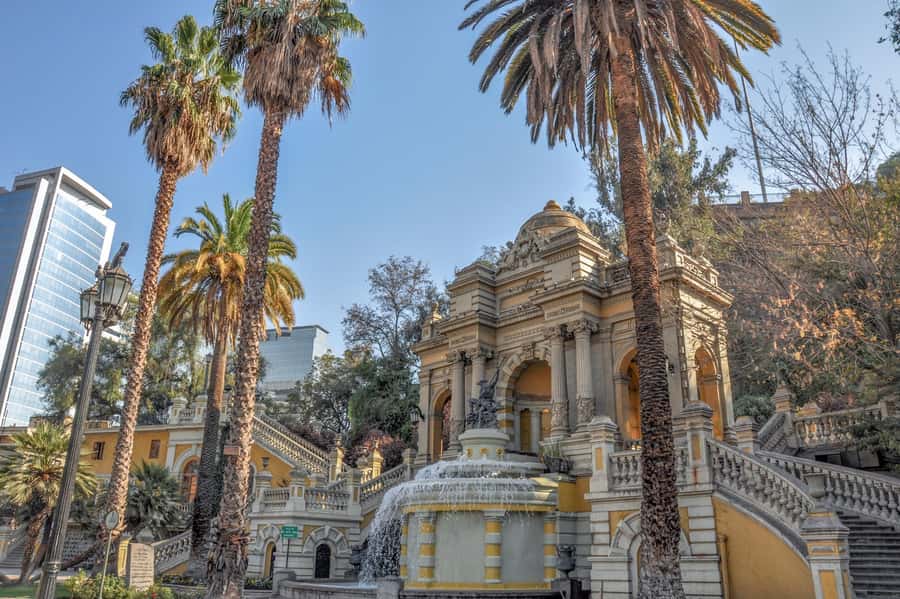
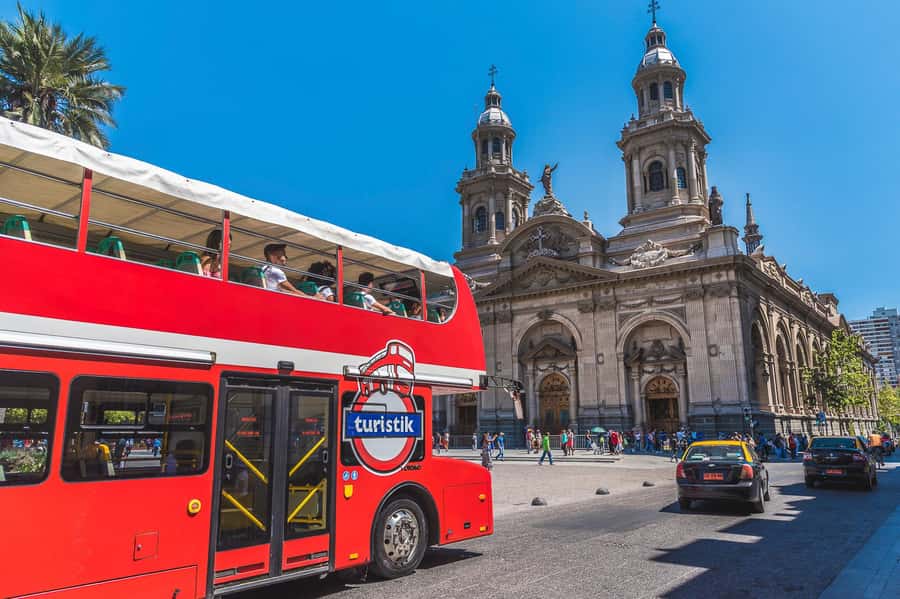
Plaza de Armas is the historic heart of Santiago. The stop puts you near the Metropolitan Cathedral and other important colonial-era landmarks, making it the best place to begin a central walking section.
I would get off here even if you are using the bus mainly for transport. The square gives you a clear sense of the city’s older core, while the nearby streets let you see how the historic center fits into present-day Santiago. The audio guide can add context while you walk, but you should also leave room to look around rather than keep your attention fixed on your headphones.
This stop is popular with first-time visitors because it concentrates several major sights within a manageable area. It is also a place where you should keep track of your belongings. The operator specifically warns that it is not responsible for objects left inside the buses.
La Moneda puts civic Santiago in view
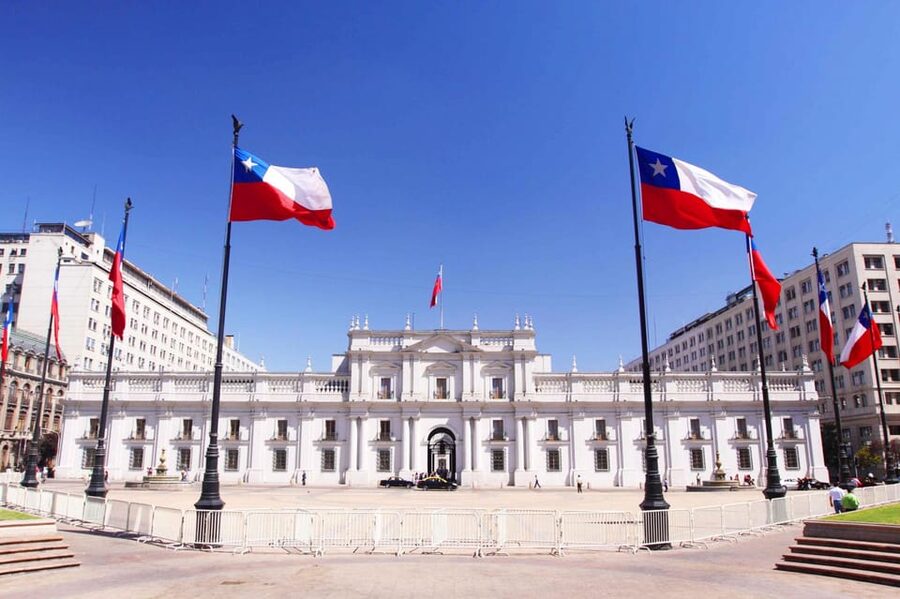
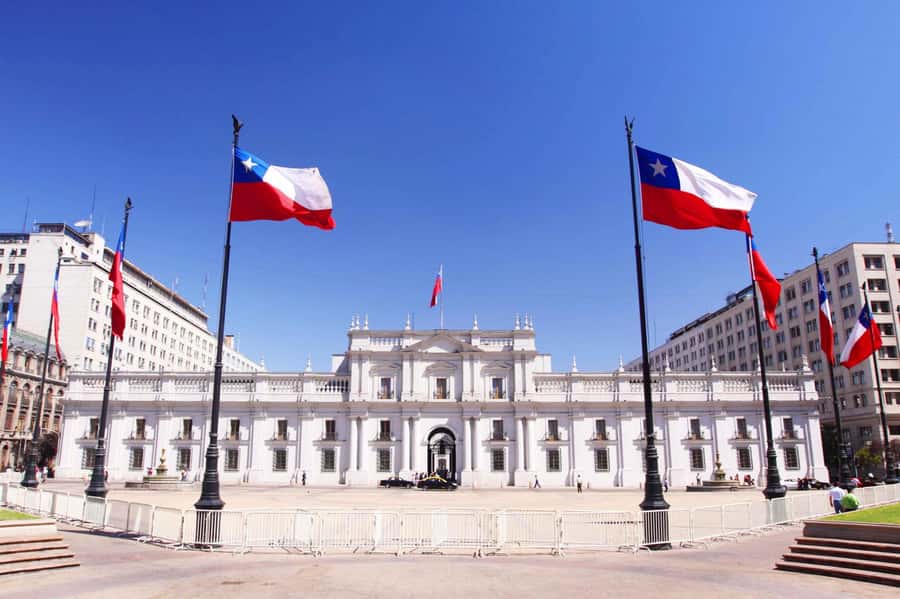
The La Moneda stop is in front of the palace at Teatinos 254. La Moneda is Chile’s government headquarters, and the nearby Plaza de la Constitución adds an important civic setting to the visit.
This is a strong stop for understanding modern Chilean public life as well as seeing a major building. You do not need to spend a long time here to get the main impression. Combine it with Plaza de Armas and Santa Lucía Hill, and you have a compact central-city plan.
The value of the bus becomes clear on this section. Instead of arranging separate rides between the eastern neighborhoods and the government district, you can use one route and decide how long to remain at each place.
Santa Lucía Hill pairs views with the Lastarria area
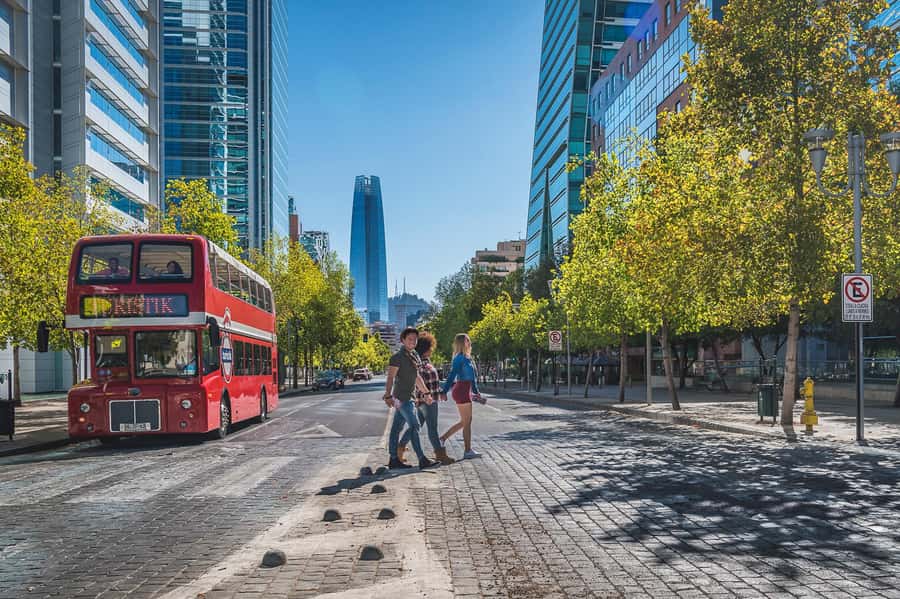
Santa Lucía Hill rises beside Alameda and offers terraces, city views, and neoclassical details. It is a smaller hill experience than Cerro San Cristóbal, but it is easier to fit into a central walking day.
The stop is also near Lastarria, an area known for restaurants and cultural attractions. That gives you a choice: climb the hill for viewpoints, take a meal break, or use the stop as a link between the historic center and nearby city streets.
I like Santa Lucía as a practical middle ground. Cerro San Cristóbal requires more time and transport, while Santa Lucía can fit into a shorter stop. If your day is running late, this may be the hill to choose instead of trying to fit both.
Plaza de la Aviación adds a riverside pause

Plaza de la Aviación sits along the Mapocho River in Providencia. It is known for its fountain and green areas, giving you another chance to step away from busy streets.
This stop is less about checking off a famous monument and more about seeing Santiago as a lived-in city. It works well if you want a walk, a photograph, or a short rest between the central district and the modern eastern stops.
Because the route has several major attractions, you may be tempted to skip this one. I would keep it in mind if you have already seen the historic center and want a quieter pause. You might find it especially useful on a hot day when a short outdoor break feels better than another indoor stop.
Costanera Center shows Santiago’s modern side
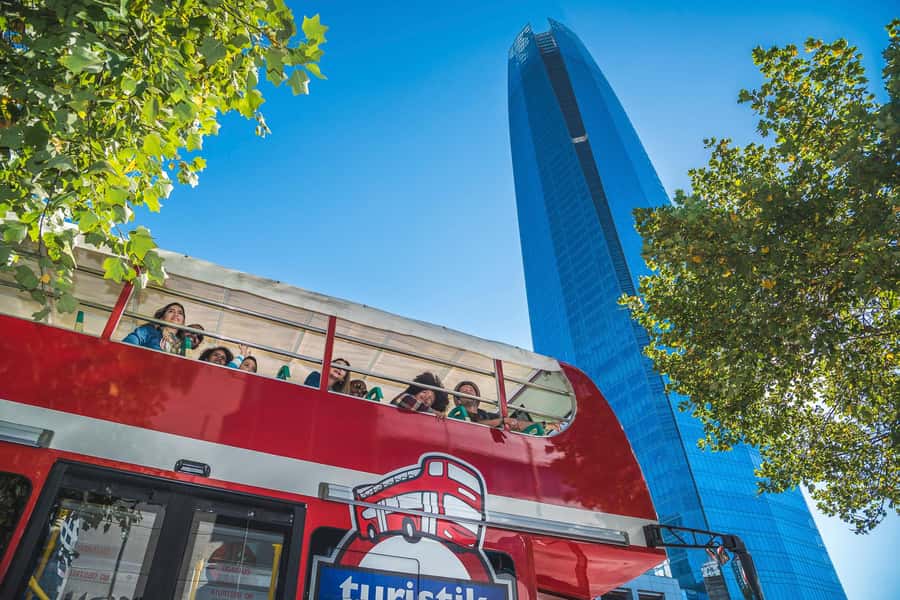
Costanera Center is both a major shopping center and a landmark beside Sky Costanera, the observatory in South America’s tallest building. The stop at Vitacura 2653 gives you an easy way to see the city’s newer commercial district.
You can use the stop for shopping, food, or a look at the tower. Entry to other attractions is not included, so treat the bus ticket as transport to the area rather than admission to Sky Costanera. That distinction matters when you calculate your day’s budget.
This is another place where I would set a time limit. The mall can absorb your schedule, especially if you combine it with Parque Arauco. If you are choosing between the two shopping stops, Costanera Center has the stronger landmark value, while Parque Arauco offers the open-air dining area and a different shopping atmosphere.
Las Condes Interactive Museum suits a modern city break
The Las Condes Interactive Museum is in the El Golf area at Isidora Goyenechea. The surrounding district has restaurants and a modern urban feel, while the museum offers interactive experiences.
This stop is a good option for families or for anyone who wants something different from churches, plazas, and viewpoints. It also gives you a look at a polished business and dining district. Museum entry is not included, so check the admission cost before making it a main part of your plan.
The stop can work well near the end of the day because it keeps you in the eastern part of Santiago, close to other modern attractions. Still, remember that the bus does not run late into the evening. A museum visit should fit inside the bus timetable, not the other way around.
How to make the $50 ticket worthwhile
At $50 per person, this is not the cheapest way to see Santiago if you plan to visit only one neighborhood. It becomes more reasonable when you use the bus for the long connections between the eastern districts, Cerro San Cristóbal, Bellavista, and the historic center.
The ticket includes unlimited hop-on hop-off use for one day and an audio guide. You are paying for convenience, a planned sightseeing route, and the ability to change your schedule without buying separate bus rides. The value drops if you stay on the bus all day and get off only once.
A strong plan could look like this:
- Start at Parque Arauco or another convenient stop in the eastern area.
- Ride to Bicentenario Park for a short walk.
- Continue to the cable car or funicular for Cerro San Cristóbal.
- Stop in Bellavista for food if your timing allows.
- Visit Plaza de Armas, La Moneda, and Santa Lucía Hill.
- Finish with Costanera Center or Las Condes if you still have time.
You do not need to follow that exact order. The important point is to group nearby stops and protect enough time for the hill. Use the app to locate stops, check real-time bus positions, and see things to do around the route.
Audio guide, languages, and staff help
The audio guide is available in English, Spanish, Portuguese, French, German, and Chinese. That is useful if you want information at your own pace or if members of your group prefer different languages.
There is also live guide support in English, Spanish, and Portuguese. Nathaly and Carlos are specifically noted for explaining how the bus system works and clarifying schedules. That kind of help matters on a route with 10 stops and a fixed operating day.
The audio guide cannot replace time on foot. Use it for orientation and background, then put it aside when you want to focus on a plaza, viewpoint, or neighborhood. The best part of a city bus tour is the freedom to decide when the commentary ends and exploration begins.
Who should book this Santiago bus day
I would recommend this experience to first-time visitors who want to cover a wide area without planning several separate rides. It also suits people with limited time, families who need flexible breaks, and visitors who want a simple introduction before returning to favorite neighborhoods on their own.
It is less suitable if you want a slow, walk-heavy day with long visits inside museums or historic buildings. The route is broad, and the schedule is fixed. You need to accept some time on the bus in exchange for seeing more of Santiago.
Bring your passport or ID card, water, sunglasses, a camera, comfortable shoes, and clothing suited to the weather. The operator advises that you take responsibility for risks connected with outside services provided by third parties, such as hill transport. Free cancellation is available up to 24 hours before the activity, and you can reserve now and pay later if that flexibility helps your plans.
Should you book it?
Book this tour if you want one practical route through old Santiago, modern Las Condes, Bellavista, and Cerro San Cristóbal. The $50 price makes the most sense when you get off several times and use the bus to cover long distances.
Skip it if you plan to stay in one central neighborhood or prefer to set your own walking route from start to finish. For most first visits, though, the early start, 10-stop route, multilingual audio guide, and hill connections give you a useful first look at a large city.
FAQ
How long is the Santiago hop-on hop-off ticket valid?
The ticket is valid for one day, with unlimited hop-on hop-off use on the day booked.
What time do the buses operate?
The buses operate Monday through Friday from 9:30 AM to 6:00 PM. Board before 4:00 PM if you want to complete the full circuit.
How many stops are included?
The route includes 10 stops, covering shopping centers, parks, Cerro San Cristóbal connections, the historic center, La Moneda, Santa Lucía Hill, and modern Las Condes.
Is an audio guide included?
Yes. The audio guide is available in English, Spanish, Portuguese, French, German, and Chinese.
Is the cable car or funicular ticket included?
The Santiago Cable Car stop includes a ticket to San Cristóbal Hill with panoramic views. Other tickets and entry fees are not included, so confirm coverage for any additional cable car, funicular, museum, or observatory service before using it.
Where can I board the bus?
You can board at any of the 10 stops, including Parque Arauco, Bicentenario Park, Santiago Cable Car, Santiago Funicular, Plaza de Armas, La Moneda, Santa Lucía Hill, Plaza de la Aviación, Costanera Center, and the Las Condes Interactive Museum.
What should I bring?
Bring your passport or ID card, comfortable shoes, sunglasses, a camera, water, comfortable clothing, and clothing suited to the weather.
Just added around Santiago
- Santiago: City Highlights Walking Tour★ 4.2 · 51 reviews
- Santiago: The Essentials City Tour & Optional Concha y Toro★ 3.4 · 40 reviews
- Horseback Private Wine Tour and Country Grill from Santiago★ 5.0 · 52 reviews
- Traditional City Tour★ 5.0 · 58 reviews
- Private Horseback Adventure in the Andes, with Picnic & Wine★ 5.0 · 61 reviews
- Santiago De Chile: Private Custom Walking tour with A Guide★ 4.4 · 88 reviews
- SIB Viña Del Mar and Valparaiso Day Trip from Santiago★ 4.0 · 89 reviews
- 2-Hour Walking Tour of Yungay The Coolest Neighborhood in Chile★ 5.0 · 85 reviews
Tickets, compared.

Tour Parque Farellones Ticket+Transportation, optional Snowwear
Read our review →
Museo Chileno de Arte Precolombino Admission Ticket
Read our review →
Skiing in Farellones Park: Ski Tickets, Lessons, Transportation and More
Read our review →Browse the lists this tour appears in