
Reviewed · ATACAMA STARGAZING TOURS
Astronomical Tour with Guide and Pick Up San Pedro de Atacama
San Pedro de Atacama is famous for its dry, dark sky, and this tour gives you a close look at what makes it special. Guides such as Patricio explain the southern constellations with a laser pointer, then aim manual and computerized telescopes at planets, clusters, galaxies, and stars. The best part is the mix of science and simple wonder: you can learn what you are seeing, then look through the eyepiece and see it for yourself.
I like the small advertised group size of up to 16 and the included pickup, blankets, chairs, drinks, snacks, and night-sky photograph. I also like that the guides can make a bright Moon useful rather than treating it as a total loss. The main caution is timing: if the group is full, telescope turns and photo sessions can take up much of the two-and-a-half-hour outing.
Key points at a glance
- Southern-sky guide: Use a laser pointer to identify constellations that are unfamiliar to many northern-hemisphere visitors.
- Two telescope styles: Computerized and manual telescopes let you see planets, clusters, stars, and other objects from different viewing setups.
- Moon phase matters: A dark or nearly dark Moon gives you the best chance of seeing the Milky Way clearly.
- Pickup begins around 9:30 p.m.: Hotel transfers are included, but collection and return can add time.
- Photography is included: A professional photo is offered, with the strongest night-sky results expected without moonlight.
- Weather controls the evening: Cloud, wind, and humidity can lead to cancellation, rescheduling, or a refund.
What a night under the Atacama sky is really like
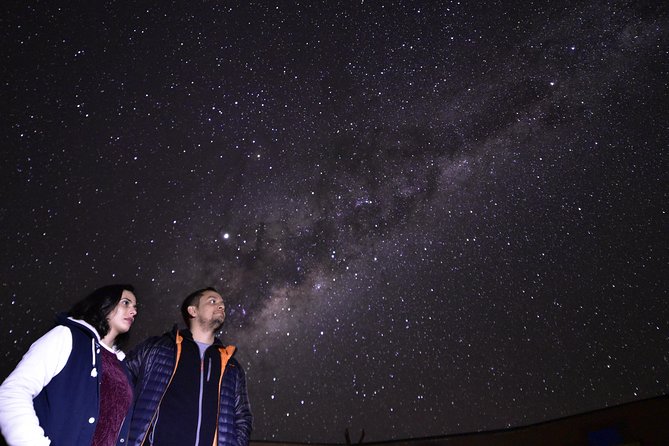
This is not a visit to a giant research observatory with rows of enormous instruments. It is a guided outdoor astronomy session near San Pedro, built around a few telescopes, clear explanations, and time spent looking up.
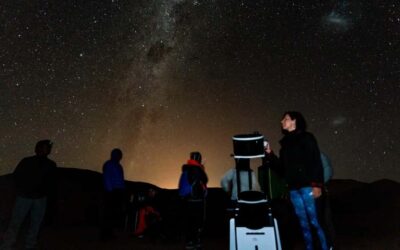
That distinction matters. You will not race through a long list of scientific instruments or see every object in a catalog. Instead, you will gather around the telescopes, listen to the guide explain the target, and take turns at the eyepiece. The reward is personal. You are looking at Saturn, the Moon, a star cluster, or another distant object with your own eye, not just seeing a prepared image on a screen.
The guides are the heart of the evening. Patricio is repeatedly praised for explaining astronomy in clear, accessible language, and Nathan has also led sessions in English. Guide assignments can vary, so the exact style and language balance may change. Some sessions are fully in English, while others use Spanish with English translation.
More Stargazing Tours in San Pedro de Atacama
- San Pedro de Atacama: Etno-Stargazing Tour with Transfer
★ 4.8 · 629 reviews - San Pedro de Atacama: Stargazing Experience
★ 4.7 · 489 reviews - “Astronomical Adventure in San Pedro de Atacama”
★ 4.5 · 96 reviews
Pickup at 9:30 p.m. and the ride beyond town
The meeting time is around 9:30 p.m., with pickup from your accommodation included in the advertised price. The tour site is outside the center of San Pedro, close enough for a short transfer in good conditions, but hotel collection can stretch the schedule.
Past departures have included roughly 10 to 20 minutes of pickup time, while crowded periods have taken much longer. One especially slow outing included about 45 minutes for collection and another 45 minutes for the return. That is not likely to be the normal target, but it is a useful warning if you have an early departure or a sunrise outing planned for the next morning.
Pickup is not offered from the ayllus of Cucuter, Tulor, Coyo, Solor, or Quitor. If you are staying in one of those areas, ask about the meeting arrangement before booking. The listed starting point is San Pedro de Atacama, and the activity is not in Santiago, despite occasional confusion from search pages that group Chilean activities together.
Once you reach the observation site, chairs and blankets help with the cold. Atacama nights can feel sharp, especially when you are standing still for long periods. Bring warm layers anyway. The supplied blankets are useful, but they should not replace a jacket, hat, and covered shoes.
Telescopes, laser pointers, and the order of the evening
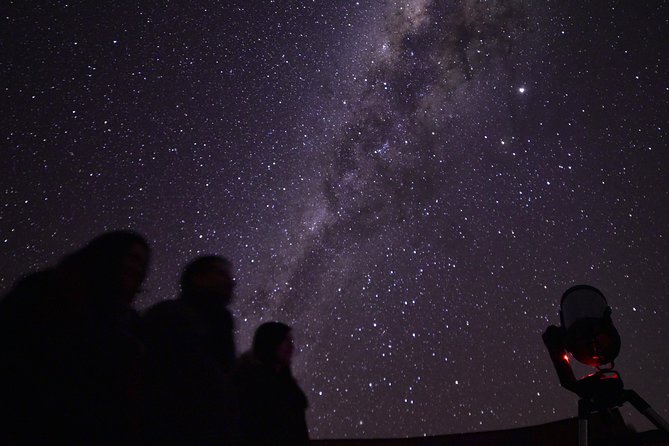
The guides use both computerized and manual telescopes. A computerized instrument can locate a target quickly, while a manual telescope gives the session a more hands-on feel. The specific objects change with the season, time of night, and sky conditions, so you may see planets, star clusters, galaxies, nebulae, or individual stars.
The basic rhythm is easy to follow:
- The guide points out a constellation or target with an astronomical laser.
- You receive a short explanation of what you are seeing and why it matters.
- The guide aims the telescope at the object.
- People take turns looking through the eyepiece.
- The group moves to another target as the sky and schedule allow.
This format works best when everyone listens and takes a turn without lingering too long. On a lightly attended night, you may have time to ask questions and return to the telescope. On a busy night, you may wait several minutes between views. One past participant felt they had only a few minutes of actual eyepiece time, while another group of 12 had three telescopes and felt unhurried.
The advertised maximum is 16 people, but a past holiday-period departure was described as having more than 20. Group size can affect the whole evening, so I would ask the operator about the expected number if telescope time is your main reason for booking.
Why the Moon can change the whole experience
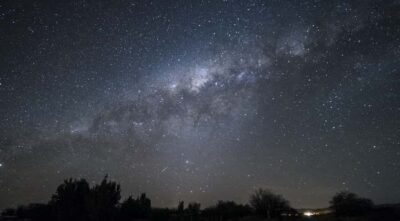
The Moon is the key planning detail. A dark Moon or a very thin crescent gives you the best chance of seeing the Milky Way as a broad band of stars. It also improves the odds of a stronger night-sky portrait.
A bright Moon washes out faint stars and galaxies. That does not make the evening worthless, but it shifts the focus. The Moon itself can be a wonderful telescope target, and guides can still show planets, bright stars, and clusters. Several sessions with a full or bright Moon produced good lunar views and plenty of explanation, but some people found the overall sky less dramatic than expected.
Check the lunar calendar before choosing your date. If your main goal is the Milky Way, aim for a night near the new Moon. If you are traveling during a bright lunar phase, adjust your expectations and treat the outing as an astronomy lesson with telescope views rather than a guaranteed Milky Way spectacle.
The operator has also defended running lunar-period tours because there are still useful targets in the sky. That is fair. Still, the listing could make the Moon issue clearer, and you should take responsibility for checking the phase before paying.
More nights under the Atacama sky from San Pedro de Atacama
- San Pedro de Atacama: Guided Atacama Desert Stargazing Tour
★ 3.9 · 93 reviews
English, Spanish, and the guide’s teaching style
Language can make or break a science tour. Some sessions are conducted fully in English. Others have a Spanish-speaking lead guide and a second guide translating into English.
That arrangement can work well when the group is small and the guides take turns. It can become confusing when the lead guide is speaking to people at one telescope while the translator is helping another group. A few English-speaking visitors found the translated sections rushed, especially when Spanish and English explanations overlapped.
If you need detailed English instruction, send a message before booking and ask which guide is scheduled. Nathan has led a fully English-friendly session, and Patricio is described as able to explain complex ideas simply. The language situation is not fixed enough to assume every departure will feel the same.
Even with translation, the science is presented for a general audience. You do not need prior astronomy knowledge. The guide explains constellations, star life, galaxies, distances, and the scale of the universe in plain terms, then answers questions around the telescopes.
The professional photograph and the waiting time
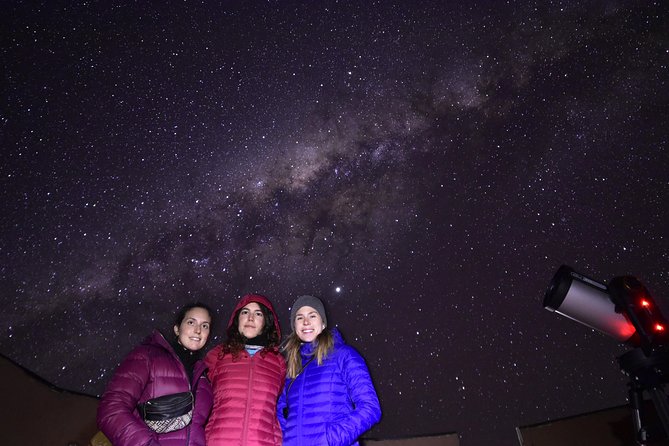
The included astrophotograph is a real selling point. A professional camera setup is used to take a photo of you beneath the sky, and the image is provided as a souvenir. When there is little or no Moon, the result can show the stars more clearly. Images taken under a bright Moon may look different, and one past image was described as blurry.
Photography also takes time. After the telescope portion, people often gather around the camera for individual and group pictures. That can stretch the final part of the evening and reduce time for more observing. If the photograph matters to you, the wait may feel worthwhile. If you booked mainly for telescope access, it can feel like the schedule is tilted toward pictures.
You can also bring a phone or camera, but do not expect an ordinary handheld phone photo to capture the same view. The included image is useful because the guide controls the camera and night-sky exposure for you. If you bring your own camera, the guide may offer some help, though that should not be treated as a private photography lesson.
Drinks, snacks, and the cold at the end of the night
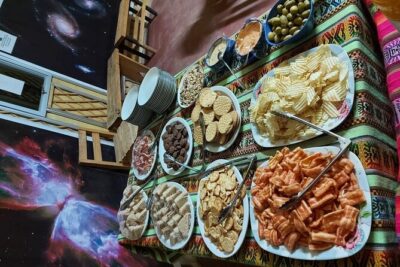
Coffee, tea, soft drinks, alcoholic drinks, snacks, chairs, blankets, and a restroom are included. Refreshments are generally served toward the end, after the telescope viewing and photographs. That timing makes sense, since cups and glasses are easier to manage once the main observing is finished.
Warm drinks are especially welcome. Wine and other alcohol may be available, along with coffee and tea, but the selection and timing can vary. One couple received champagne for a honeymoon, though that appears to have been a special touch rather than a standard promise.
Do not book this as a dinner. The snacks are a small comfort, not a full meal. Eat beforehand, especially if you are prone to feeling cold or tired late at night.
Weather, cloud cover, and cancellation decisions
Astronomy depends on the sky, and this tour requires suitable weather. Cloud, wind, and humidity can block the targets or make telescope viewing poor. The operator may decide to cancel based on weather reports, satellite views, and conditions observed that evening.
The policy allows a different date or a full refund if poor weather causes cancellation. You can also cancel for a full refund if you do so at least 24 hours before the start time. Cancellations inside 24 hours are not normally refundable unless the operator cancels for weather.
Communication is important here. One cancelled departure involved delayed notice, while another booking was cancelled on two consecutive nights and eventually ran successfully on the third. If the sky looks uncertain, contact the operator through the fastest available channel and confirm the status before waiting outside your hotel.
The wet season is another point to consider. December through March can bring unstable high-altitude weather, including cloudy conditions. That does not mean every summer outing will fail, but you should leave room in your schedule for a change of date.
Is $38 a fair price?
At $38 per person, the tour is reasonably priced if you value the guide, transport, telescope access, refreshments, and included photograph. A private astronomy session would cost more, while simply walking outside town with a phone costs less but gives you no expert explanation and no guaranteed telescope view.
The value depends heavily on group size and sky conditions. On a clear, dark night with a good English-speaking guide, the combination of telescope time and astronomy teaching makes the price attractive. Under a bright Moon, or with a large group and long waits, the same price feels less generous.
You are paying for a planned setup rather than just access to darkness. The operator brings equipment, locates targets, explains the southern sky, supplies chairs and blankets, and handles photography. That is useful if you do not have a rental car, camera tripod, or astronomy experience.
Who will enjoy this most
I would recommend this outing to families with curious children, couples, amateur astronomy fans, and anyone who wants a guided introduction to the Atacama sky. Children often respond strongly to the Moon and planets because the telescope turns distant objects into something they can see directly.
It also suits you if you want a simple evening with transport included. You do not need to know the constellations or carry special equipment. The guide does the searching and gives the sky a story.
I would be more cautious if you want long, uninterrupted telescope sessions, highly detailed astrophotography, or a private guide. The group format means waiting, and the included photo is a souvenir rather than a professional photography package. I would also avoid booking it on your final night if a weather cancellation would leave no room for a second attempt.
Should you book the San Pedro astronomy tour?
Book it if you choose a dark-Moon date, accept the group format, and want the sky explained by an expert rather than simply viewed from your hotel yard. The strongest version of the evening combines clear weather, a small group, an English-friendly guide, and enough time for each person to use the telescopes.
Before paying, check three things: the Moon phase, the expected language of the guide, and the pickup area. If you are happy with those details, $38 buys a memorable and practical introduction to one of the world’s great stargazing regions.
FAQ
What time does the astronomy tour start?
The listed start time is 9:30 p.m. Hotel pickup is included, so your actual collection time may vary depending on where you are staying and how many passengers are being collected.
How long does the tour last?
The advertised duration is approximately two hours and 30 minutes. Pickup and return transfers are part of the evening, and busy departures may take longer.
Is hotel pickup included?
Yes. Pickup from accommodation in San Pedro de Atacama is included. Pickup is not offered from the ayllus of Cucuter, Tulor, Coyo, Solor, or Quitor.
Can I see the Milky Way during the tour?
You have the best chance near the new Moon, when there is little moonlight. A bright or full Moon can reduce visibility of the Milky Way, although the Moon, planets, clusters, and bright stars may still be visible.
Is a photograph included?
Yes. Astrophotography is included when conditions allow, with the strongest night-sky results expected without moonlight. The tour also provides chairs, blankets, drinks, snacks, and restroom access.
What happens if the weather is poor?
The tour requires suitable weather. If the operator cancels because of poor conditions, you will be offered another date or a full refund. You can cancel your own booking for a full refund up to 24 hours before the start time.
Just added around San Pedro de Atacama
- 4 TOUR IN ATACAMA IN 3 DAYS★ 4.6 · 12 reviews
- Atacama Desert: Horseback Adventure with Scenic Views★ 4.7 · 42 reviews
- Sandboarding Tour in San Pedro de Atacama, Chile★ 4.9 · 77 reviews
- Atacama: San Pedro de Atacama Sunrise Hot Air Balloon Ride★ 4.7 · 76 reviews
- Full Atacama – SORBAC (private groups)★ 5.0 · 76 reviews
- Full Day Tour Piedras Rojas Altiplanic Lagoons Chaxa Lagoon★ 5.0 · 75 reviews
- Altiplanic Lagoons & Piedras Rojas Tour from San Pedro de Atacama★ 4.5 · 87 reviews
- Guided tour to the Tatio Geyser breakfast at Geyser Blanco★ 4.5 · 81 reviews
Atacama Stargazing Tours, compared.
“Astronomical Adventure in San Pedro de Atacama”
Read our review →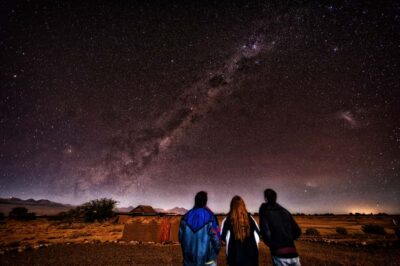
Browse the lists this tour appears in