
Reviewed · ATACAMA STARGAZING TOURS
Easter Island: Rapa Nui Stargazing Tour
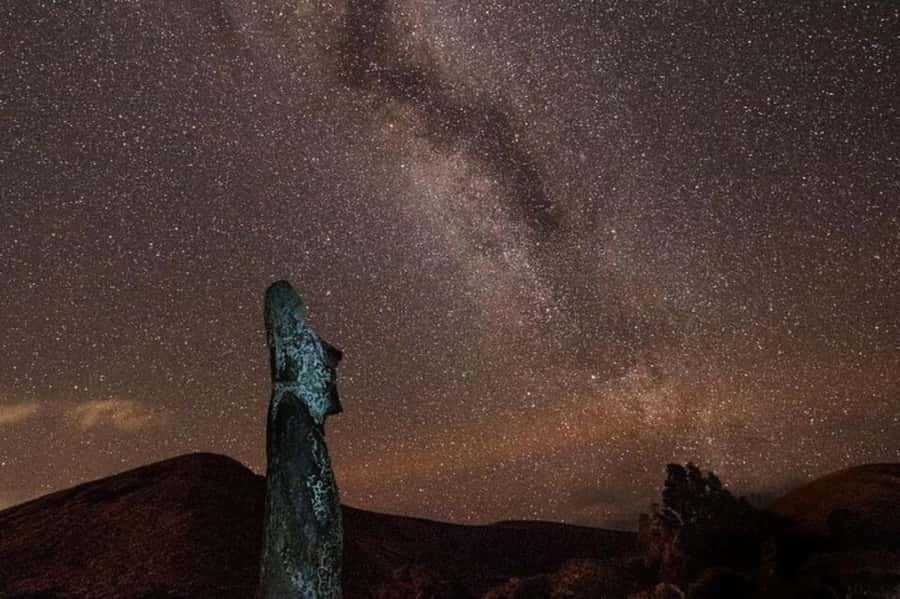
On a remote island with very little artificial light, the night sky becomes part of Rapa Nui’s story. This three-hour outing connects Polynesian navigation with practical astronomy, then takes you to a traditional observation site for telescope viewing and a close look at stars seen from the Southern Hemisphere.
I like the direct link between the sky and the island’s settlement history, and I like the chance to see Ahu Nau Nau at night, when the moai take on a very different mood. The main drawback is weather: clouds can limit the program, and a quiet night may leave you with less to do between telescope views than you expect for the $140 price.
Key points to know before booking
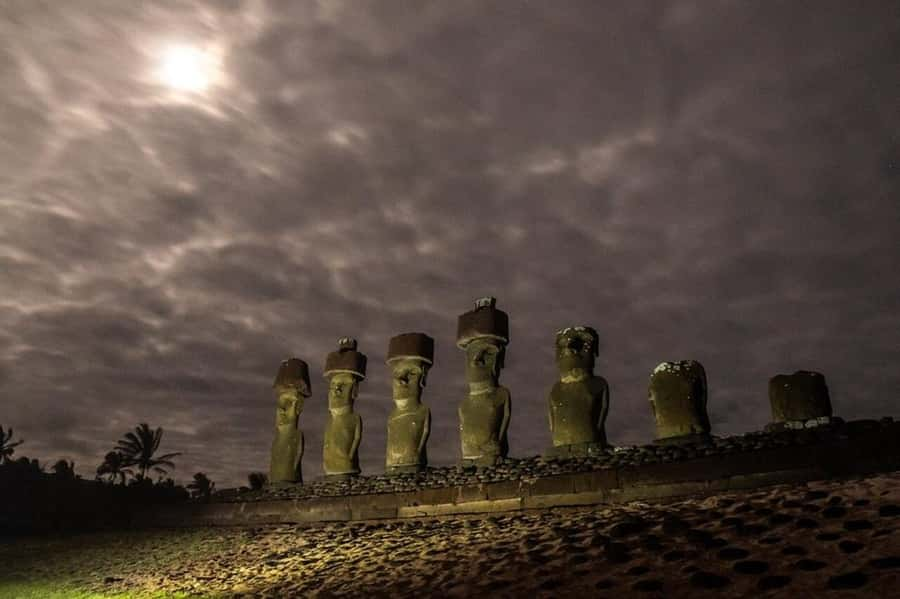
- Ahu Nau Nau after dark: You get nighttime access to one of Rapa Nui’s important archaeological sites, with a digital photo included.
- Polynesian wayfinding: The guide explains how ocean voyagers used stars, constellations, and other sky clues to travel across the Pacific.
- Small group setting: The maximum group size is 12, which keeps the telescope portion manageable.
- Seasonal meeting times: Meet at Katipare Library at 21:00 in summer or 19:00 in winter.
- Southern Hemisphere stars: The telescope and open sky give you a chance to see stars and constellations unfamiliar to many visitors from the Northern Hemisphere.
- Weather and moon matter: The outing is not offered from four days before until two days after the full moon, and poor weather can lead to a new date or refund.
Why Rapa Nui is a fine place to study the stars
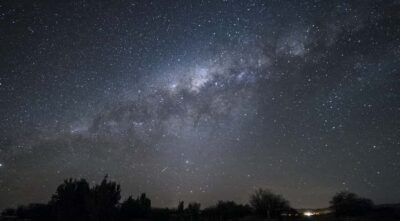
Easter Island is far from major population centers, so darkness is not just a backdrop here. It is part of the experience. Away from Hanga Roa, the sky can feel much larger than it does at home, and the lack of city glare helps you pick out stars that are easily lost elsewhere.
The tour uses that setting to explain more than basic astronomy. You learn how Polynesian voyagers watched the sky to guide long ocean crossings and how the night sky relates to Rapa Nui’s settlement. This gives the telescope work a useful purpose. You are not simply looking at bright objects through a lens. You are hearing how the same sky helped people find their way across thousands of miles of open water.
I would choose this outing for its cultural link as much as for the astronomy. A standard stargazing session can feel detached from the place where it happens. Here, the sky is tied to the island’s people, monuments, and position in the Pacific.
More nights under the Atacama sky from Easter Island
- Rapa Nui Stargazing
★ 4.5 · 62 reviews - San Pedro de Atacama: Etno-Stargazing Tour with Transfer
★ 4.8 · 629 reviews - San Pedro de Atacama: Stargazing Experience
★ 4.7 · 489 reviews
Meeting at Katipare Library and heading into the night
You meet in front of Centro Lector Katipare, also called Katipare Library, in Hanga Roa. The tour does not include hotel pickup, so you need to make your own way to the library at the correct seasonal time.
The listed meeting time is 21:00 in summer and 19:00 in winter. Check the exact starting time when you book, since the darkness needed for the program changes through the year. It is wise to arrive early rather than walk up at the last minute. You will be joining a night outing, and the group leaves from the meeting point rather than collecting people at different hotels.
Transport after the meeting is provided by a driver-guide, and hotel drop-off is included at the end. That makes the return easier, especially after spending time outside in the dark. The short transfer also lets the guide begin the evening commentary before you reach the observation area.
The group limit is 12 people. That is small enough for a more personal explanation and helps when several people need time at the telescope. It is not a private tour, however, so the pace and telescope time are shared.
Learning how Polynesian voyagers read the sky
The educational part covers basic astronomy, Polynesian voyaging, settlement, navigation methods, and the archeo-astronomy of Rapa Nui. The most useful part for you is the connection between individual stars and practical travel.
Polynesian navigators did not have modern charts or electronic guidance. They used patterns in the sky, the movement of celestial bodies, ocean conditions, and other natural signs. The tour focuses on how the night sky helped guide journeys, giving you a clearer sense of the skill behind Pacific exploration.
The guide provides live commentary in English or Spanish. A guide named Marc received especially warm praise for explaining the constellations and navigation, and for adding a traditional song to the evening. Another account refers to the guide as Mark, so the name may be spelled differently in booking material, but Marc is the name most clearly associated with the memorable guide experience provided here.
You should expect conversation and explanation rather than a formal lecture. The quality of the night depends partly on the guide’s delivery, and Marc has been described as adding music and personality, including a song he wrote and a traditional song near the end. That sort of personal touch is unusual on a short astronomy outing, though it may not be part of every departure.
Ahu Nau Nau after dark
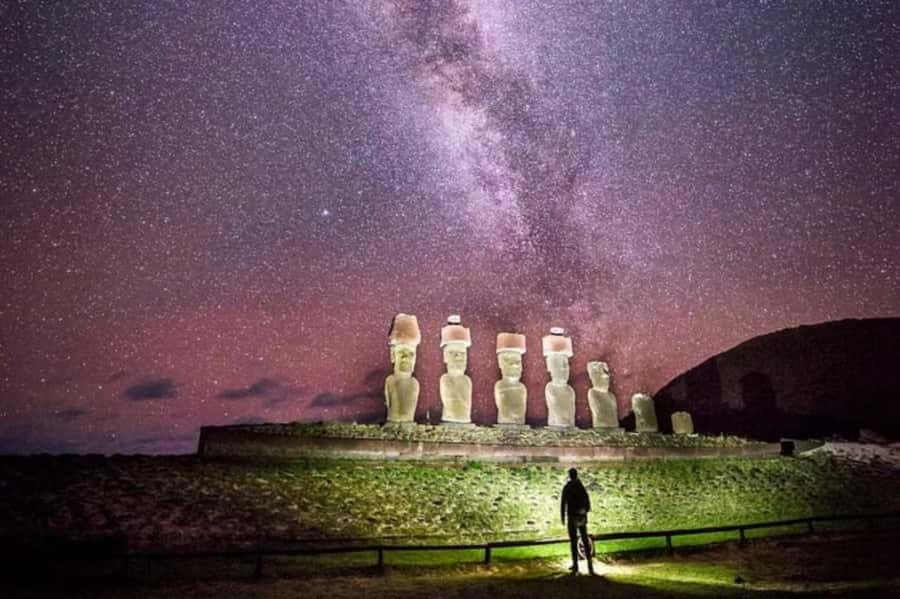
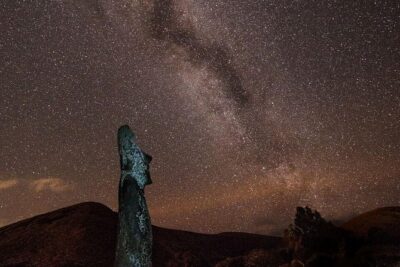
One of the strongest reasons to choose this tour is nighttime access to Ahu Nau Nau. The site is near Anakena and is known for its restored moai, so seeing it after dark gives you a setting very different from a daytime archaeological visit.
The attraction here is not a long guided walk or a full site tour. Instead, the moai provide a powerful link between the island’s monuments and the sky above them. The combination of stone figures, darkness, and visible stars creates the kind of setting that photographs well and feels specific to Rapa Nui.
A digital photo is included, and you have the option to take your own pictures. One account describes private-feeling access to the beach at night and photographs beside the moai. You should keep expectations sensible: this is still a shared tour, not a professional photography session, and the exact photo setup may depend on conditions and the guide.
If you want to use a phone or your own camera, bring it. Tripod photography is allowed according to the tour information and direct experience from the outing. A tripod can make a big difference in low light, but you need to handle it carefully on uneven ground and avoid slowing the group.
More moai and Rapa Nui trips around Easter Island
- From Hanga Roa: Rapa Nui Culture Sightseeing Tour
★ 4.6 · 307 reviews - From Hanga Roa: Easter Island Highlights 2-Day Tour
★ 4.3 · 205 reviews - From Hanga Roa: Easter Island Sightseeing Full Day Tour
★ 4.5 · 189 reviews - From Hanga Roa: Journey from Orongo to Ana Te Pahu
★ 4.3 · 75 reviews
What happens at the telescope
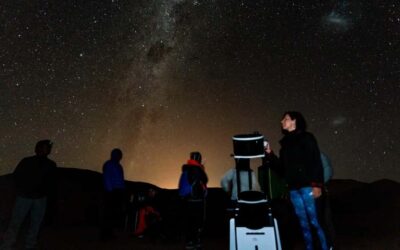
At the remote observation site, the guide sets up a telescope and points out stars and planets visible from the Southern Hemisphere. You spend a good portion of the evening using the telescope, though the exact number of objects you see depends on clouds, visibility, and the moon.
This is where the timing rule matters. The tour is not available from four days before to two days after the full moon. A bright moon can wash out many stars, so the operator schedules the outing around darker conditions. That restriction may make planning slightly harder, but it protects the main purpose of the experience.
You may see unfamiliar Southern Hemisphere constellations, which is a real benefit if you normally live north of the equator. The guide also explains what you are looking at rather than leaving you to peer through the telescope without context.
There is one fair warning. On a night with limited celestial activity or less favorable viewing conditions, you may spend much of the program around the telescope without many additional activities. One person found the tour good but not worth the cost because there was not much happening during a quieter night. That criticism is useful: book this for the setting, teaching, and chance of clear skies, not for a nonstop schedule.
Coffee, local cake, and the human touch
The refreshment break includes hot chocolate and local cake. This is a small detail, but it matters when you are outside late at night. The warm drink gives the group a natural pause and makes the evening feel less like a technical demonstration.
The singing is another distinctive element. Marc has been praised for performing a song he wrote and a traditional song. I would treat this as a possible highlight rather than a guaranteed part of every booking, since the formal inclusions promise live commentary, not a scheduled concert.
The strongest departures seem to balance facts with a sense of place. You learn about the stars, then connect them with Rapa Nui navigation, moai, and local tradition. That is more memorable than a list of constellations alone.
The $140 question: is the value there?
At $140 per person, this is not a cheap add-on. You are paying for a three-hour guided experience, transport during the outing, hotel drop-off, telescope use, nighttime access to Ahu Nau Nau, refreshments, and a digital photo. The small group cap also helps support the price.
I think the cost makes more sense if you value the cultural explanation and the unusual access to the archaeological site. The tour combines astronomy, Polynesian voyaging, photography, and a nighttime visit in one evening. Booking separate activities could easily require more planning, though the information provided does not give comparison prices.
The value is weaker if your only goal is to look through a telescope. A poor-weather night can cancel the outing, and even a clear night may offer a quieter program than you expect. One critical account found the cost too high for the amount of activity, while the most enthusiastic feedback praised the telescope, explanations, photographs, and beach setting.
Your expectations should match the product. This is not an action-packed excursion. It is a calm, night-based cultural experience with periods of listening, waiting, and looking upward.
Weather, comfort, and accessibility
Good weather is required. If conditions are poor, you are offered another date or a full refund. The same applies if the minimum number of people is not reached, with the option of a different experience or refund.
Plan for outdoor conditions and darkness. The information does not specify the exact ground conditions, but one older participant found some areas uneven and suggested better lighting for safety. That is a practical warning, especially if you have balance problems. The tour is not suitable for wheelchair users.
You should also think about the late schedule. The summer meeting time is 21:00, and the winter meeting time is 19:00, with the activity lasting about three hours. The hotel drop-off helps at the end, but you still need to reach Katipare Library at the start.
The full-moon blackout is not a minor booking note. If your dates fall within four days before or two days after the full moon, you cannot take this tour. Check the lunar calendar before arranging your evening plans.
Who will enjoy this most?
I would recommend this tour to you if you enjoy:
- Polynesian history and navigation
- Archaeological sites in unusual settings
- Basic astronomy explained for a general audience
- Night photography and moai photographs
- Small-group activities with a personal guide
- Quiet evenings rather than fast-moving excursions
It suits couples, solo visitors, and families with older children who can manage a late night and uneven ground. The English and Spanish guide options make it practical for many visitors, but you should select the language that lets you follow astronomy and historical explanations comfortably.
I would hesitate if you need guaranteed clear skies, constant activity, wheelchair access, or a strictly scheduled astronomy show. The telescope is central, but nature controls the results.
Booking tips for a smoother evening
Check the season, moon phase, language, and meeting time before paying. Remember that you meet at Katipare Library and hotel pickup is not included.
Bring a phone or camera if you want your own photographs. A tripod is permitted, and low-light pictures beside the moai can be one of the evening’s best souvenirs. Keep your equipment simple so you can move safely and give others room.
You also need your National Park ticket. It is not included in the $140 price, so arrange that separately before the outing.
Free cancellation is available up to 24 hours in advance for a full refund. Confirmation is sent within 48 hours after purchase, and the operator can provide the tour in English or Spanish.
Should you book the Rapa Nui Stargazing Tour?
Book it if you want a thoughtful night outing that links Southern Hemisphere astronomy with Polynesian wayfinding and Rapa Nui archaeology. The combination of telescope viewing, Ahu Nau Nau after dark, refreshments, photographs, and a guide such as Marc gives the experience a character that a simple star-viewing session would lack.
Skip it if $140 feels high for a weather-dependent activity or if you want a busy program with many stops. The night can be quiet, and the telescope is the main focus. For the right audience, though, a clear sky above the moai, a story about ocean navigation, and a warm drink in the darkness can make this one of the island’s most unusual evenings.
FAQ
Where does the Rapa Nui Stargazing Tour meet?
Meet in front of Centro Lector Katipare, also called Katipare Library, in Hanga Roa, Easter Island.
What time does the tour start?
The meeting time is 21:00 in summer and 19:00 in winter. Check availability for the exact starting time on your date.
How long does the experience last?
The tour lasts about three hours.
Is hotel pickup included?
No. You must reach Katipare Library yourself. Hotel drop-off is included at the end.
Is the National Park ticket included?
No. You need to arrange and pay for your National Park ticket separately.
Is the tour available in English?
Yes. Live guiding and commentary are available in English and Spanish.
Just added around Easter Island
- Volcanic Refuges: Excursion to Underground Civilization★ 4.7 · 8 reviews
- Two days of Full Day Tour of Rapa Nui + Sunrise in Tongariki★ 4.8 · 55 reviews
- Half Day Tour in Rapa Nui★ 5.0 · 48 reviews
- Ride to the highest point on the island for sunset★ 5.0 · 40 reviews
- Rapa Nui Stargazing★ 4.5 · 62 reviews
- Easter Island: Private Full Day History Of The Moai★ 4.6 · 12 reviews
- Tongariki Sunrise: Half Day Private Tour★ 3.8 · 9 reviews
- Sunrise Tongariki: Sunrise at Tongariki Park Private Tour★ 4.5 · 47 reviews
Atacama Stargazing Tours, compared.
Astronomical Tour with Guide and Pick Up San Pedro de Atacama
Read our review →
“Astronomical Adventure in San Pedro de Atacama”
Read our review →
Pisco Elqui: Mountaintop Stargazing and Night Portrait
Read our review →Browse the lists this tour appears in