
Reviewed · ATACAMA STARGAZING TOURS
Rapa Nui Stargazing
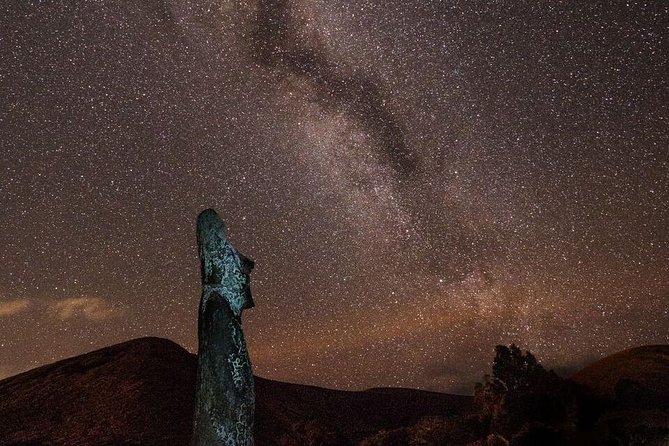
Rapa Nui Stargazing takes you away from Hanga Roa’s lights and into a dark corner of Easter Island, where telescopes bring the moon, planets, star clusters, and southern sky into view. The night ends at Anakena Beach, with special access to Ahu Nau and a long-exposure photograph beside the moai.
I like the small groups and the link between astronomy and Polynesian wayfinding. I also like the hot chocolate and local cake, a welcome touch on a cool island night. The main drawback is weather uncertainty: clouds, wind, or a bright moon can cancel the outing with short notice.
Key points at a glance
- Telescopes at a remote dark-sky site: You may see the moon, Jupiter, Saturn, star clusters, and other southern-sky objects more clearly than from town.
- Polynesian navigation included: Guides such as Mark explain how stars helped Rapa Nui people cross the Pacific.
- Night access to Ahu Nau: The final stop at Anakena adds moai to the stargazing setting.
- Small maximum group of 12: A limited group makes telescope time and questions easier to manage.
- Hot chocolate and local cake: Tuhii is praised for the hot chocolate, which matters when the night turns chilly.
- Weather needs careful planning: Book early in your island stay so a cancellation may be moved to another night.
Why the night sky matters on Rapa Nui
Easter Island is famous for its moai, but the island’s location also makes the night sky part of its identity. Away from Hanga Roa, there is little artificial light, so the Milky Way and southern constellations can appear with much more force than they do from a city.
The best part of this outing is not simply looking upward. The guide connects the stars to Polynesian ocean travel. You learn how navigators used the position of stars, along with other natural signs, to find their way across the Pacific. That gives the sky a human story instead of turning the evening into a list of star names.
The astronomy can be quite varied. Depending on the season and conditions, telescope viewing has included the craters of the moon, Jupiter, Saturn and its rings, Sirius, the Pleiades, star clusters, and the Horsehead Nebula. You should not treat that list as a promise, since clouds, visibility, and the current sky determine what can be seen.
This is a good choice even if you know almost nothing about astronomy. The guides explain the main ideas in plain language, and you can ask to look at particular objects when conditions allow. The presentation has also used maps and a laptop to show Polynesian routes and star positions, although a small screen can be hard to see when the whole group gathers around it.
More nights under the Atacama sky from Easter Island
- Easter Island: Rapa Nui Stargazing Tour
★ 4.8 · 16 reviews - San Pedro de Atacama: Etno-Stargazing Tour with Transfer
★ 4.8 · 629 reviews - San Pedro de Atacama: Stargazing Experience
★ 4.7 · 489 reviews
Meeting in Hanga Roa and heading into the dark
You meet in front of the Centro Lector Katipare, also called the Katipare library, rather than at your hotel. Hotel pickup is not included, so you need to make your own way to the meeting point.
The stated meeting time varies by season and by the final confirmation. The tour information gives 20:00 in summer and 19:30 in winter, while another instruction lists a start from September to April between 20:30 and 21:00. Confirm the exact time with Green Island Tours before the evening, and do not rely on a general schedule if your booking confirmation gives something different.
A local driver and guide lead the outing. The vehicle transfer is part of the experience because the goal is to leave the town lights behind. The ride also lets you settle into the night before the astronomy begins.
The total outing lasts about three and a half hours. One detailed account placed the return to a hotel at around 1:00 in the morning, so plan for a late finish. The advertised service includes hotel drop-off, but not hotel pickup.
Bring a jacket or a warm long-sleeved layer. A sunny afternoon can make Easter Island feel warm, yet the open night air can be surprisingly cool. You should also carry a flashlight or headlamp. The group visits dark areas, and a phone light is not always the most convenient way to walk.
Telescopes at the remote viewing site
Before the group reaches Anakena, the guides set up telescopes at a remote site. This is where the main astronomy session takes place, away from the brighter areas of Hanga Roa.
A small group makes a real difference here. With a maximum of 12 people, you have a better chance to get a clear turn at the telescope and ask questions without competing with a large crowd. Several guides may assist, depending on the group, and the strongest reports describe the staff as friendly, organized, and happy to explain what you are seeing.
The experience can include both telescopes and binoculars. On a clear night, you might move from a planet to the moon, then to a star cluster or another object visible in the southern sky. The moon’s craters and Saturn’s rings are especially memorable targets when they are available.
Do not expect continuous telescope viewing for the whole evening. One account wanted more time at the eyepiece, and that is a fair point. Some of the session is spent explaining the sky, discussing navigation, moving between equipment, and organizing the final photo stop.
The quality of the evening depends heavily on conditions. Even light cloud can limit the number of objects you see, though the Milky Way may still show through. Strong wind is a bigger problem because telescopes need to remain steady, and standing outside in wind is uncomfortable. The guide may make the call close to departure, since conditions near Anakena can be different from the sky over Hanga Roa.
Polynesian wayfinding beneath the stars
The cultural explanation is one of the strongest reasons to choose this tour instead of simply walking outside your hotel. Guides explain how Polynesian navigators used the stars to travel between islands across the Pacific.
You hear about the relationship between particular stars, the horizon, and direction. The point is not to turn you into a navigator in one evening. It is to show how a sky that looks scattered to modern eyes could serve as a working map for people making long ocean journeys.
Guides including Mark have combined the astronomy lesson with maps and a presentation. Another guide, Marc, has also been praised for adding music and a song on guitar during the photo session. Staff names and assignments can change, so you should not book expecting one particular person unless the company confirms it.
This part suits families especially well because it gives children a story to follow. It also helps adults understand that astronomy on Rapa Nui is tied to culture, migration, and survival, not just to technical observation.
More moai and Rapa Nui trips around Easter Island
- From Hanga Roa: Rapa Nui Culture Sightseeing Tour
★ 4.6 · 307 reviews - From Hanga Roa: Easter Island Highlights 2-Day Tour
★ 4.3 · 205 reviews - From Hanga Roa: Easter Island Sightseeing Full Day Tour
★ 4.5 · 189 reviews - From Hanga Roa: Journey from Orongo to Ana Te Pahu
★ 4.3 · 75 reviews
Anakena Beach and Ahu Nau after dark
Anakena is the last major stop. The beach is one of Easter Island’s most important places, and the night setting gives it a very different mood from a daytime visit.
The tour includes special night access to Ahu Nau. That is a major feature, since seeing moai after dark is not something you can treat like an ordinary beach stop. The exact admission arrangement is not included in the listed price details, so check what access is covered when you book.
At the beach, the guides take long-exposure photos with the moai behind you. These images use the dark sky and a longer camera exposure to capture both people and the stone figures. Souvenir photos are available for purchase, so you should ask how the images will be delivered and what the cost is before the session if that matters to you.
The photo stop can take longer than expected. Some people love the chance to get a polished night portrait, while others would prefer more time under the telescope. If you mainly want astronomy, keep that tradeoff in mind. If a moai photograph under the stars is high on your list, the final stop adds real value.
The guides provide hot chocolate and local cake. Tuhii has received special praise for the hot chocolate, and it is a practical touch rather than a decorative extra. After several hours outdoors, a hot drink makes the last part of the evening more comfortable.
What $140 includes, and what it does not
At $140 per person, this is not a cheap night activity. The price covers roughly three and a half hours, a local driver-guide, live commentary, small-group transport, hotel drop-off, telescope equipment, the remote viewing site, and the night visit to Anakena.
I think the value depends on how much you want the complete package. You are paying for transport away from town, equipment, interpretation, access to a special nighttime setting, and a guided photo session. Renting or arranging each part separately would not be simple on a small island.
The price is harder to justify if clouds cancel most of the astronomy or if you have little interest in the cultural explanation. The tour is also less attractive if you already have a clear plan for visiting Anakena during the day and only want a quick look at the stars.
Souvenir photos are extra. Hotel pickup is also not included, so factor in the short journey to Katipare library. The tour does include hotel drop-off at the end, which is useful given the late return.
Weather, moonlight, and short-notice decisions
This is the part you need to understand before paying. The tour requires favorable weather, and the final decision may come only shortly before departure. The operator checks conditions near Anakena, not just in Hanga Roa, so a clear sky in town does not necessarily mean the telescopes can operate at the viewing site.
Cloud is not the only concern. Strong wind can shake the equipment and make the session unpleasant. A full moon can also wash out many stars, so the company may cancel or avoid dates close to a full moon. A full moon hike to Terevaka may be offered as an alternative, but it is a different activity and should not be treated as an equal substitute for stargazing.
I recommend booking this for the first night or two of your island stay. If weather cancels the outing, you have a better chance of moving it to another evening. If you schedule it on your final night, a postponement may be impossible.
The cancellation terms work in two directions. You can cancel for a full refund up to 24 hours before the start time. If the company cancels for bad weather or because too few people have booked, you are offered another date, another experience, or a full refund. Once the tour has started, refunds are not available. If weather changes during the outing, the company may try to take you out again on another night, subject to space.
Minimum numbers matter as well. A very small booking can be canceled even when the sky looks promising. That is frustrating if your schedule is tight, so keep some flexibility and check your messages on the day.
Who will enjoy this most
I would choose Rapa Nui Stargazing if you want more than a scenic photo stop. It suits you if you enjoy learning how people read the sky, like asking questions, or want to connect Easter Island’s Polynesian past with the stars above it.
Families can do well here, since the telescope targets and navigation stories give the evening structure. Couples and solo participants also benefit from the small group, especially during the telescope session and night photography.
You should think twice if you dislike late nights, standing outdoors, or plans that can change at short notice. It is also not ideal if you need a guaranteed clear-sky experience. No operator can promise that, and the company’s cautious weather policy may feel inconvenient when the sky over town looks fine.
The outing is generally suitable for most people, and it is near public transportation at the meeting point. Still, bring proper footwear, a warm layer, and a light for walking in dark areas.
Should you book Rapa Nui Stargazing?
Book it if you have at least one spare evening, can accept a weather decision close to departure, and want a guided connection between the night sky, Polynesian navigation, and the moai at Anakena. The small group, telescopes, hot chocolate, and final photo session make the $140 easier to justify.
My main advice is simple: schedule it early in your Easter Island visit, confirm the exact meeting time, check the moon phase, and keep the next night free if possible. If clear skies cooperate, this can be one of the island’s most memorable evenings. If the weather does not, take the refund and do not force a substitute hike unless that is what you actually want.
FAQ
Where does Rapa Nui Stargazing meet?
The group meets in front of the Centro Lector Katipare, also called the Katipare library, in Hanga Roa. Hotel pickup is not included.
What time does the tour start?
The listed start times vary by season and confirmation. The schedule gives 20:00 in summer, 19:30 in winter, and a September to April range of 20:30 to 21:00. Confirm your exact time with the operator.
How long does the experience last?
The outing lasts approximately three hours and 30 minutes. Hotel drop-off is included at the end.
What is included in the price?
The price includes a driver-guide, live commentary, small-group participation, hotel drop-off, telescope viewing, the remote astronomy stop, and the visit to Anakena. Hot chocolate and local cake are also included.
Is hotel pickup included?
No. You make your own way to the Katipare library meeting point. Hotel drop-off is included after the tour.
What happens if the weather is poor?
The tour may be canceled because of clouds, wind, or other unsuitable conditions. You can be offered another date or a full refund. If conditions change during the outing, the company may offer another night, subject to availability.
Can I cancel my booking?
You can cancel for a full refund up to 24 hours before the scheduled start time. Cancellations or changes made less than 24 hours before the start are not accepted for a refund.
Just added around Easter Island
- Volcanic Refuges: Excursion to Underground Civilization★ 4.7 · 8 reviews
- Two days of Full Day Tour of Rapa Nui + Sunrise in Tongariki★ 4.8 · 55 reviews
- Half Day Tour in Rapa Nui★ 5.0 · 48 reviews
- Ride to the highest point on the island for sunset★ 5.0 · 40 reviews
- Easter Island: Private Full Day History Of The Moai★ 4.6 · 12 reviews
- Tongariki Sunrise: Half Day Private Tour★ 3.8 · 9 reviews
- Sunrise Tongariki: Sunrise at Tongariki Park Private Tour★ 4.5 · 47 reviews
- Terevaka Horse Excursion: The highest point and 360° view.★ 4.7 · 38 reviews
Atacama Stargazing Tours, compared.
Astronomical Tour with Guide and Pick Up San Pedro de Atacama
Read our review →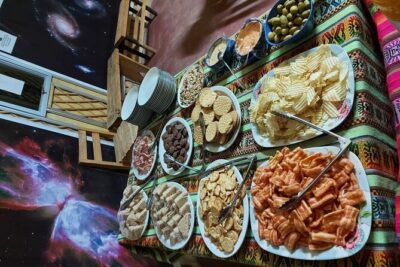
“Astronomical Adventure in San Pedro de Atacama”
Read our review →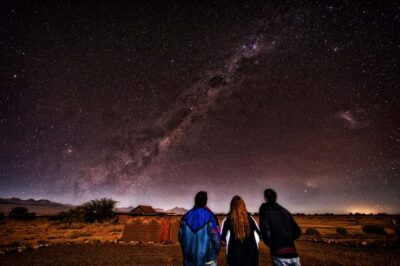
Pisco Elqui: Mountaintop Stargazing and Night Portrait
Read our review →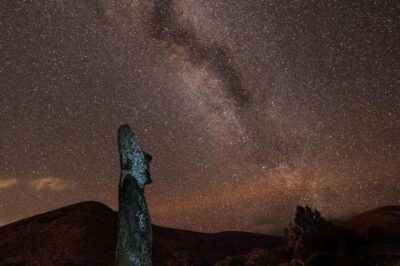
Browse the lists this tour appears in