
Reviewed · EASTER ISLAND & MOAI TOURS
Easter Island: Demo of How to Carve a Moai statue
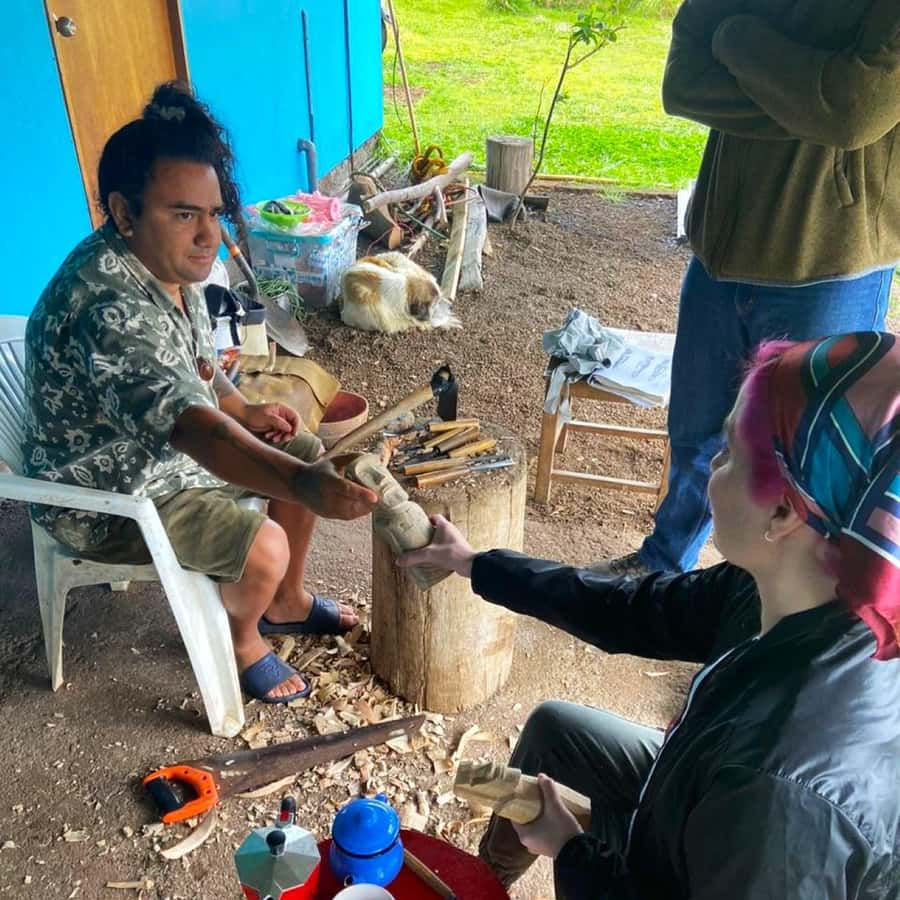
The most memorable part of this private Rapa Nui carving class is its setting: you meet artist Joaquin Rapu at his house, not in a large workshop filled with souvenir shelves. He shows you how a plain block of wood becomes a moai figure, then lets you handle the tools and take part in the process.
I like two things here. First, the activity connects the famous stone figures with a living local craft. Second, the finished wooden moai gives you a useful souvenir with a story behind it. The main point to check before booking is how much of the carving each person does, since the activity may produce one shared moai rather than one complete statue per participant.
Key points to know before booking
- Joaquin Rapu hosts the class at his own house, giving the experience a personal, local setting.
- The session lasts two hours, with a demonstration, tool instruction, and hands-on carving.
- Wood, tools, and other supplies are included, so you do not need to bring equipment.
- The class is private, which gives you room to ask questions and work at a comfortable pace.
- The instruction is in Spanish, an important detail if you need English guidance.
- The $100 price includes a carved wooden moai, but confirm whether the booking provides one shared piece or an individual statue.
Meeting Joaquin Rapu at his house
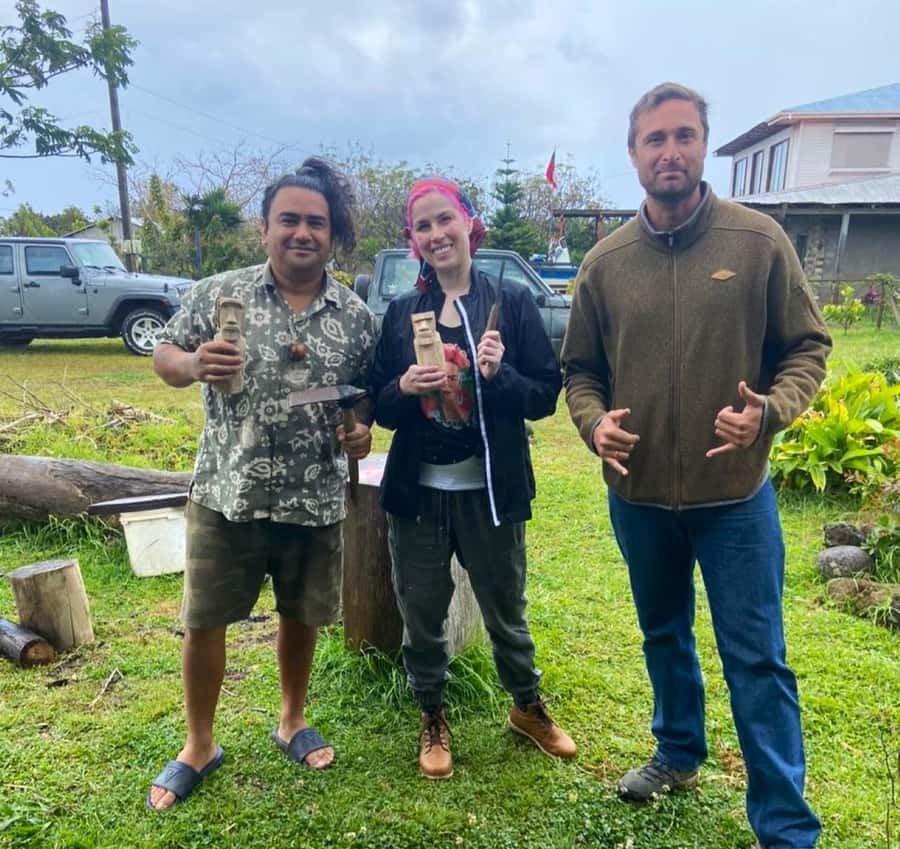
Your starting point is Joaquin Rapu’s house on Rapa Nui. The meeting directions describe it as the penultimate light-blue house on the road, and you can ask a taxi to take you to Joaquin Rapu’s House.
This is the sort of detail you should handle before the day of the class. Save the map link, show the address to your taxi driver, and allow time to identify the correct house. The meeting point is not described as a hotel, museum, or formal visitor center, so clear directions matter.
The home setting is one of the experience’s strongest features. You are meeting a local Rapa Nui carver where he works, rather than watching a short demonstration designed for a large crowd. That makes the class feel more like an introduction to a family craft than a standard sightseeing stop.
The group is private, so you will not be sharing the lesson with a large public audience. That matters during a hands-on activity. You can ask about the tools, pause when you need help, and follow the carving process at a reasonable pace.
More moai and Rapa Nui trips around Easter Island
- From Hanga Roa: Rapa Nui Culture Sightseeing Tour
★ 4.6 · 307 reviews - From Hanga Roa: Easter Island Highlights 2-Day Tour
★ 4.3 · 205 reviews - From Hanga Roa: Easter Island Sightseeing Full Day Tour
★ 4.5 · 189 reviews
Seeing a moai take shape from wood
The class begins with an explanation of the carving process. Joaquin introduces the wood and the tools, then demonstrates how the different stages fit together.
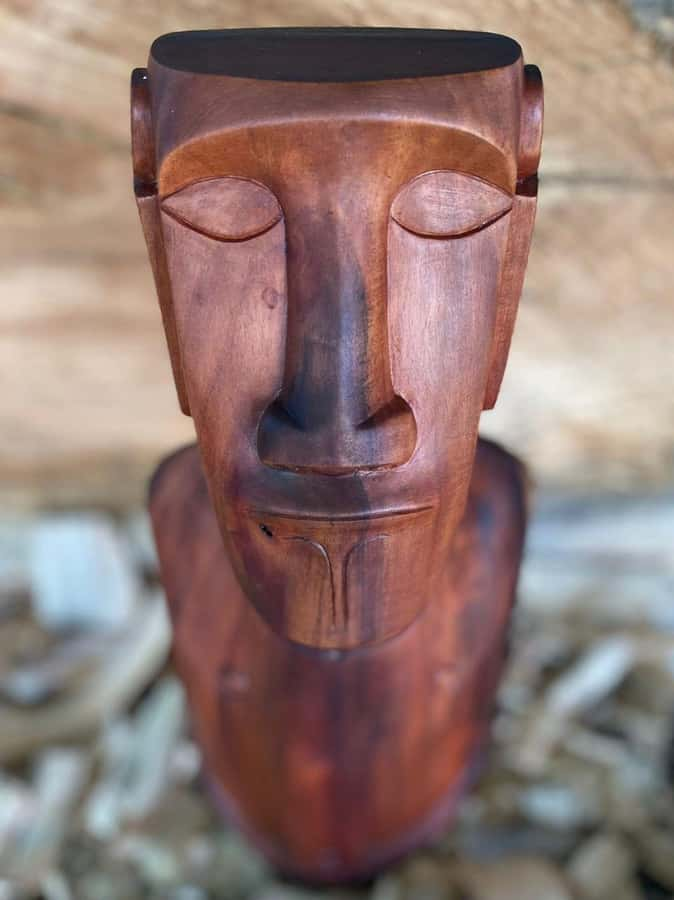
A moai is instantly recognizable, but that does not mean it is simple to carve. The familiar long ears, strong brow, straight nose, narrow mouth, and elongated head all depend on careful shaping. Even a small wooden figure requires the carver to think about balance and proportion.
You will learn how each tool is used during the work. The supplied information does not name the individual tools, so you should expect instruction on the equipment provided at the house rather than a technical lesson built around a fixed tool list.
The demonstration gives the class its cultural value. You are not simply purchasing a wooden figure made elsewhere. You are seeing how a local artist interprets a symbol linked so closely with Rapa Nui, and you are learning how the form develops from a plain piece of wood.
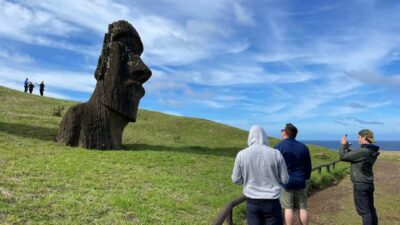
The activity also helps put the island’s famous statues in a wider setting. The large moai seen around Rapa Nui are part of the island’s ancestral culture. Here, the scale is smaller and the material is wood, but the lesson gives you a direct connection to the act of shaping a recognizable moai form.
Your turn with the tools
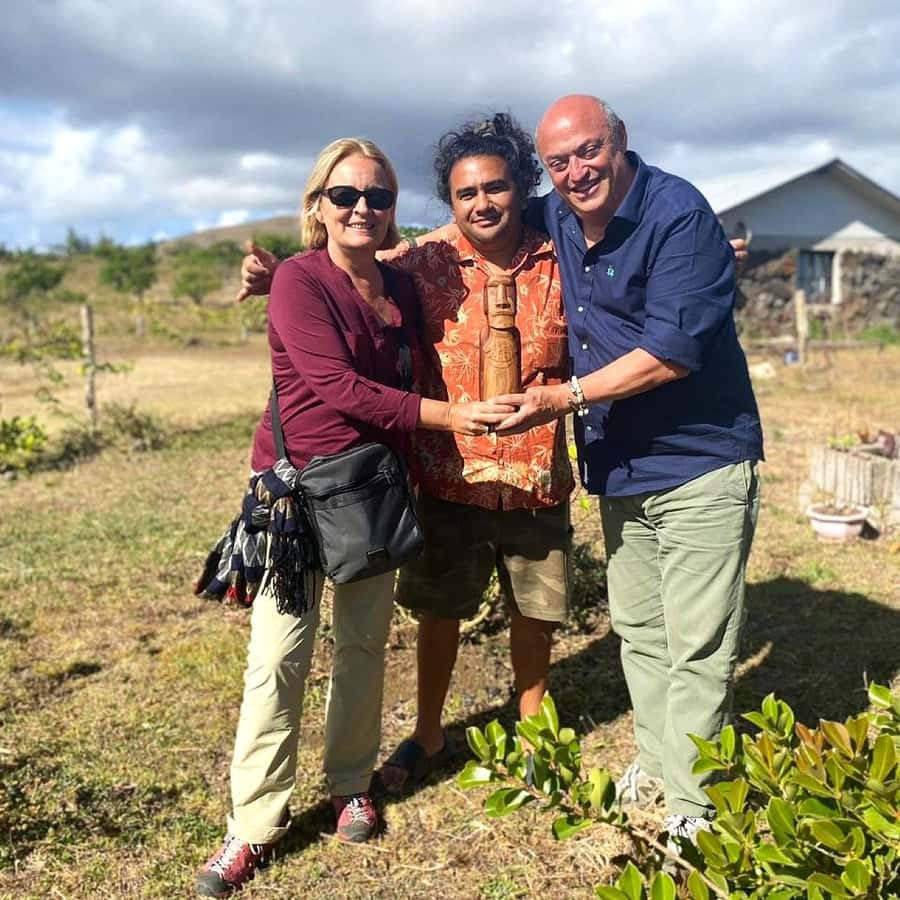
After Joaquin’s demonstration, you begin working with the wood and carving tools. The class is designed to be hands-on, not just a show where you watch an expert work.
You will need comfortable clothing suitable for wood carving. Bring a camera if you want photographs of the process, but keep your attention on the tools while you are working. This is a creative activity, so the finished piece will reflect your own effort rather than looking exactly like a shop-made souvenir.
The two-hour length is useful here. It gives you enough time to see the process and make a start on the carving without turning the activity into a full-day workshop. Still, you should keep your expectations sensible. Joaquin is the trained artist, and his demonstration may move faster than your own work.
One especially useful detail is that the activity may create one moai for the group. A past participant expected to make an individual moai, then found that the session produced one statue and chose to purchase a second so that each person could take one home.
That means you should clarify the arrangement before you book. The description says you take your own carved wooden moai home, while the practical experience may involve one shared carving or a single completed piece. The safest question to ask is whether the $100 price includes one statue per person or one statue for the private group.
Why the Rapa Nui setting matters
Moai are not generic island souvenirs. They belong specifically to Rapa Nui, and the supplied information describes this carving tradition as endemic to the island.
That gives the activity a clear sense of place. You could buy a small wooden figure in many tourist shops, but a class with a Rapa Nui artist gives you a better understanding of how the image is connected to local culture. You also leave with the memory of making the piece, not just carrying it in your luggage.
I like this kind of experience because it adds a human scale to a major archaeological destination. After seeing the island’s monumental figures, you can spend two hours learning how an artist works with a much smaller block of wood. The activity does not replace visiting the moai sites, but it adds a personal craft element that a viewpoint or photo stop cannot provide.
The experience is also private and exclusive in a practical sense. You are not waiting for a large class to rotate through a demonstration. You can ask questions about Joaquin’s process and the island’s ancestral culture as the work progresses.
A few more trips around Easter Island worth a look
- Full day tour – DREAM
★ 5.0 · 86 reviews - From Hanga Roa: Journey from Orongo to Ana Te Pahu
★ 4.3 · 75 reviews - Rapa Nui Stargazing
★ 4.5 · 62 reviews - Two days of Full Day Tour of Rapa Nui + Sunrise in Tongariki
★ 4.8 · 55 reviews
The Spanish-language lesson
The listed instructor language is Spanish. This is important, since the experience depends on spoken instruction about tools, technique, and cultural background.
If you speak Spanish, you should get the fullest version of the class. If your Spanish is limited, you may still be able to follow the physical demonstration, but the cultural explanations and safety instructions could be harder to understand.
One participant managed with broken Spanish and found Joaquin patient and welcoming. That suggests you do not need perfect Spanish to take part, but you should not assume that the class is offered in English. Ask about language support before booking if this is a concern.
The practical upside of a craft demonstration is that some instructions are visual. Joaquin can show how to hold and use the tools, and you can watch the carving process directly. Even so, confirm the language if you want a detailed discussion rather than a mainly visual lesson.
What you take home
The included souvenir is part of the price, not an extra item you must buy at the end. The stated package includes your carved wooden moai, along with the wood, tools, and other supplies used in the class.
The finished statue will be personal. It may not have the polished finish of a professionally made piece, and that is part of the point. You are taking home evidence of your own attempt, shaped under the guidance of a local artist.
If you are traveling with another person, ask how many finished pieces are included. The information describes your own piece of art, but the activity has also been described as creating one moai for the group. Purchasing an additional statue may be possible, though you should confirm the cost and availability directly.
Pack the finished piece carefully for your journey. The exact size and packing arrangements are not provided, so ask Joaquin how the statue will be protected for transport before you leave the house.
Is $100 a fair price?
At $100 per person, this is not the cheapest way to buy a wooden souvenir. The value depends on what you want from your time on Rapa Nui.
You are paying for a private two-hour session with a local Rapa Nui artist, the use of all tools and materials, instruction in a local craft, and a carved wooden moai to take home. That is a stronger package than a quick shop purchase, especially if you care about meeting an artist and learning how the object is made.
The price looks less attractive if you mainly want a finished statue and do not care about the process. You may also want to reconsider if you expect to produce a fully finished moai entirely on your own during the two hours. The class includes a demonstration and hands-on work, but the exact balance between artist demonstration and participant carving should be confirmed.
For a private group, the cost can make sense as a special cultural activity rather than a simple craft lesson. It is particularly suited to someone who values direct contact with a local maker and wants a souvenir tied to the island.
Who will enjoy this activity most?
I would recommend this experience to adults and older children who enjoy making things with their hands. The minimum age is 12, so families with younger children will need another plan.
It is also a good choice for anyone who has already seen the major moai sites and wants a quieter activity with a local person. You do not need to be an experienced woodworker. The class is intended to teach you the tools and process, and Joaquin guides the work.
People who want a polished, museum-quality statue made entirely by themselves may need to adjust their expectations. The class is a demonstration and guided activity, and the group may create one shared moai. Confirm the final arrangement before paying.
The experience suits visitors comfortable with Spanish or willing to work through a visual demonstration. Bring comfortable clothing, since wood carving is practical work rather than a dress-up excursion.
Booking details that affect your plans
The class lasts two hours, but starting times depend on availability. Plan it as a fixed appointment rather than something to squeeze between uncertain island activities.
Transportation to and from the house is not included. You will need to arrange your own taxi, and the meeting directions should be handled in advance. Since the house is identified by its color and position on the road, having the map link ready is a sensible precaution.
You can reserve now and pay later, which helps if you are still arranging your Rapa Nui schedule. Cancellation is free up to 24 hours before the activity for a full refund.
The experience has a perfect rating from 19 reviews, with repeated praise for Joaquin’s friendliness, patience, hospitality, and ability to explain the work. The strongest pattern is personal attention, not luxury or elaborate production. That is exactly what you should book it for.
Should you book the Rapa Nui moai carving class?
Book it if you want a personal cultural activity, enjoy hands-on work, and value meeting a local Rapa Nui artist. Joaquin’s home setting, private format, included materials, and take-home carving give the two hours a clear purpose.
Before booking, confirm two details: the language of instruction and whether each person receives an individual moai or the private group creates one shared statue. If those points match your expectations, the $100 price is reasonable for a private lesson and a meaningful souvenir.
Skip it if you want a short, polished demonstration with no participation, or if you need English instruction and cannot confirm language support. For everyone else, this is a thoughtful way to connect the island’s famous moai with the hands and skills of a living local artist.
FAQ
Where does the moai carving class meet?
The class meets at Joaquin Rapu’s house. You can ask a taxi to take you to Joaquin Rapu’s House. The directions identify it as the penultimate light-blue house on the road, and a map link is provided for the correct location.
How long does the activity last?
The wood-carving class lasts two hours. Starting times vary, so you need to check availability when selecting your booking.
Is transportation included?
No. Transportation to and from the artist’s house is not included. You need to arrange your own taxi.
What language is the class taught in?
The listed instructor language is Spanish. If you need instruction in another language, confirm that before booking.
What does the price include?
The $100 per person price includes a private wood-carving class with a local Rapa Nui artist, the carving tools and materials, and a carved wooden moai to take home.
Is the activity suitable for children?
The class is not suitable for children under 12 years old. Participants should also wear comfortable clothing suitable for wood carving.
Just added around Easter Island
- Volcanic Refuges: Excursion to Underground Civilization★ 4.7 · 8 reviews
- Two days of Full Day Tour of Rapa Nui + Sunrise in Tongariki★ 4.8 · 55 reviews
- Half Day Tour in Rapa Nui★ 5.0 · 48 reviews
- Ride to the highest point on the island for sunset★ 5.0 · 40 reviews
- Rapa Nui Stargazing★ 4.5 · 62 reviews
- Easter Island: Private Full Day History Of The Moai★ 4.6 · 12 reviews
- Tongariki Sunrise: Half Day Private Tour★ 3.8 · 9 reviews
- Sunrise Tongariki: Sunrise at Tongariki Park Private Tour★ 4.5 · 47 reviews
Easter Island & Moai Tours, compared.

Two days of Full Day Tour of Rapa Nui + Sunrise in Tongariki
Read our review →
Browse the lists this tour appears in