
Reviewed · EASTER ISLAND TOURS
From Hanga Roa: Journey from Orongo to Ana Te Pahu
Orongo gives this tour its strongest opening: a ceremonial village high on the rim of Rano Kau, with the crater on one side and the Pacific on the other. From there, you follow the story of the Bird Man competition, ancient stonework, moai platforms, red scoria topknots, and volcanic caves in one long day around Rapa Nui. I especially like the mix of big views and sacred places, plus the chance to see sites that answer different questions about island life.
The two best features are the varied route and the guides. Ata has been praised for interesting explanations, while Javiera is noted for answering questions with confidence. The main caution is the pace: some stops involve about an hour of walking, and one recent passenger found it hard to hear when the guide walked ahead of the group.
Key points at a glance
- Orongo and Rano Kau: See the great volcanic crater and the ceremonial village tied to the Bird Man tradition.
- Six major sites in one day: The route covers Rano Kau, Orongo, Vinapu, Puna Pau, Ahu Akivi, and Ana Te Pahu.
- Ahu Akivi’s seven moai: Learn why this inland platform is linked with the island’s seven legendary explorers.
- Ana Te Pahu caves: Walk through volcanic chambers once used for shelter and storage.
- Guides Ata and Javiera: English and Spanish guiding is available, with strong praise for clear answers and engaging talks.
- Seven hours for $70: Hotel pickup and return are included, but the Rapa Nui National Park ticket costs extra.
Why this route makes sense on Rapa Nui
Rapa Nui can look small on a map, yet its major archaeological sites are scattered across the island. This tour groups six important places into one seven-hour outing, saving you the trouble of arranging separate rides or trying to fit each site into a short stay.
I like the route because it does not show you only moai. You get geology at Rano Kau, ceremony at Orongo, stone construction at Vinapu, sculpture production at Puna Pau, an unusual inland moai platform at Ahu Akivi, and practical cave use at Ana Te Pahu. Together, these stops give you a broader picture of how people lived, worshipped, worked, and adapted to the island.
The $70 price is reasonable for a full day with hotel pickup, transport, a live guide, and return to Hanga Roa. You still need to buy the National Park ticket before the tour begins, so add that cost to your budget. The tour works best as a first look at Rapa Nui, especially if you want an organized overview rather than several short taxi trips.
More moai and Rapa Nui trips around Chile
- From Hanga Roa: Rapa Nui Culture Sightseeing Tour
★ 4.6 · 307 reviews - From Hanga Roa: Easter Island Highlights 2-Day Tour
★ 4.3 · 205 reviews - From Hanga Roa: Easter Island Sightseeing Full Day Tour
★ 4.5 · 189 reviews
Starting from Hanga Roa
Pickup begins in Hanga Roa, the island’s main settlement. The company contacts you about 10 minutes before the driver arrives, so keep your phone available and be ready near your hotel pickup point.
The first ride takes about 15 minutes by bus or coach. After that, much of the day is spent outside or walking between archaeological areas. Bring comfortable shoes, light and comfortable clothes, cash, and a reusable water bottle. The park has no internet, so download anything you need before leaving Hanga Roa and do not depend on online maps during the day.
The tour runs rain or shine. That matters on an exposed island where weather can change the feel of a site quickly. Bring clothing that lets you walk comfortably in changing conditions, but keep expectations realistic: this is an outdoor cultural tour, not a sheltered museum visit.
Rano Kau: a powerful first view
Rano Kau is the first major stop, with about 45 minutes for a guided visit. The volcano’s crater is one of the most striking natural features on Rapa Nui. Its broad interior and high rim give you a clear sense of the island’s volcanic origin.
I like starting here because the view provides context before the tour turns to monuments and legends. You are not simply looking at stones in isolation. You can see the scale of the extinct volcano and the open Pacific around it, then begin to understand why a high crater rim became such an important ceremonial setting.
The stop is guided rather than a long independent hike. Still, wear proper shoes because the route can include uneven ground. Give yourself time to listen and look around rather than treating Rano Kau as a quick photo stop. The crater is central to the meaning of the next visit, Orongo.
Orongo and the Bird Man tradition
Orongo receives about an hour, making it one of the most important stops of the day. This ceremonial village sits on the rim of Rano Kau, where the volcanic crater meets sweeping ocean views.
The site is closely tied to the Bird Man legend and the competition that shaped late ceremonial life on Rapa Nui. Your guide explains the beliefs and social meaning connected with this tradition, helping you read Orongo as more than a group of stone structures.
This is likely to be the tour’s emotional high point. The setting is dramatic, but the real value comes from the connection between place and story. Here, the cliff-edge position, the crater, and the sea all form part of the experience.
Stay close to the guide. One practical issue raised about the tour is that explanations may be difficult to hear if you fall behind. At a site like Orongo, where the details matter, walking near the front of the group can make a real difference.
A few more trips around Chile worth a look
- Santiago: Cajon del Maipo/Embalse del Yeso Tour with Picnic
★ 4.3 · 3,789 reviews - Santiago: Vina Del Mar, Valparaiso, Casablanca & Reñaca Tour
★ 4.2 · 2,838 reviews - Small-Group Cajón del Maipo Full-Day Tour and Picnic
★ 4.5 · 2,277 reviews - Santiago: Cajon del Maipo & Embalse El Yeso Trip with Picnic
★ 4.5 · 1,859 reviews
Vinapu and the skill of stone construction
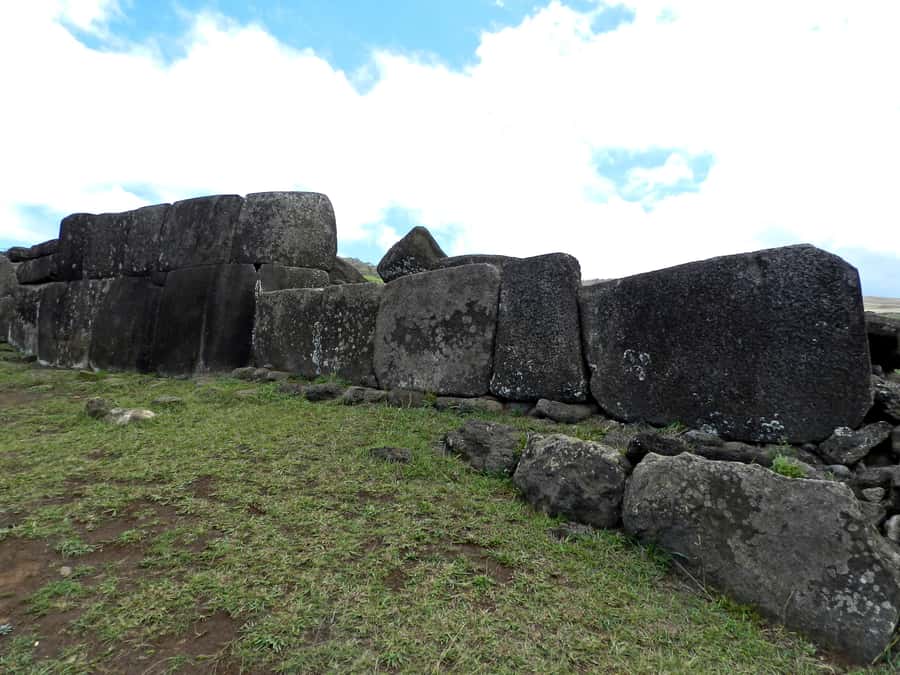
Ahu Vinapu receives about 45 minutes. Here, the focus shifts from ceremony and views to construction. Large stone blocks form a platform that reveals the care and skill involved in Rapa Nui building.
Your guide points out how the stones were placed and why their arrangement matters. This is a useful stop for anyone curious about engineering rather than only the famous faces of the moai. It also gives you a chance to compare the character of different ahu, or ceremonial platforms, across the island.
Do not expect Vinapu to offer the same wide panorama as Orongo. Its appeal is more focused. You are looking closely at stonework and asking how the builders shaped and positioned heavy blocks with limited tools. The 45-minute visit gives enough time for an explanation and a careful look without making the day feel slow.
Puna Pau and the red stone crowns
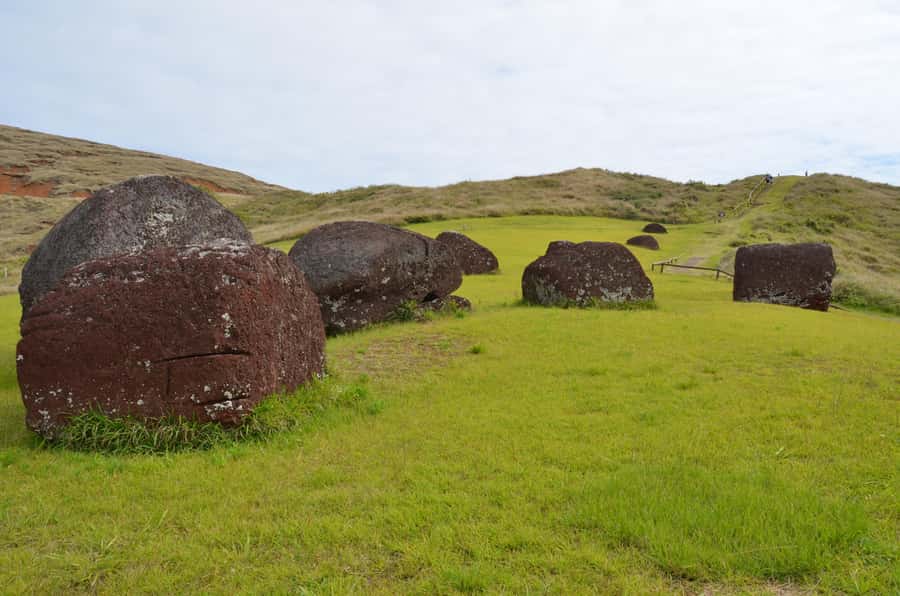
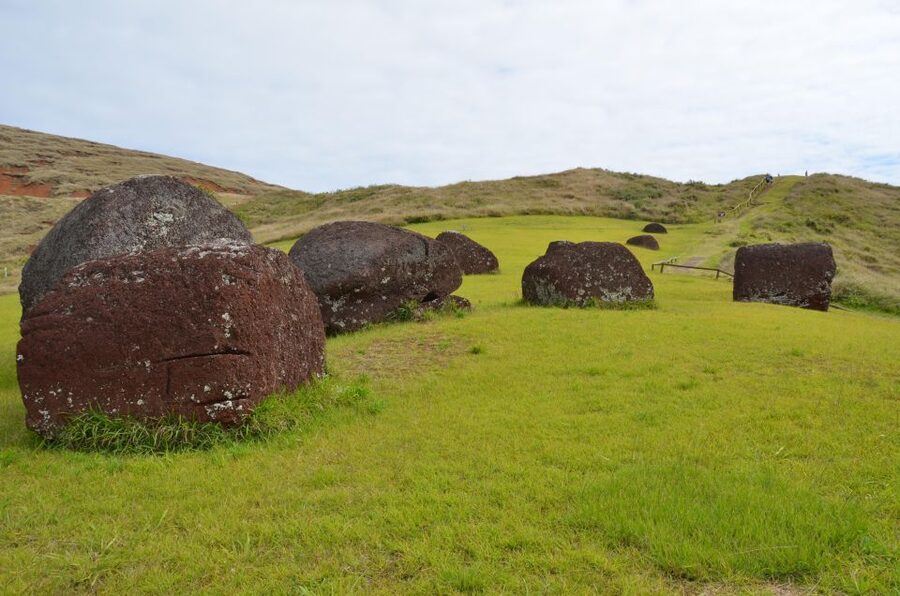
At Puna Pau, the tour spends about 45 minutes at the quarry that supplied the red scoria topknots seen on many moai. These red elements are easy to notice in photographs, but they can be overlooked when you focus on the statues themselves.
This stop explains where the topknots came from and how they were made. It adds an important layer to your understanding of moai production: the statues and their crowning pieces came from different types of stone and involved separate stages of work.
Puna Pau is also a good place to remember that Rapa Nui culture was not built around one single monument type. The island’s sculptors and builders handled volcanic materials in different ways for different purposes. The guide’s explanation helps connect the quarry to the ahu and moai you see elsewhere.
Keep your water close and use the stop to rest your feet. By this point, you have already spent time walking at two major sites, and two more important visits remain.
Ahu Akivi and the seven explorers
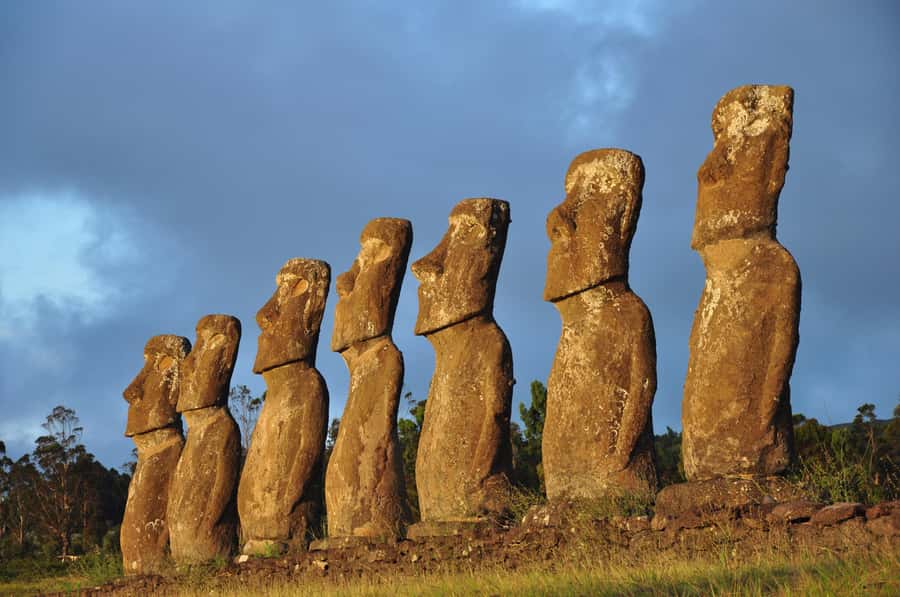
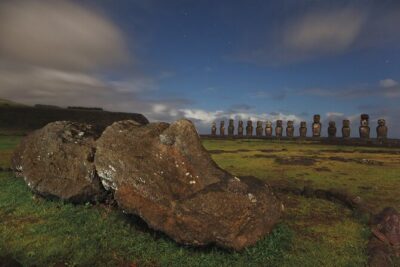
Ahu Akivi is unusual because its seven moai stand inland rather than directly beside the coast. The tour allows about 45 minutes here, enough to hear the story associated with the seven explorers and study the platform.
This is one of the most useful stops for comparing different settings. You have already seen a ceremonial village on a crater rim and stonework at Vinapu. At Ahu Akivi, the inland position changes the way you think about the moai and their relationship with the island.
The story of the seven explorers is part of the site’s cultural meaning. Your guide sets out the tradition and explains why these figures are treated as distinct within Rapa Nui stories. I would listen closely here, since the explanation gives the statues a role beyond their familiar appearance.
The platform is a straightforward place to view, but the walking day is beginning to add up. Comfortable footwear is not optional. If you need a slower pace, tell the guide early rather than waiting until the final cave visit.
Ana Te Pahu and the practical side of island life
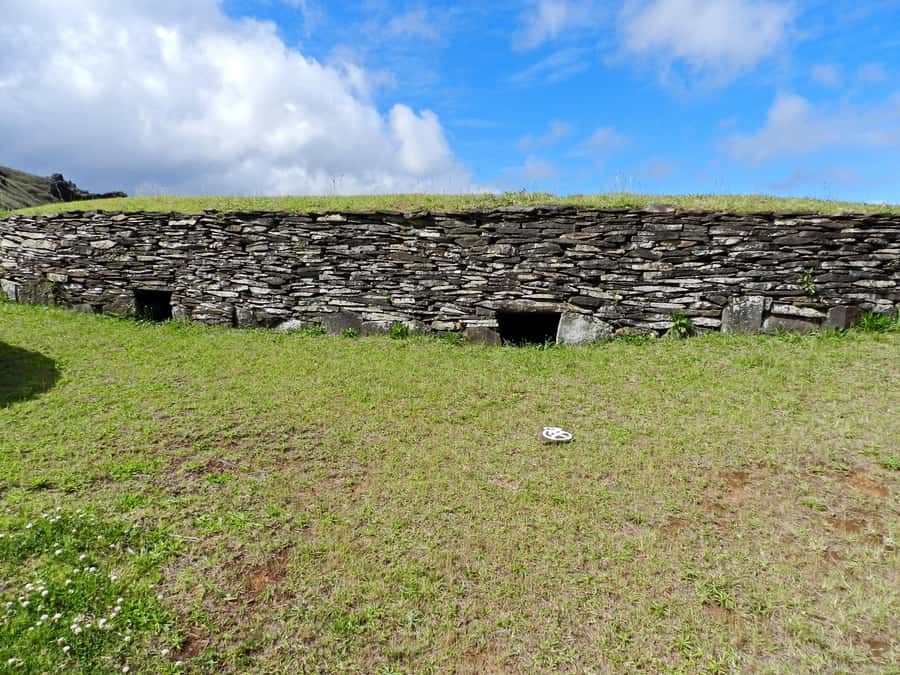
Ana Te Pahu receives about an hour and offers the day’s most different setting. This volcanic cave system was used for shelter and storage, showing a practical side of Rapa Nui life that can get lost among the ceremonial sites.
Inside, the volcanic rock creates a cooler, darker environment. You can expect to walk through parts of the cave system while the guide explains how people used these spaces. The change from open crater views and exposed moai platforms makes Ana Te Pahu a welcome contrast.
This is not a polished underground attraction. It is a natural volcanic space, so sensible shoes and comfortable clothes matter. The tour information warns that some sites require around an hour of walking, and Ana Te Pahu is one reason to take that warning seriously.
If caves make you uneasy, consider that before booking. The tour description identifies Ana Te Pahu as a cave system, but it does not provide details about lighting, accessibility, or the exact depth of the route. Ask the provider if you need those specifics.
What the guide adds
A guide is especially valuable on Rapa Nui because many sites are visually simple at first glance. A moai platform may take only a few minutes to photograph, but the stories, construction methods, and ceremonial uses give it meaning.
The guiding languages are English and Spanish. Ata has received praise for being informative and interesting, and Javiera has been noted for answering questions with strong subject knowledge. Those names may not guarantee your assigned guide, but they show the kind of service the company can provide.
Your best strategy is to stay near the guide and ask questions during the explanations. One passenger found that the guide spoke mainly to people near the front, making it hard to hear from farther back. That is a small issue with an easy fix: keep close, especially at Orongo and Ahu Akivi where the stories are central.
The tour is described as guided at every major stop, not as a simple transfer between monuments. That makes the $70 fee more worthwhile for you if you want context rather than just transportation.
Timing, walking, and comfort
The listed guided visits add up to about five hours: 45 minutes at Rano Kau, one hour at Orongo, 45 minutes each at Vinapu, Puna Pau, and Ahu Akivi, plus one hour at Ana Te Pahu. The full activity lasts seven hours, leaving time for driving, loading, transitions, and movement between sites.
That is a full day, but the schedule is sensibly divided into medium-length visits. You are not asked to spend three hours at one monument. Instead, you move through different types of places, each with its own subject.
The main physical demand is repeated walking over outdoor and volcanic ground. Bring water, wear shoes with a secure sole, and avoid clothing that makes movement awkward. The absence of internet in the park also means you should carry the essentials with you rather than plan to stop online along the way.
Drones are not allowed. Cash is recommended, and a passport or ID card is listed among the items to bring. The National Park ticket is not included, so purchase it before the tour starts.
Is $70 good value?
For $70 per person, this is a solid value if you want one organized day covering the island’s major archaeological themes. Hotel pickup and drop-off remove the need to arrange transport, while the guide gives you historical and cultural context at each stop.
The cost is less attractive if you already have private transportation and prefer to spend a long time at only one or two sites. A private arrangement could offer more control over timing, but this tour gives you breadth and a set route at a predictable price.
Remember the extra National Park ticket. Since it is required and not included, the advertised price is not the final cost of the day. Still, the combination of transport, six guided sites, and a seven-hour schedule makes the tour useful for a first visit or a short stay.
Free cancellation is available up to 24 hours before the start, and you can reserve now and pay later. Those terms help if your island schedule is still changing, but the more important decision is whether you are comfortable with the fixed group pace.
Who should book this experience?
I would choose this tour if you want to see a wide range of Rapa Nui sites without handling transport yourself. It suits first-time visitors, people with only a limited number of days, and anyone who wants a guide to explain the Bird Man tradition, moai platforms, topknots, and cave use.
It is also a good choice if your interests go beyond the famous statues. Rano Kau gives you geology, Orongo gives you ceremony, Vinapu gives you stone construction, Puna Pau gives you sculpture materials, Ahu Akivi gives you a distinctive moai setting, and Ana Te Pahu gives you everyday adaptation to volcanic terrain.
I would think twice if you dislike group schedules, struggle with extended walking, or need detailed accessibility information before booking. The route is active, the weather does not stop the tour, and some explanations may be harder to hear if you remain at the back.
Should you book it?
Book this tour if you want an efficient, well-rounded introduction to Rapa Nui for $70, with hotel transport and a live English- or Spanish-speaking guide. The strongest reasons are the excellent range of sites, the dramatic Rano Kau and Orongo pairing, and the chance to enter Ana Te Pahu rather than seeing only open-air monuments.
Before you commit, buy the park ticket, prepare for a full day outdoors, and stay close to the guide. If you do those three things, this route gives you a useful first chapter in understanding Easter Island beyond its most famous statues.
FAQ
Where does the tour start and finish?
The tour includes pickup in Hanga Roa and returns you to Hanga Roa at the end of the day.
How long does the experience last?
The full tour lasts seven hours.
What sites are included?
The route includes Rano Kau, Orongo, Ahu Vinapu, Puna Pau, Ahu Akivi, and Ana Te Pahu.
Is the National Park ticket included?
No. You must buy the National Park ticket before the tour starts.
What languages are available?
The live guide service is available in English and Spanish.
Is hotel pickup included?
Yes. Hotel pickup and drop-off are included, and the company contacts you about 10 minutes before the driver arrives.
What should I bring?
Bring a passport or ID card, comfortable shoes, comfortable clothes, cash, and a reusable water bottle.
Are drones allowed?
No. Drones are not allowed on the tour.
Can I cancel the booking?
You can cancel up to 24 hours in advance for a full refund. You can also reserve now and pay later.
Just added around Chile
- 4 TOUR IN ATACAMA IN 3 DAYS★ 4.6 · 12 reviews
- Atacama Desert: Horseback Adventure with Scenic Views★ 4.7 · 42 reviews
- Santiago: City Highlights Walking Tour★ 4.2 · 51 reviews
- Puerto Varas: Peulla Day Trip★ 4.5 · 57 reviews
- Santiago: The Essentials City Tour & Optional Concha y Toro★ 3.4 · 40 reviews
- Horseback Trailride Excursion★ 5.0 · 48 reviews
- Horseback Private Wine Tour and Country Grill from Santiago★ 5.0 · 52 reviews
- Traditional City Tour★ 5.0 · 58 reviews
Easter Island Tours, compared.
Browse the lists this tour appears in