
Reviewed · EASTER ISLAND & MOAI TOURS
Easter Island: Private Full Day History Of The Moai
Easter Island’s Moai are most powerful when you see them in their original setting, not just in photographs. This private day visits the island’s great ceremonial platforms, the quarry at Rano Raraku, two beaches, and lesser-known sites such as One Makihi. I especially like the chance to connect the statues with Rapa Nui culture, and the flexibility of a private group means you can ask questions without competing with a busload of people.
I also like the route’s range. You get major sights such as Ahu Tongariki and Rano Raraku, but you also see Akahanga, Te Pito Kura, and Ovahe. The main caution is communication: some departures have suffered delayed pickups or weak English explanations, so confirm the meeting point and guide language before setting out.
Key details at a glance
- Rano Raraku takes two hours: This is the main stop, with Moai still being carved from the volcanic slope.
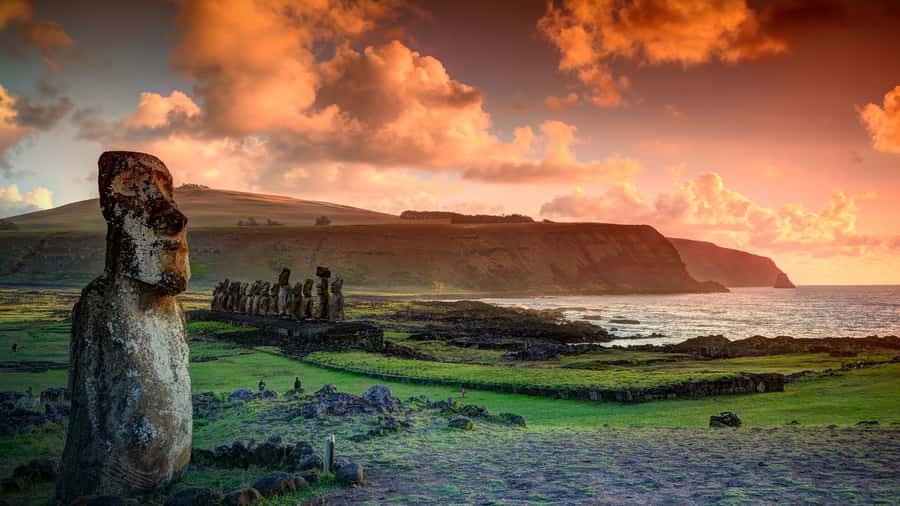
- Tongariki gives you the big visual moment: Fifteen Moai line one ceremonial platform, making this one of the island’s essential stops.
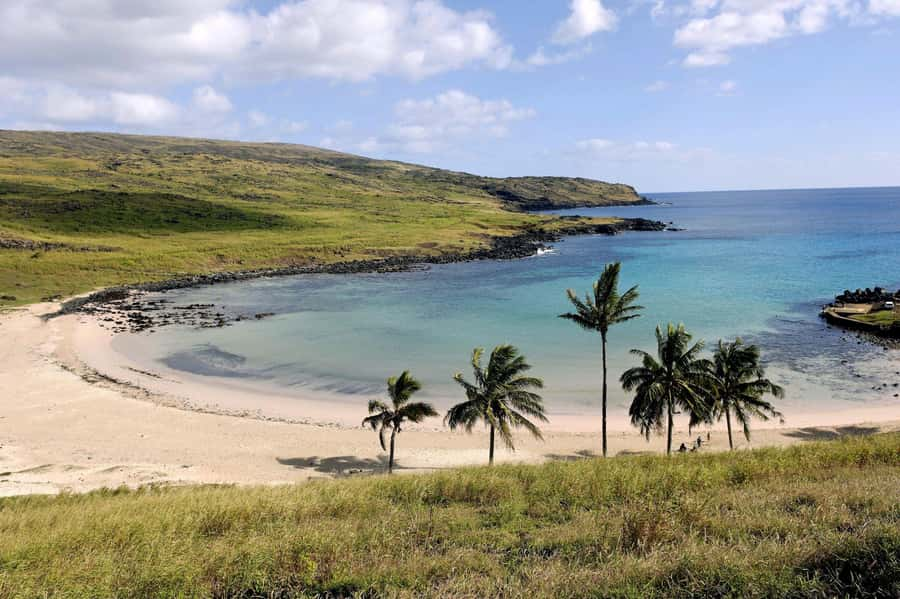
- The route includes beaches as well as archaeology: Ovahe has pinkish sand, while Anakena offers clear water and time to relax.
- It is a private tour: You travel with your own group, rather than joining a large shared coach.
- English, Spanish, and French are offered: Confirm your preferred language before booking.
- Food and park admission are extra: Bring funds for both, along with sun protection and water.
Why this route makes sense for a first day
I like this tour because it treats Easter Island as more than a collection of giant stone heads. The route moves from ceremonial platforms to the quarry where the statues were made, then finishes at the coast. That sequence helps you understand the work behind the Moai and the places where they served a cultural and spiritual purpose.
The day begins with pickup in Easter Island, generally from your hotel. You are asked to wait in the lobby 10 minutes before the scheduled time. If you arrive by cruise tender, pay special attention to the meeting instructions. A delayed tender once led to a late start, and another pickup was reportedly delayed by about an hour. That is not a reason to reject the tour, but it is a good reason to confirm the arrangements in writing.
At roughly seven hours, the tour covers a lot of ground. The listed stop times add up to around seven and a half hours before driving time, so you should expect a full day and some variation in timing. The private format helps, but this is still a packed route.
More moai and Rapa Nui trips around Easter Island
- From Hanga Roa: Rapa Nui Culture Sightseeing Tour
★ 4.6 · 307 reviews - From Hanga Roa: Easter Island Highlights 2-Day Tour
★ 4.3 · 205 reviews - From Hanga Roa: Easter Island Sightseeing Full Day Tour
★ 4.5 · 189 reviews
Vinapu and the island’s first architectural puzzle
The opening visit is at Ahu Vinapu, one of the places linked with the tour’s promise of lesser-known history. Its carefully fitted stonework has often been compared with Inca masonry because of the way large stones meet with tight joints.
I would listen closely here, but keep an open mind. The visual similarity is striking, yet the site should not be treated as proof of a direct connection between Rapa Nui and the Inca world. Your guide’s explanation matters, and this is one place where a two-way conversation is more useful than a memorized list of measurements.
The initial guided visit is short, about 20 minutes. That makes it an introduction rather than a full archaeological study. Still, it sets up an important theme for the rest of the day: Rapa Nui builders worked with stone in precise and demanding ways.
Akahanga and Moai left where they fell
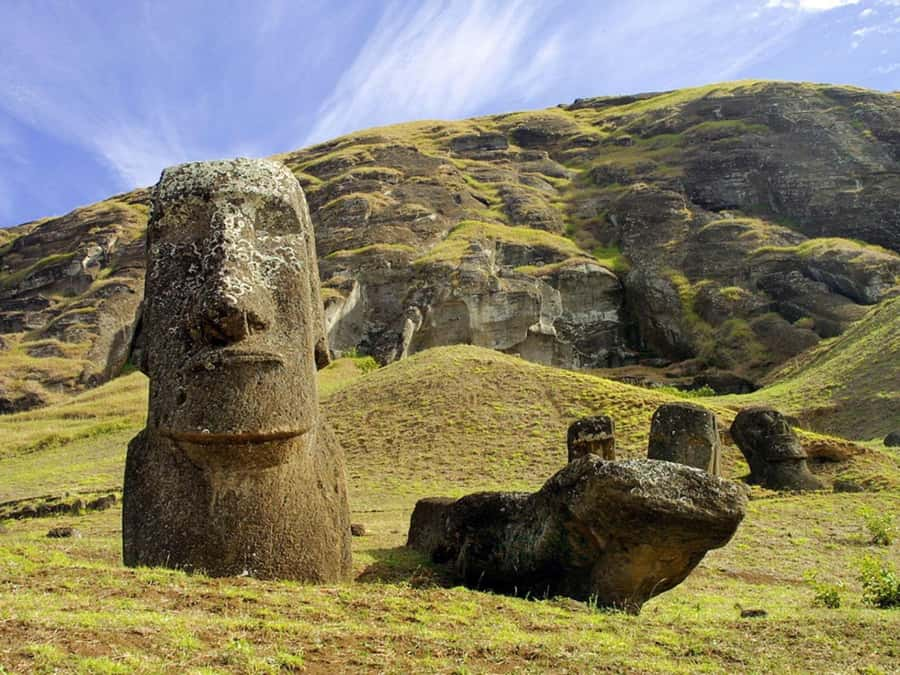
Ahu Akahanga follows, with about 30 minutes for a visit, photographs, and a walk. Here you can see Moai associated with a ceremonial platform and learn about statues that are no longer standing in their original upright position.
This stop helps correct a common misunderstanding. The island is not filled only with upright statues facing inland. Some Moai were toppled, some remain near their platforms, and others are still tied to the stages of carving and transport. Seeing different conditions across the day gives you a better sense of how much changed over time.
The stop is also useful for photography because it has a quieter feel than Tongariki. I would use the guide’s time here to ask about why the statues were placed where they were, what the platform meant, and how Rapa Nui communities understood the relationship between ancestors and living people.
One Makihi, a short stop with a distinctive Moai
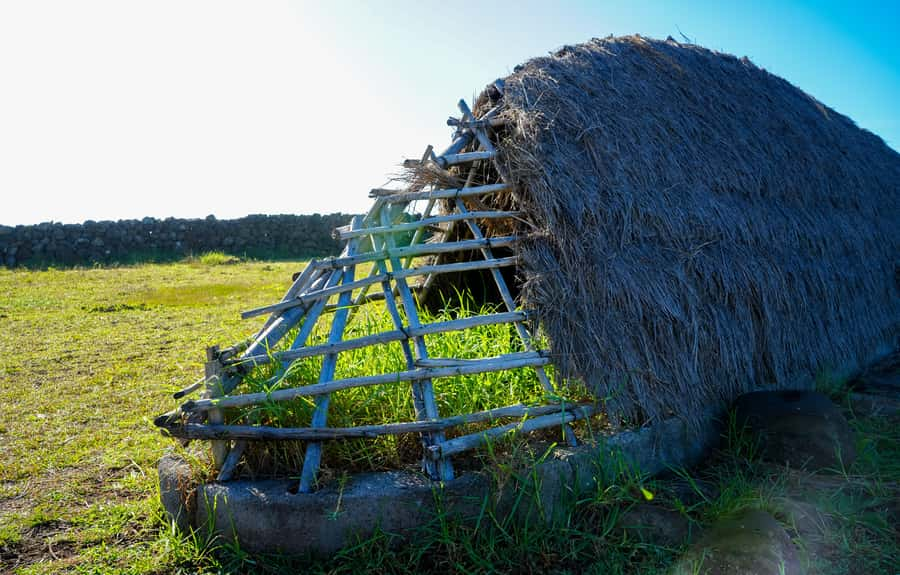
One Makihi is a brief photo and sightseeing stop, listed at about 30 minutes. The main feature is a finely carved Moai lying on its back, described as a supine statue.
This is not the place to expect a long walk or a large complex. Its value comes from the unusual position of the statue and the chance to see a detail many visitors might miss if they focused only on the island’s famous platforms. I appreciate stops like this because they break up the standard route and give the guide room to explain how a statue can be read as part of a larger process rather than as an isolated object.
Because this is one of the shorter visits, make sure you are ready to leave when the guide calls the group back. One recent booking experience noted that two brief photo stops were skipped, so the exact order and inclusion of minor stops may change during the day.
A few more trips around Easter Island worth a look
- Full day tour – DREAM
★ 5.0 · 86 reviews - Two days of Full Day Tour of Rapa Nui + Sunrise in Tongariki
★ 4.8 · 55 reviews - Easter Island: Full-Day Tour to Anakena
★ 4.7 · 27 reviews - Hanga Roa: Full Day Moai and Mistery
★ 4.4 · 22 reviews
Rano Raraku, the Moai quarry
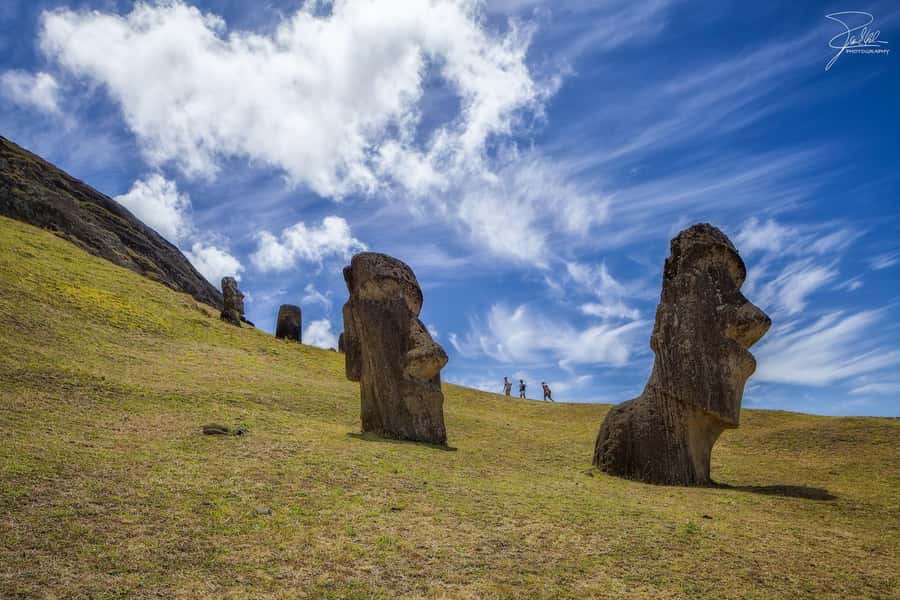
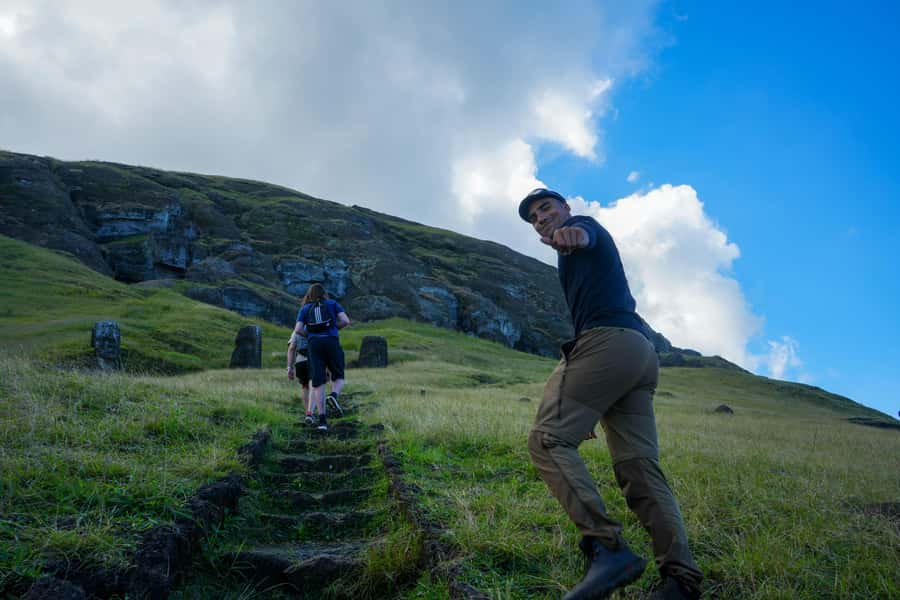
Rano Raraku is the heart of the tour. The visit is scheduled for about two hours, and that is the right amount of time for a place that rewards slow walking and close attention.
This volcanic quarry is known as the Moai factory because many of the statues were carved directly from its slopes. You can see unfinished figures and Moai at different stages of production. That changes the way you look at the completed statues later. Instead of imagining them appearing fully formed, you can follow the practical steps of shaping, separating, moving, and raising them.
I would save questions for this stop. Ask how the guide distinguishes a finished statue from one abandoned during carving, and what the unfinished figures reveal about the work process. The tour description promises discussion of the Moai’s role in Rapa Nui culture, so this is the natural place to connect engineering with belief.
The walk is important. This is not simply a roadside viewpoint where you take a picture and leave. Wear shoes suitable for uneven ground, though the supplied information does not specify trail conditions or accessibility. If you have limited mobility, ask the provider what portion of the quarry route is practical for you before booking.
Rano Raraku can also be the most tiring stop because of its length and walking time. Bring the individual bottle of water supplied with the tour, but do not rely on that alone for a full day in the sun. Since food is not included, pack something to eat unless you plan to buy food later at Anakena.
Tongariki and fifteen Moai in one frame
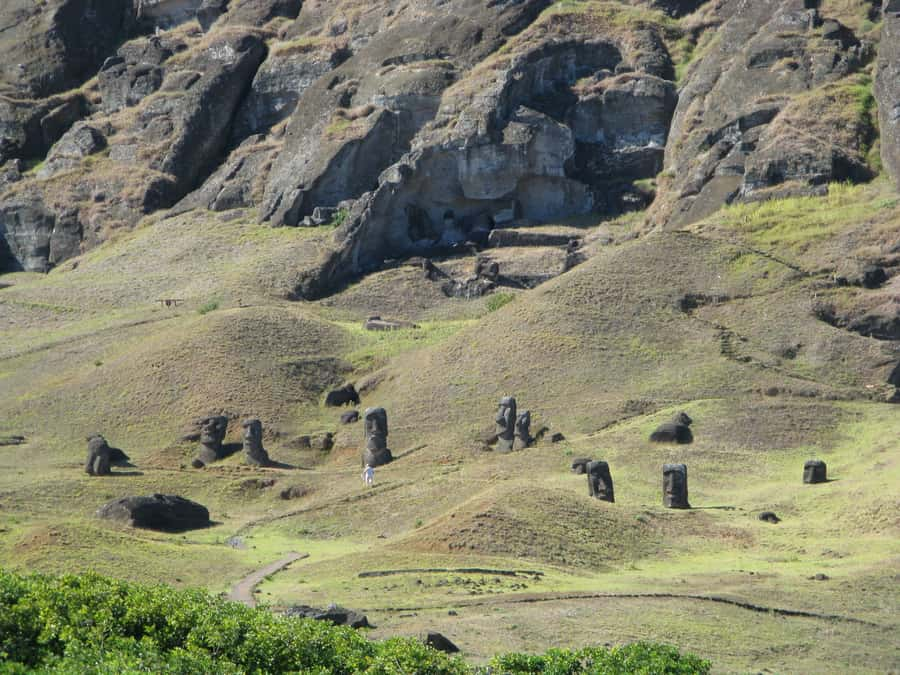
After the quarry, the route reaches Ahu Tongariki. The stop lasts about 80 minutes, giving you time for photographs, a guided explanation, and sightseeing around the platform.
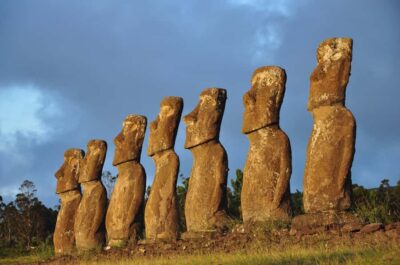
Tongariki is the grand visual center of the day. Fifteen Moai stand together on one long ceremonial platform, creating the view most people associate with Easter Island. The scale is hard to grasp from a screen. Standing at a distance, you can compare the statues’ different shapes and heights, then move closer to study their stone surfaces.
This is also where a good guide earns the private-tour price. The basic numbers are easy to memorize, but the better questions concern meaning. Why were these statues placed together? What did the platform represent? How does Tongariki differ from the smaller ahu visited earlier? Guides Simon and Flora have been associated with this experience, and the strongest feedback about them has focused on warmth, patience, and clear explanations.
Still, guide quality may vary. One English-language departure was criticized for repeating basic facts about height, weight, and statue counts without handling questions well. If your guide’s explanation feels thin, use the private format to ask direct questions early rather than waiting until the end.
Te Pito Kura and the story of the largest Moai
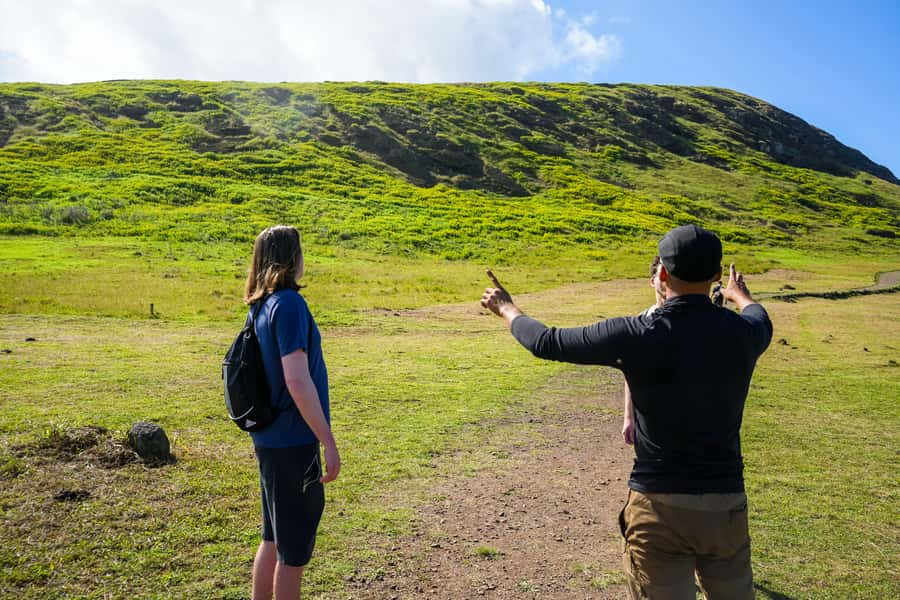
Ahu Te Pito Kura is another shorter stop, about 20 minutes. It is associated with one of the largest Moai on the island and is described as a sacred place.
Because the visit is brief, think of it as a focused stop rather than a long site walk. The value is the contrast with Tongariki. Tongariki presents fifteen statues as a group, while Te Pito Kura directs your attention toward scale, sacred meaning, and the fate of an individual monument.
This is a good moment to ask the guide to compare the statue here with the figures at Rano Raraku. Seeing the quarry and then a very large finished Moai on the same day lets you connect the raw volcanic material with the completed work.
Ovahe’s pink sand and a change of pace
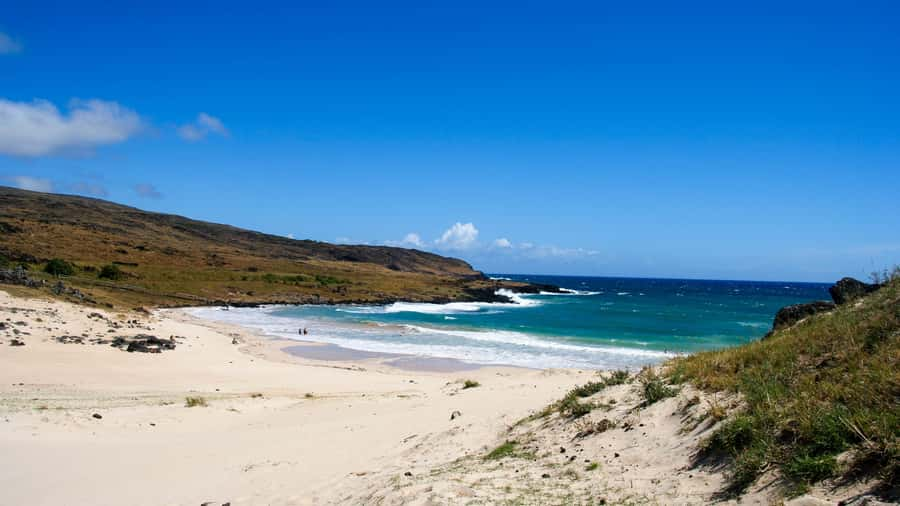
Ovahe provides a short coastal break, listed at about 20 minutes. Its pinkish sand gives the day a visual change after so many stone platforms and volcanic sites.
I like having this stop in the schedule because seven hours of archaeology can become a lot. Ovahe offers a chance to breathe, take photographs, and see another side of the island. The guide is still part of the visit, so you can ask about the beach and its place within the route.
Do not treat this as a guaranteed long swim or snorkeling session. The supplied details identify it as a sightseeing and walking stop, not a dedicated water-activity period. If you want substantial time in the water, Anakena is the better opportunity.
Anakena, the day’s relaxed finish
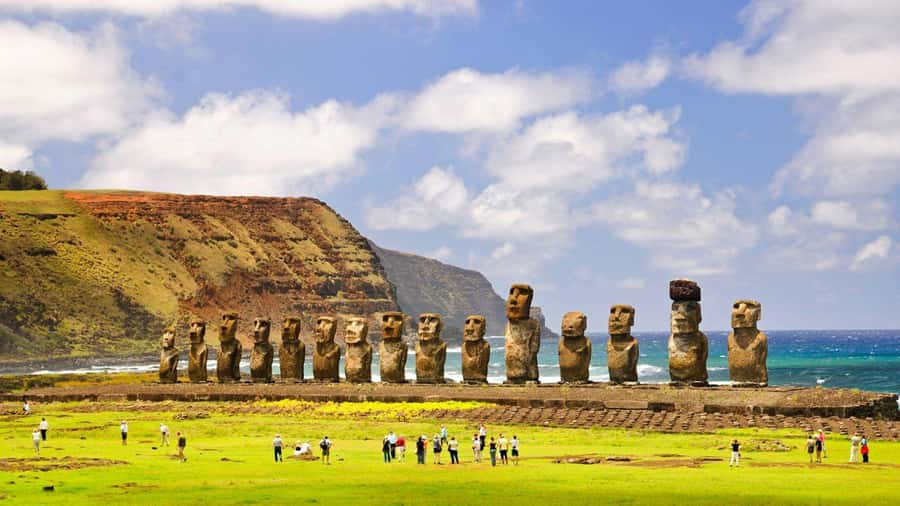
The final major stop is Anakena, with about 100 minutes for sightseeing, a guided visit, walking, and scenic views. A further 30-minute break allows free time, photographs, possible shopping, and a chance to enjoy the beach.
Anakena is a smart ending because it gives you room to shift from monuments to open-air relaxation. The beach has clear water and is described as suitable for activities such as snorkeling. You can also enjoy a picnic here, but remember that food is not included, so bring your own or budget for something available nearby.
The long time allocation makes Anakena more than a quick photo stop. You can decide whether to concentrate on the beach, ask final questions about the Moai, or simply rest before the return drive. If you want the tour to feel less rushed, this is the stop where your private group may benefit most from flexible pacing.
I would not count on every listed minor stop being completed if the day starts late or the group spends extra time at the quarry. Anakena, Tongariki, and Rano Raraku are the stops I would protect first. Ovahe and One Makihi are worthwhile, but they are more likely to be shortened when time is tight.
Guide quality and language matter here
The experience offers live guiding in English, Spanish, and French. That is useful on an island where the meaning behind the sites matters as much as the photographs.
The strongest guide comments have praised patience, professionalism, cultural explanation, and willingness to listen. Simon is noted for waiting when a tender arrived late and for explaining history, culture, and language. Flora is associated with a warm, capable guiding style. These details suggest the best version of the tour is conversational rather than mechanical.
There is also a clear warning. A poor command of English can make a private tour frustrating, especially when you want to ask about contested or complex subjects. Confirm your preferred language and, if possible, ask who will guide your group. If you are arriving from a ship, confirm exactly where the guide will meet you. Do not assume the provider will automatically know your tender schedule.
Is $219 good value?
At $219 per person, this is not the cheapest way to see Easter Island. But it includes a private group, hotel pickup and return, a live guide, and a route that reaches the island’s major Moai sites in one day.
The price makes the most sense if you have limited time, want transportation between distant locations, or value being able to ask questions privately. It is also a practical choice for a couple or small family that does not want to coordinate several separate visits.
The value is weaker if you mainly want independent beach time or already have transport arranged. Park admission and food are not included, and those extra costs need to be added to your budget. The private format cannot fix a communication problem, so guide language and pickup details deserve attention before payment.
Free cancellation up to 24 hours before the start and reserve-now, pay-later booking provide some flexibility. Those policies are helpful, but they do not replace a clear pickup plan.
Who should book this Moai tour?
I would choose this tour if you want the main archaeological sights in one organized day and prefer a private setting. It suits first-time visitors, cruise passengers with a tight window, and anyone who wants a guide to explain the cultural meaning behind the statues rather than simply point them out.
It is less suitable if you need a slow, highly specialized archaeological tour or if you dislike a full schedule with several short stops. The day includes walking, sun exposure, transfers, and a substantial visit at Rano Raraku. Ask about walking conditions if mobility is a concern.
My practical advice is simple: confirm the guide language, pickup point, tender timing if relevant, park admission, and food plan. If those details are settled, the route gives you a strong introduction to Rapa Nui, from unfinished Moai at the quarry to the fifteen figures at Tongariki and the beaches at the island’s northern end.
FAQ
How long does the Easter Island Moai tour last?
The advertised duration is seven hours. The planned visits add up to roughly seven and a half hours before allowing for travel, so the actual day may vary.
What sites are included?
The route includes Vinapu, Ahu Akahanga, One Makihi, Rano Raraku, Ahu Tongariki, Ovahe, Ahu Te Pito Kura, and Anakena, with pickup and return in Easter Island.
Is the tour private?
Yes. It is offered for a private group rather than as a shared group tour.
Which languages are available?
Live guiding is available in English, Spanish, and French. Confirm your preferred language before the tour.
Are food and park admission included?
No. Food and entrance fees for the parks are not included. The tour does include an individual bottle of water.
Does the tour pick me up at my hotel?
Hotel pickup and return are included. You should wait in the hotel lobby 10 minutes before the scheduled pickup time and confirm the exact meeting plan, especially if you are arriving by tender.
Just added around Easter Island
- Volcanic Refuges: Excursion to Underground Civilization★ 4.7 · 8 reviews
- Two days of Full Day Tour of Rapa Nui + Sunrise in Tongariki★ 4.8 · 55 reviews
- Half Day Tour in Rapa Nui★ 5.0 · 48 reviews
- Ride to the highest point on the island for sunset★ 5.0 · 40 reviews
- Rapa Nui Stargazing★ 4.5 · 62 reviews
- Tongariki Sunrise: Half Day Private Tour★ 3.8 · 9 reviews
- Sunrise Tongariki: Sunrise at Tongariki Park Private Tour★ 4.5 · 47 reviews
- Terevaka Horse Excursion: The highest point and 360° view.★ 4.7 · 38 reviews
Easter Island & Moai Tours, compared.
Two days of Full Day Tour of Rapa Nui + Sunrise in Tongariki
Read our review →
Browse the lists this tour appears in