
Reviewed · EASTER ISLAND & MOAI TOURS
Hanga Roa: Full Day Moai and Mistery
The Moai are the reason most people come to Rapa Nui, and this seven-hour circuit takes you to the island’s essential sites in one long day. You move from fallen statues and half-carved figures to the famous fifteen Moai at Tongariki, then finish at Anakena Beach.
I like the wide range of stops and the chance to see the Moai in their original settings, not just in photographs. I also like that local guides such as Ene, an archaeologist, have brought strong cultural and historical knowledge to the day. The main caution is time: one recent departure spent too long at lesser sites and moved too quickly through Tongariki, so guide quality and pacing can make a real difference.
Key points to know before booking
- Rano Raraku is the heart of the day: You see unfinished Moai still attached to the volcanic rock where they were carved.
- Tongariki deserves your full attention: Fifteen restored Moai face the sea, and a rushed visit would be a real loss.
- Anakena provides a welcome change of pace: Golden sand, palms, and turquoise water offer a calm ending after hours among archaeological sites.
- The guide matters: English and Spanish tours are available, with guides such as Ene bringing an archaeology background.
- The National Park ticket costs extra: Add that fee to the $100 tour price when working out your budget.
- This is an efficient overview: You cover six major places in about seven hours, but the schedule may feel brisk.
Six Rapa Nui sites in one well-packed day
This tour is built for you if you want a broad introduction to Easter Island, also called Rapa Nui, without arranging separate rides to each site. Pickup is available in Hanga Roa, and the package includes transportation, a driver, and a local guide.
The $100 price is reasonable for a full day of transport and guiding, especially on an island where the main archaeological sites are spread out. You are not simply paying for a vehicle. A good guide helps explain why the Moai were made, how the sites relate to Rapa Nui culture, and what you are actually looking at when a fallen statue appears to be only a pile of stone.
Still, the National Park ticket is not included. That extra cost is important to remember when comparing the total price with other tours. The experience lasts about seven hours, so it is an efficient introduction rather than a slow, highly private archaeological study.
More moai and Rapa Nui trips around Hanga Roa
- From Hanga Roa: Rapa Nui Culture Sightseeing Tour
★ 4.6 · 307 reviews - From Hanga Roa: Easter Island Highlights 2-Day Tour
★ 4.3 · 205 reviews - From Hanga Roa: Journey from Orongo to Ana Te Pahu
★ 4.3 · 75 reviews
Vaihu begins with Moai in a sacred setting
Vaihu is an atmospheric first stop. Here, ancient Moai lie or stand among the remains of a ceremonial site, giving you an early look at both the power and fragility of Rapa Nui’s stone culture.
I like beginning here because you do not start with the most famous view. Instead, you first encounter the Moai as part of a wider sacred setting. The statues are not isolated museum pieces. Their position, the stone platforms, and the surrounding coast help you understand that these were connected to community beliefs and ceremony.
Your guide should explain the meaning of the figures and the way they were created. This is where a strong local guide can make a clear difference. Ask questions early, especially if you want more detail about the Rapa Nui people and the role the Moai played in their culture.
Do not expect Vaihu to offer the same dramatic lineup as Tongariki. Its value is quieter. You are beginning to see how the island’s archaeological sites vary, and why visiting several of them gives you a fuller picture than visiting one famous platform alone.
Akahanga shows the island’s troubled past
At Akahanga, you see fallen Moai and scattered topknots, the large stone ornaments once placed above some statues. The scene has a more broken, unsettled feel than the carefully restored sites later in the day.
That contrast matters. You get a glimpse of the island’s difficult past rather than only its polished postcard image. The fallen figures invite questions about how the statues were brought down, what happened to the ceremonial platforms, and how much of the original arrangement can still be understood.
I would pay close attention to the guide here. Akahanga can be easy to skim if you see only toppled stone. With the right explanation, the site becomes a useful lesson in craftsmanship, ceremony, and the changes that affected Rapa Nui society.
This is also one of the places where pacing becomes important. Because the day includes six stops, your guide needs to give enough context without using too much time early on. If the explanation feels brief, ask for the main story before the group moves on.
Rano Raraku reveals where the Moai were born
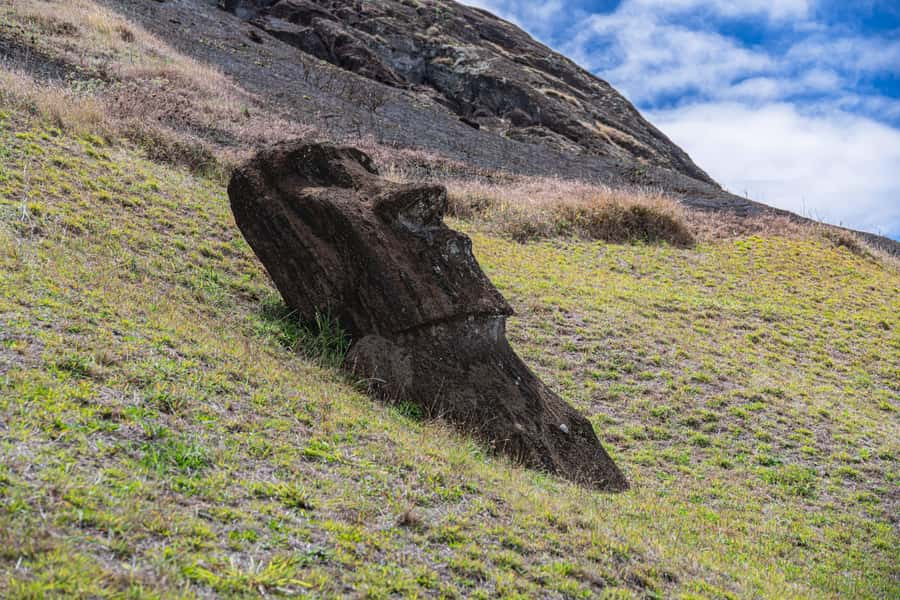
Rano Raraku is the day’s most important archaeological stop for many people. This volcanic quarry is where the Moai were carved, and you can see figures in different stages of completion.
Some remain partly attached to the rock. Others are positioned around the slopes, giving you a rare look at the work before a statue reached its final ceremonial site. The unfinished figures make the carving process easier to picture than any finished Moai can.
I especially like the way Rano Raraku changes your understanding of the statues. At Tongariki, you see the finished result. Here, you see the beginning: stone selected, bodies shaped, and enormous figures left at different points in the process.
The setting also adds to the experience. The quarry is surrounded by volcanic scenery, and the unfinished Moai appear connected to the earth rather than placed on a platform. Your guide can help explain the craftsmanship and spiritual beliefs behind the work, which is far more useful than simply taking photographs and moving on.
Allow yourself a little time to look closely. Notice how different the statues are in size, position, and stage of completion. This is one stop where a rushed schedule would weaken the whole day. If you have a choice between extra time here and a longer pause at a less distinctive site, Rano Raraku deserves priority.
A few more trips around Hanga Roa worth a look
- Two days of Full Day Tour of Rapa Nui + Sunrise in Tongariki
★ 4.8 · 55 reviews - Easter Island: Full-Day Tour to Anakena
★ 4.7 · 27 reviews - Small-Group Cajón del Maipo Full-Day Tour and Picnic
★ 4.5 · 2,277 reviews - Piedras Rojas, Altiplanics Lagoons & Salar Full-Day Tour
★ 4.7 · 592 reviews
Tongariki is the visual centerpiece
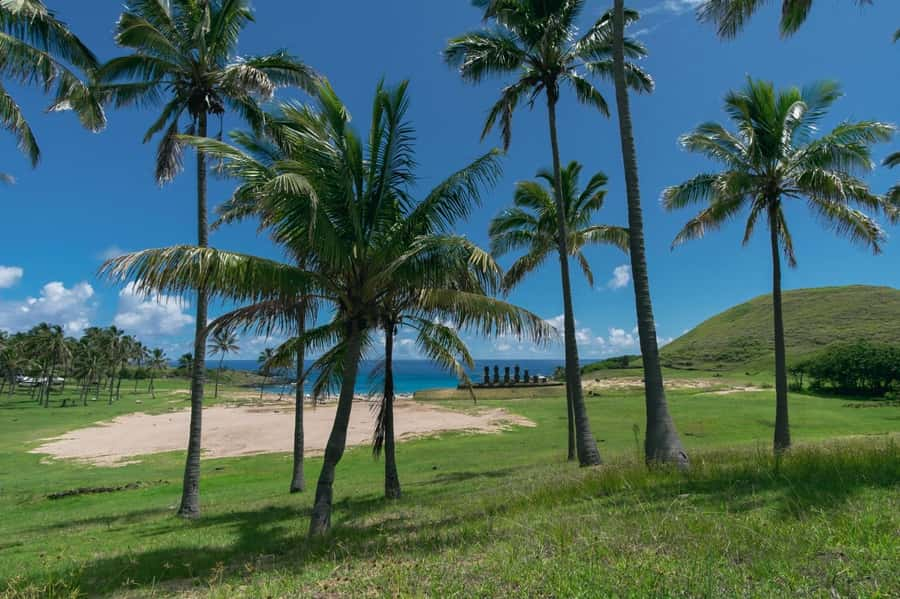
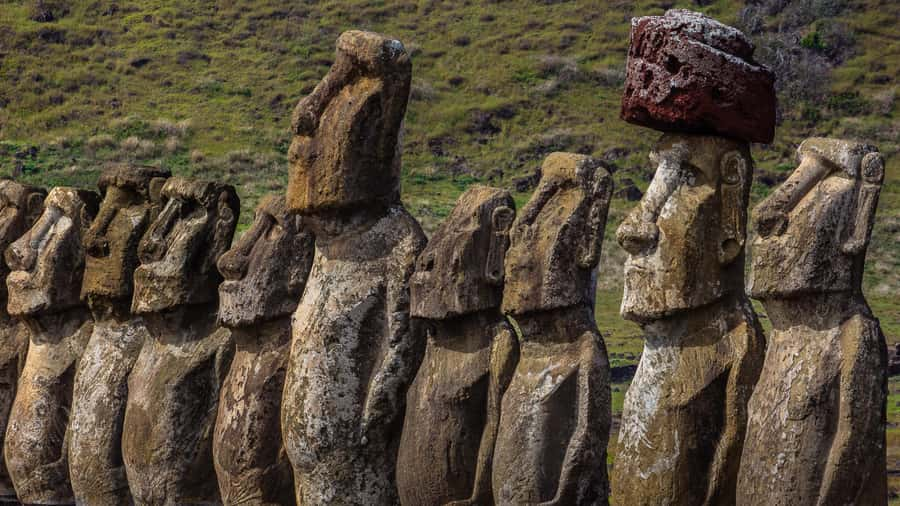
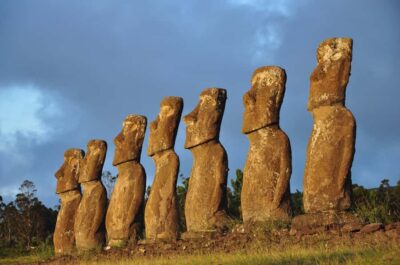
Tongariki is the image most people carry in their minds before arriving on Rapa Nui: fifteen Moai arranged on a broad platform with the Pacific behind them. The restored line is powerful, but the site is not only a place for a quick photograph.
Take time to look at the differences between the statues. Their size and shape are not identical, and the line feels more personal when you stop treating it as one large monument. Your guide can also explain the restoration work and the symbolic importance of the group.
This is the stop where tour pacing matters most. A recent departure was criticized for moving through Tongariki too quickly after spending time at less compelling empty areas. That is a fair warning for anyone booking a fixed itinerary. Ask at the start of the day how long you will have at each location, and make it clear that Tongariki is a priority for you.
I would rather have a focused explanation and time to take in the view than a long speech at a minor stop. The best guides understand that Tongariki needs breathing room. You should be able to photograph the full line, look toward the ocean, and listen without feeling pushed straight back to the vehicle.
Pito Kura adds a quieter ceremonial stop
Pito Kura is less famous than Rano Raraku or Tongariki, but it adds another layer to the day. You visit a sacred ceremonial village with distinctive features and learn about the rituals that once took place there.
The stop works best as a change in rhythm. After the scale of the quarry and the fifteen statues at Tongariki, Pito Kura invites you to think about ceremony and community rather than sheer size.
Because the details of this site may be less familiar, your guide’s explanation is especially important. Do not judge it only by the number of intact Moai. Its purpose is to broaden your understanding of Rapa Nui’s spiritual life and the way sacred places were used.
This is also a likely place for the schedule to feel uneven if the guide does not manage the day well. The site deserves context, but it should not take time away from Tongariki or Rano Raraku. A clear explanation is more valuable than a long stop.
Anakena Beach ends the day on a different note
Anakena is a welcome final stop because it shows you a side of Rapa Nui beyond archaeology. Turquoise water meets golden sand, and coconut palms give the beach a relaxed Pacific feel.
After several hours among stone platforms and volcanic sites, Anakena gives you room to slow down. I like ending here because the day does not finish with one more explanation beside a statue. You get a chance to reflect on what you have seen while enjoying one of the island’s most attractive natural settings.
Do not expect Anakena to replace a dedicated beach outing. The tour’s main purpose is the Moai circuit, and the time at the beach may be limited by the earlier stops. Still, even a short visit changes the mood. It reminds you that Rapa Nui is not only an archaeological destination. It is also an island of beaches, ocean views, and natural beauty.
If you care most about swimming or relaxing by the water, ask how much time is planned there. If you want a balanced day, the stop is well placed.
The guide can shape the entire experience
The strongest part of this tour can be the human explanation. Local guides lead the day in English or Spanish, and the experience has included guides such as Ene, who has an archaeology background. A guide with that kind of training can help connect the stones to Rapa Nui culture instead of giving you a simple list of dates and names.
Zoe has also received warm praise for her hospitality and presentation. Those details matter on a seven-hour outing. You spend much of the day together, and a friendly guide can make the vehicle rides, site visits, and practical transitions feel easy.
The quality may not be identical on every departure. One recent booking described an unmotivated guide who slept during the drive and hurried through Tongariki, while the driver was considered helpful. I would treat this as a reason to ask for the guide’s name and background when possible, not as proof that every departure has the same problem.
The tour is advertised with a driver and a local guide, so those roles may be separate. That can work well when the driver handles the road and the guide focuses on the sites. You should still expect the guide to manage the day’s timing carefully.
How the $100 price fits your Rapa Nui budget
At $100 per person, this is best viewed as a practical island overview. You receive transportation from Hanga Roa, a driver, and a live guide for roughly seven hours. Reaching six major sites independently would require more planning, and you would lose the interpretation that gives the ruins meaning.
The value is strongest if you have limited time on Rapa Nui or want to see the major sites in one outing. It is also useful if you prefer not to organize separate transport for Rano Raraku, Tongariki, and Anakena.
The price is less attractive if you already have private transport or prefer to spend a long time at one or two sites. This is a set route with several stops, not a custom archaeological day. The National Park ticket is extra, so include that cost before deciding.
Free cancellation up to 24 hours before the start and the option to reserve now and pay later make the booking less rigid. Wheelchair access is also listed, which is useful to confirm if mobility affects your plans. The tour offers pickup in Hanga Roa, and the stated languages are English and Spanish.
Who will get the most from this tour
I would recommend this experience to you if:
- You want to see the main Moai sites in one day.
- You are staying in Hanga Roa and need included transport.
- You prefer a guide who can explain cultural meaning and archaeology.
- You want both ancient sites and a beach stop.
- You have a short visit to Rapa Nui and need an efficient overview.
You may want another format if you dislike fixed schedules or want to spend a full morning at Rano Raraku. A private tour could give you more control over timing, but this group-style outing is likely to cost less and covers a great deal in seven hours.
The wheelchair-accessible description is helpful, though the information provided does not explain the exact surfaces or access conditions at every archaeological site. If that is important for you, ask before booking.
Should you book the Moai and Mystery day?
Book it if your priority is coverage. You will visit Vaihu, Akahanga, Rano Raraku, Tongariki, Pito Kura, and Anakena in one organized day, with transport and a guide included. That combination gives you finished Moai, fallen statues, the carving quarry, a restored ceremonial platform, a sacred village, and a beach.
I would book with one request in mind: confirm that the schedule allows proper time at Rano Raraku and Tongariki. Those are the places where a hurried visit would be most disappointing. If your departure is led by a guide with the care and background shown by Ene or Zoe, the day can offer both solid context and warm hospitality.
The tour earns its place on a first visit because it gives you the broad picture. Just remember that the park ticket costs extra, and the quality of the day depends heavily on how well the guide balances explanation, driving time, and the sites that matter most.
FAQ
How long does the Moai and Mystery tour last?
The tour lasts about seven hours. Starting times depend on availability.
Which sites does the tour visit?
The route includes Vaihu, Akahanga, Rano Raraku, Tongariki, Pito Kura, and Anakena Beach.
Is transportation included?
Yes. Transportation, a driver, and a local guide are included, with pickup available from Hanga Roa.
Are the National Park fees included?
No. The National Park ticket is not included in the $100 tour price.
What languages are available?
Live guiding is available in English and Spanish.
Can I cancel the tour or pay later?
You can cancel up to 24 hours in advance for a full refund. You can also reserve your place and pay later.
Just added around Hanga Roa
- Volcanic Refuges: Excursion to Underground Civilization★ 4.7 · 8 reviews
- Two days of Full Day Tour of Rapa Nui + Sunrise in Tongariki★ 4.8 · 55 reviews
- Sunrise Tongariki: Sunrise at Tongariki Park Private Tour★ 4.5 · 47 reviews
- Rapa Nui: Polynesian Massage★ 4.8 · 5 reviews
- Rapa Nui: 3 Excursions with Hotel Transfers★ 4.3 · 6 reviews
- Rapa Nui Highlights Program: 3 incredible tours to discover!★ 4.8 · 18 reviews
- Rapa Nui Dreams: Experiencie Pack 3 Days★ 4.7 · 32 reviews
- Ahu Vinapu, Rano Kao and Orongo City Half-Day Tour★ 4.6 · 20 reviews
Easter Island & Moai Tours, compared.
Two days of Full Day Tour of Rapa Nui + Sunrise in Tongariki
Read our review →
Browse the lists this tour appears in