
Reviewed · SANTIAGO CITY TOURS
From Hanga Roa: Rapa Nui Culture Sightseeing Tour
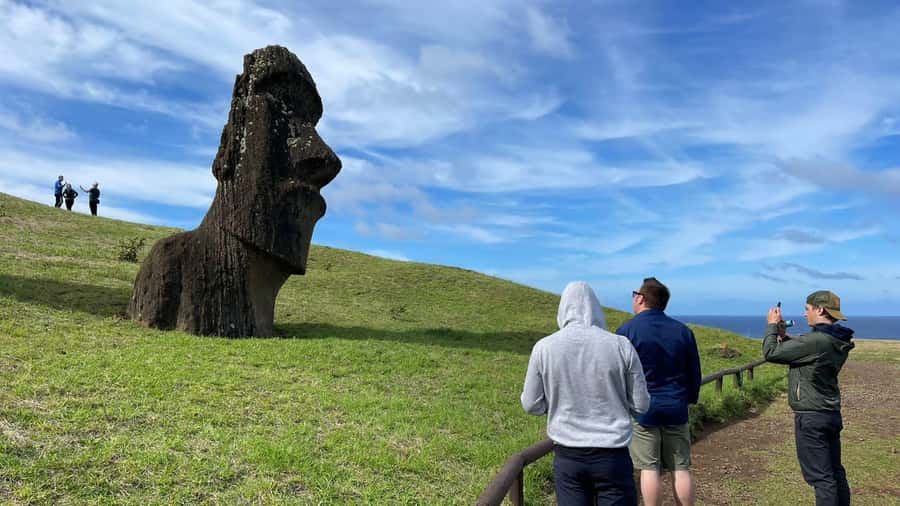
Rapa Nui packs some of the world’s most striking archaeological sites into a small island, and this tour takes you to the places most people hope to see first: the moai platforms at Tongariki, the quarry at Rano Raraku, and Anakena beach. I like the way a local guide adds meaning to the stone figures instead of leaving you to guess at their purpose. I also like the hotel pickup and the chance to cover the island’s main eastern and northern sites without arranging transport yourself.
The main tradeoff is time. You will spend about eight hours moving between stops, getting on and off the vehicle, and walking over uneven ground. Lunch is not included, and one long restaurant stop reportedly caused a group to miss the final sight. Plan to keep the day moving.
The essential Rapa Nui day, at a glance
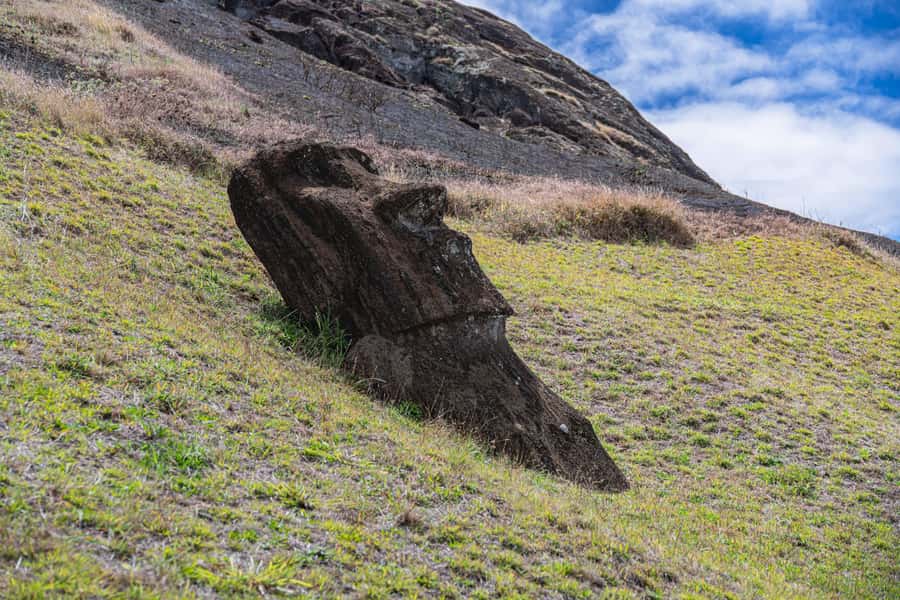
- Rano Raraku puts the moai story into view: unfinished statues still emerge from the volcanic quarry, giving you a rare look at how they were made.
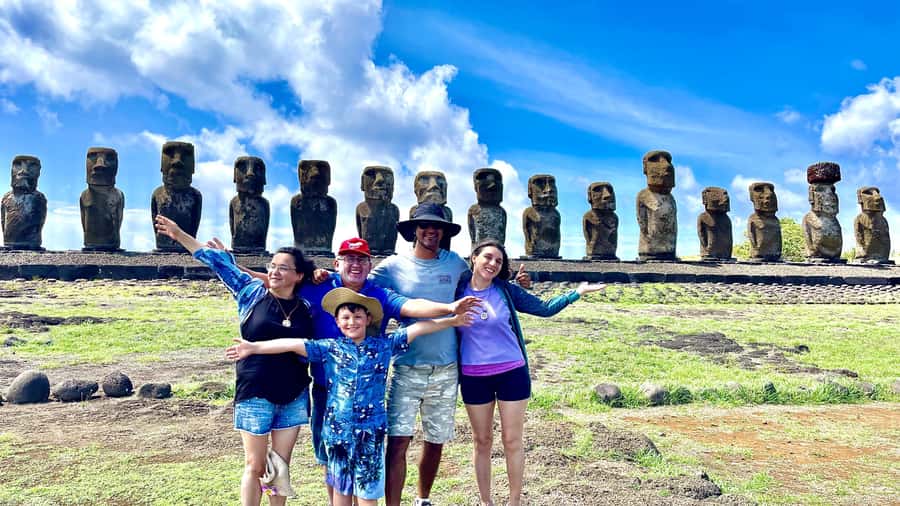
- Tongariki is the headline stop: its row of standing moai is the island’s most famous group and deserves your full attention.
- Anakena gives the day a welcome change of pace: after archaeology and walking, you get about 90 minutes of free time at a palm-fringed beach.
- The guide makes the difference: past guides including Frank, Hivi, Javiera, Zoe, Enzo, and Habi were praised for clear English, local knowledge, patience, and warmth.
- The price is useful if you have one day: at $80 per person, transport, hotel pickup, drop-off, and guiding are covered, but your National Park ticket and lunch are extra.
- Bring swimming gear: the beach at Anakena is the best chance during this tour to swim and relax beside the sea.
Why this route works for a first day on Rapa Nui
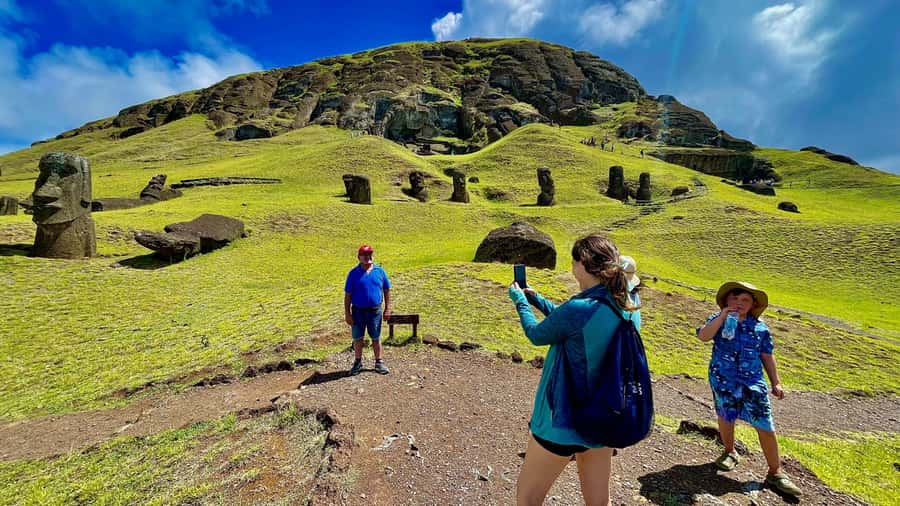
I like this tour because it follows the island’s eastern and northern highlights rather than spending the whole day in Hanga Roa. You get moai platforms, a quarry, a sacred stone, village remains, and a beach in one run. That variety matters. Rapa Nui is not only about taking a picture beside a statue. The sites make more sense when you see where the figures were carved and how they were placed.
The $80 price is fair for a full day if you are traveling without a rental car or do not want to manage the island’s roads and park rules yourself. You get transportation, hotel pickup and drop-off in Hanga Roa, and a live guide in English or Spanish. The National Park ticket is not included, so add that to your budget before you book. Lunch is also on you.
This is a group sightseeing day, not a private archaeological tour. That keeps the price down, but your pace will be shaped by the whole group. Most stops last 45 minutes, while Rano Raraku gets about an hour and Anakena about an hour and a half. That is enough for a useful visit, but not enough to linger everywhere.
More moai and Rapa Nui trips around Chile
- From Hanga Roa: Easter Island Highlights 2-Day Tour
★ 4.3 · 205 reviews - From Hanga Roa: Easter Island Sightseeing Full Day Tour
★ 4.5 · 189 reviews - From Hanga Roa: Journey from Orongo to Ana Te Pahu
★ 4.3 · 75 reviews
Starting in Hanga Roa and crossing the island
Pickup is from your Hanga Roa hotel. You are asked to wait in the lobby 10 minutes before the scheduled time, a small detail worth taking seriously on an island where a late start can squeeze the final beach stop.
The first ride lasts about 45 minutes. That gives your guide a chance to introduce the day, explain what you are seeing, and set the cultural context. Guide quality matters here. Frank has been praised for speaking English, Spanish, and Rapa Nui, while other guides named on past departures include Javiera, Hivi, Habi, Zoe, Enzo, Jose, and Hivi. The guide assigned to your group can vary, but the strongest part of this experience is clearly the human connection.
The vehicle has been described as comfortable, with one small group reporting a good-quality minivan. Group size can vary. One departure had only four people, while other days may be larger. Ask at booking if the group size matters to you, since a smaller vehicle makes it easier to hear and reduces the time spent loading and unloading.
Vaihu and the first look at moai culture
The first cultural stop is described as a traditional village, paired with the Vaihu area. You spend about 45 minutes walking with the guide and looking at moai scattered around the site.
Vaihu is a useful opening stop because it introduces the basic pattern of Rapa Nui archaeology: moai, ahu platforms, ceremonial space, and a strong connection between the statues and the communities that made them. The site may not deliver the same instant impact as Tongariki, and one day-tripper felt the first couple of stops were less striking than what came later. Still, this stop helps you understand what to look for.
Your guide is especially valuable here. Instead of rushing straight to photos, listen for explanations of local traditions and the lives of the island’s early inhabitants. Take a few minutes to notice the setting as well as the figures. The moai are not isolated objects in a museum. They belong to a wider ceremonial and family story tied to the land.
The walk is not described as strenuous, but you should expect outdoor paths and uneven ground. Comfortable shoes, sun protection, and water make sense.
Akahanga, where history and legend meet
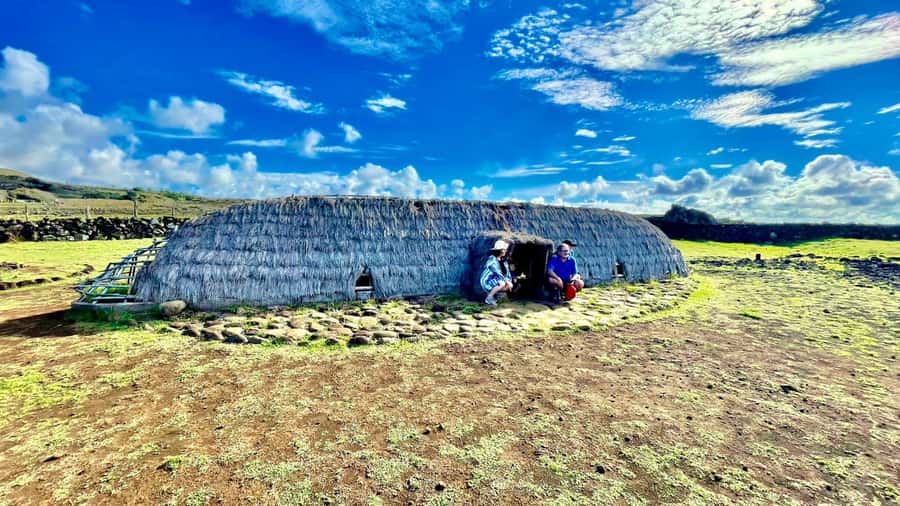
At Ahu Akahanga, you get another 45-minute guided walk. This archaeological site is associated with legends and fallen moai, and it has a rougher, less polished feeling than Tongariki.
I would not judge Akahanga only by the number of statues you see. Its value is in the clues left around the ahu and the chance to hear how local tradition and archaeology overlap. A good guide can explain what is known, what is debated, and why the site matters without turning every mystery into a certain fact.
This is also one of the stops where a strong guide can keep the day from feeling like a sequence of photo breaks. Past departures were praised for guides who answered questions in context and added details about local traditions. If you are interested in culture rather than only famous viewpoints, pay close attention here.
More sightseeing days around Chile
- Private Santiago City Half Day Tour
★ 4.0 · 414 reviews - Valparaiso: Street Art, Funiculars and Port City Tour
★ 4.8 · 214 reviews - Traditional City Tour
★ 5.0 · 58 reviews - Santiago: City Highlights Walking Tour
★ 4.2 · 51 reviews
Rano Raraku, the day’s archaeological high point
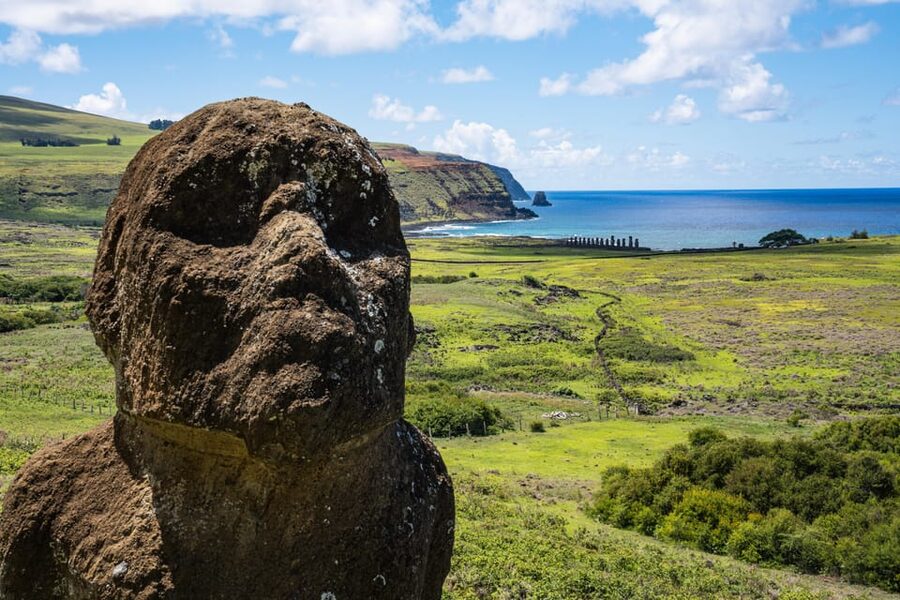
Rano Raraku is the stop I would prioritize most. This is the quarry where the moai were carved, and unfinished statues remain partly attached to the volcanic stone or appear to rise from the hillside. Seeing the figures in this setting changes your understanding of the whole island.
At the other sites, you see finished statues placed on ceremonial platforms. Here, you see the production area. The unfinished forms show different stages of work and make the scale of the undertaking easier to grasp. Even if you have seen photographs, the experience of walking among the quarry figures is different.
You get about an hour with a guided visit and walk. That is longer than most stops, but it can still pass quickly. Use the time for both the main view and the smaller details near the paths. Your guide should explain how the quarry relates to the moai at other sites, so this is a good moment to ask how the figures were shaped and moved.
Lunch may be offered at a restaurant near the quarry, but it is not included in the tour price. One past schedule placed lunch as late as 3 p.m., and another group missed the last stop after the meal took too long. I would ask the guide about the lunch timing early in the day. If you want to protect your Anakena time, keep lunch efficient and do not assume the restaurant stop will be quick.
Tongariki and the island’s most famous row
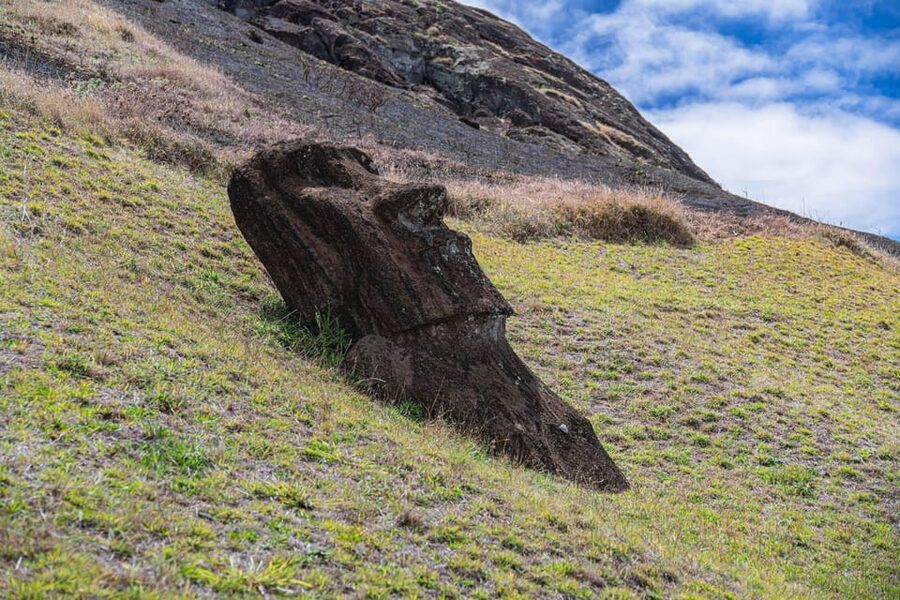
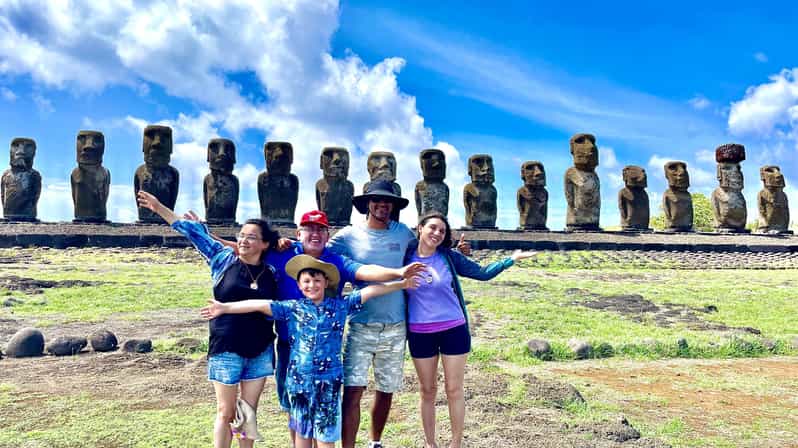
Ahu Tongariki is the visual centerpiece. About 45 minutes are set aside for a guided visit, and this is where you see the largest platform of standing moai on Rapa Nui.
The broad platform and repeated line of figures make Tongariki feel grand even before the guide speaks. It is also the place where photos can take over the visit, so give yourself time to look away from the camera. Notice the position of the platform, the scale of the statues, and how different each figure feels despite the repeated arrangement.
This stop is one reason the tour works well for a first visit. You see the image that likely brought you to Rapa Nui, but you also get an explanation of its cultural setting. The guide can connect Tongariki with the earlier quarry visit, helping you see the statues as part of a process rather than isolated monuments.
The 45-minute limit is reasonable for a group tour, though visitors mainly interested in photography or archaeology may want longer here. If the group has a choice about how to use a few spare minutes, I would favor Tongariki and Rano Raraku over the less central stops.
Te Pito Kura and the magnetic stone
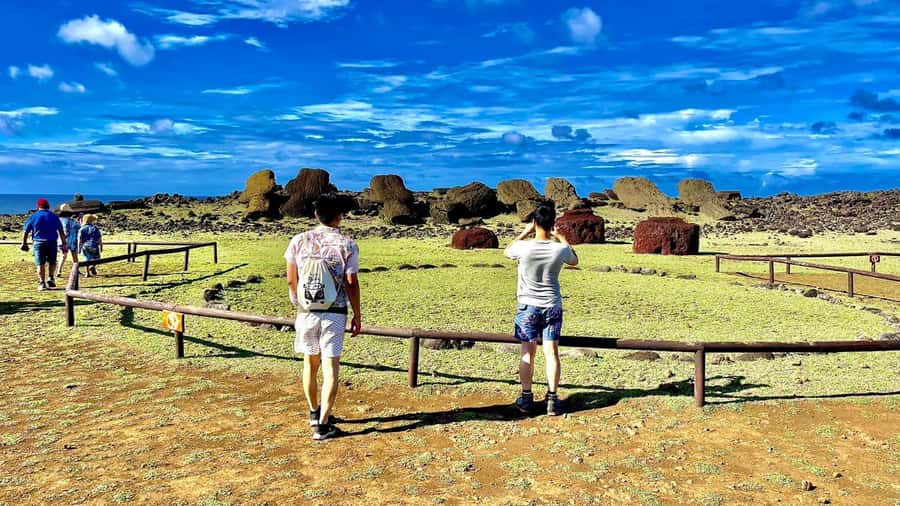
The next stop is Ahu Te Pito Kura, with about 45 minutes for a guided walk. The site is known for its large moai and the rounded stone called Te Pito o te Henua, often described as having magnetic or mystical qualities.
This is a shorter visit, but it adds an important spiritual dimension to the day. Rapa Nui sites are not only engineering achievements. They also carry stories, beliefs, and meanings that are still important to the island’s identity. Listen carefully to how your guide presents the stone. The point is not simply to test a supposed magnetic effect, but to understand why the place has spiritual importance.
By this stage, you will have visited several archaeological sites, so fatigue may begin to show. Keep water handy and use the walk as a chance to stretch. The schedule has many stops, and the repeated bus rides can make the day feel longer than the distances suggest.
Anakena beach, the right ending
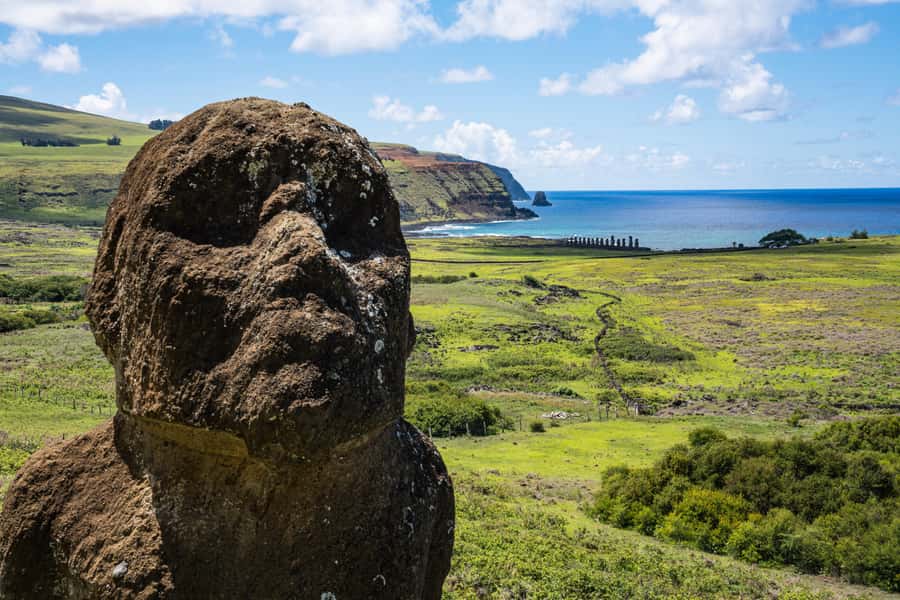
Anakena is the final major stop, with about 90 minutes of free time. That longer break is welcome. After a day of moai and archaeological explanation, you can slow down beside the palm trees, take photos, walk along the sand, or swim.
The beach is repeatedly singled out as a highlight, and one past visitor called it the best beach they had seen. I would bring swim shorts, a towel, and a change of clothes if you plan to enter the water. The schedule gives you enough time for a real break, but only if the earlier stops and lunch stay on track.
Anakena also makes a smart final stop because it shows another side of Rapa Nui. The island is not only a remote archaeological destination. It has beaches, open sea, and places where you can sit quietly and think about what you have seen.
Do not count on an extended beach afternoon. This is still a sightseeing tour, and you return to Hanga Roa after the free time. If swimming is your priority, organize your lunch and earlier stops with that in mind.
Guides, comfort, and the small details that matter
The strongest praise centers on the guides. Past departures included local islanders who explained traditions, answered questions, spoke clear English, and handled both English- and Spanish-speaking groups. Frank was especially noted for his language ability and his explanations of moai culture. Javiera, Hivi, Habi, Zoe, and Enzo were also praised for being friendly, patient, or well informed.
That does not mean every guide will suit every interest. One past departure involved a guide who gave only surface explanations and handled a personal exchange poorly. That appears to be an exception among the supplied feedback, but it is a useful reminder: group tours depend heavily on the individual guide assigned that day.
Comfort is another plus. Pickup and drop-off save you from arranging transport, and the vehicle has been described as comfortable. The tradeoff is the number of stops. Expect plenty of getting on and off the bus, plus short walks at each site. The tour is wheelchair accessible, but confirm the exact conditions for your mobility needs before booking because outdoor archaeological paths can vary.
The cancellation terms are practical: you can cancel up to 24 hours before the start for a full refund, and you can reserve now and pay later. Those policies help if your Rapa Nui plans are still shifting.
Who should book this Rapa Nui tour?
I would choose this tour if you have one full day on the island and want to see the major moai sites without renting a vehicle. It suits first-time visitors, history fans, photographers who want the essential locations, and anyone who prefers a local guide to explain what is in front of them.
It is also a good fit if you want a mix of culture and scenery. Rano Raraku and Tongariki deliver the big archaeological moments, while Anakena provides time beside the sea.
I would look elsewhere if you want long, quiet visits at only two or three sites. The schedule is broad rather than slow. You will see a lot, but you cannot give every place the same amount of time. Independent visitors with several days may prefer to split these locations across separate outings.
Final booking advice
Book this tour if your main goal is to cover Rapa Nui’s essential eastern and northern sights in one day. At $80, the combination of transport, hotel pickup, a local guide, and a full route offers solid value, even after adding the National Park ticket and lunch.
Before departure, confirm the pickup time, carry water, wear walking shoes, and pack swimwear and a towel. Most important, ask when lunch will happen and protect your Anakena time. If the assigned guide is as strong as Frank, Javiera, Hivi, Zoe, Enzo, or Habi have been on past departures, the history and local perspective will make the long day worthwhile.
FAQ
Where does the tour start and finish?
The tour includes pickup and drop-off at your hotel in Hanga Roa. You should wait in the hotel lobby 10 minutes before the scheduled pickup time.
How long does the tour last?
The tour lasts eight hours, including transportation between Hanga Roa and the sites.
Which places are included?
The route includes Vaihu, Ahu Akahanga, Rano Raraku, Ahu Tongariki, Ahu Te Pito Kura, and Anakena beach.
Is lunch included?
No. Lunch is not included in the $80 price. The group may stop at a restaurant, including one near the moai quarry, but you pay for your own meal.
Is the National Park ticket included?
No. The National Park ticket is an additional cost.
What languages are available?
The tour offers live guiding in English and Spanish.
Is the tour wheelchair accessible?
Yes, the activity is listed as wheelchair accessible. Because several stops include outdoor walks, confirm the practical arrangements for your needs before booking.
Just added around Chile
- 4 TOUR IN ATACAMA IN 3 DAYS★ 4.6 · 12 reviews
- Atacama Desert: Horseback Adventure with Scenic Views★ 4.7 · 42 reviews
- Santiago: City Highlights Walking Tour★ 4.2 · 51 reviews
- Puerto Varas: Peulla Day Trip★ 4.5 · 57 reviews
- Santiago: The Essentials City Tour & Optional Concha y Toro★ 3.4 · 40 reviews
- Horseback Trailride Excursion★ 5.0 · 48 reviews
- Horseback Private Wine Tour and Country Grill from Santiago★ 5.0 · 52 reviews
- Traditional City Tour★ 5.0 · 58 reviews
Santiago City Tours, compared.




The Essentials City Tour & Optional Concha y Toro
Read our review →Browse the lists this tour appears in