
Reviewed · EASTER ISLAND TOURS
From Hanga Roa: Easter Island Sightseeing Full Day Tour
Easter Island’s moai are most impressive when you see the places where they were made, moved, and finally left behind. This full-day route links the island’s key eastern and southern sites, from toppled statues at Akahanga to the great line of moai at Tongariki and the quarry at Rano Raraku. Rano Raraku is the star attraction, but the stops around it give the statues a much fuller story.
I like the small group of up to 14 people, which is a sensible size for a day built around short walks, photo stops, and guide talks. I also like the bilingual local guides. Hiva, Ata, Fernanda, Enzo, Javi, and Pocho are among the guides praised for clear explanations and a calm pace. The main drawback is that $70 does not include the national park ticket or lunch, and a few people have found the vehicle seating or pickup timing less than ideal.
Key points to know before booking
- Rano Raraku explains how the moai were made: You see unfinished figures cut from the volcanic rock, not just finished statues on ceremonial platforms.
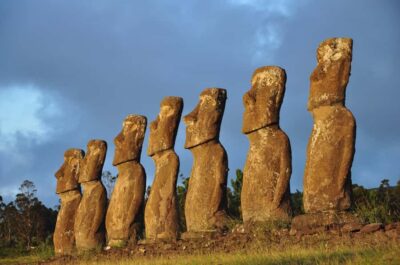
- Tongariki delivers the classic view: Fifteen moai face inland with the Pacific behind them, making this the tour’s strongest photo stop.
- The route covers a lot in one day: Vaihu, Akahanga, Rano Raraku, Tongariki, and Te Pito Kura make this a useful first tour if your time is limited.
- Guides are the main strength: The best guides, including Hiva, Ata, Fernanda, and Enzo, explain both the archaeology and the local stories in English and Spanish.
- Pack your own food and water: Lunch is not included, and one detailed account noted few places to buy supplies along the route.
- Expect a small van, not a private car: Group size is limited, but your seat may depend on where you are collected.
Why this route works so well in one day
Easter Island is small enough to circle by road, but its important sites are spread out. A good guide also matters because the moai are not simply statues to photograph. Their placement, carving marks, fallen positions, and connection to village life all add meaning that is easy to miss on your own.
This eight-hour trip gives you a broad introduction without asking you to arrange transport between remote archaeological sites. Pickup and return to your accommodation are included, which is especially useful in Hanga Roa, where you may not want to spend your limited time sorting out a vehicle or finding each entrance.
The group limit is listed as 14, though one account described a minivan carrying 12 people and another described a group of only three. That means the feel of the day can vary. With a smaller group, questions are easier and departures may be quicker. At full capacity, the vehicle can feel more crowded, and the person who boards last may not get a window seat.
The guides receive the strongest praise. Ata was singled out for very clear English, while Hiva was praised for detailed explanations and careful attention to the group. Fernanda’s calm manner suited people who wanted a relaxed day, and Enzo was noted for answering questions in both English and Spanish while keeping the schedule moving. The quality of your guide will shape the experience more than any other part of the trip.
More moai and Rapa Nui trips around Chile
- From Hanga Roa: Rapa Nui Culture Sightseeing Tour
★ 4.6 · 307 reviews - From Hanga Roa: Easter Island Highlights 2-Day Tour
★ 4.3 · 205 reviews - From Hanga Roa: Journey from Orongo to Ana Te Pahu
★ 4.3 · 75 reviews
Vaihu and the first look at fallen moai
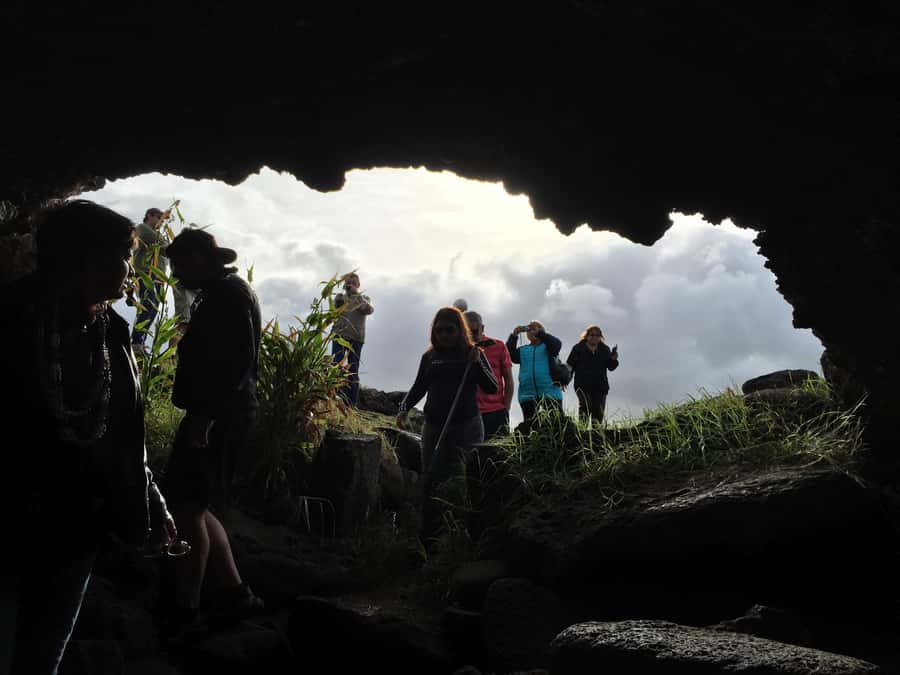
Vaihu introduces you to the island’s ceremonial sites in a quiet setting. You see moai connected with an ahu, or ceremonial platform, and hear about how these great figures were made and placed. The point here is not just size. You begin to understand that each statue belonged to a wider social and religious setting.
This is a useful first stop because it slows you down before the more famous sites. A guide can explain what to look for in the arrangement of the stones, the position of the statues, and the remains of the settlement nearby.
The site also gives you an early look at fallen moai. Their toppled condition can feel startling after seeing polished photographs of upright statues. It helps to remember that the island is not an outdoor display arranged for modern visitors. Many sites preserve signs of change, conflict, weather, and abandonment.
Bring sturdy footwear for the short walks and uneven ground. The supplied information does not give a precise walking distance, but the day includes several archaeological stops with some steps and brief walks rather than one long hike.
Akahanga and the human side of the island
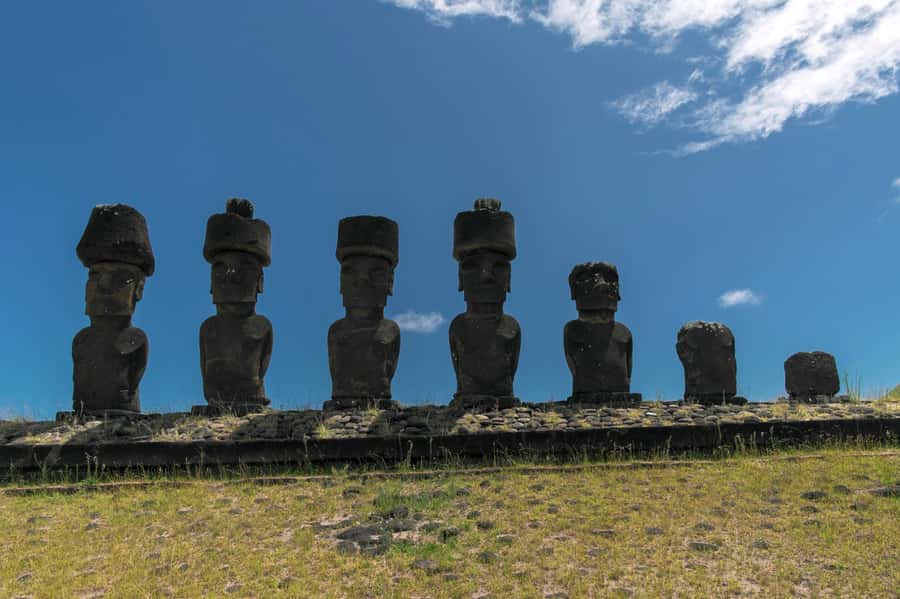
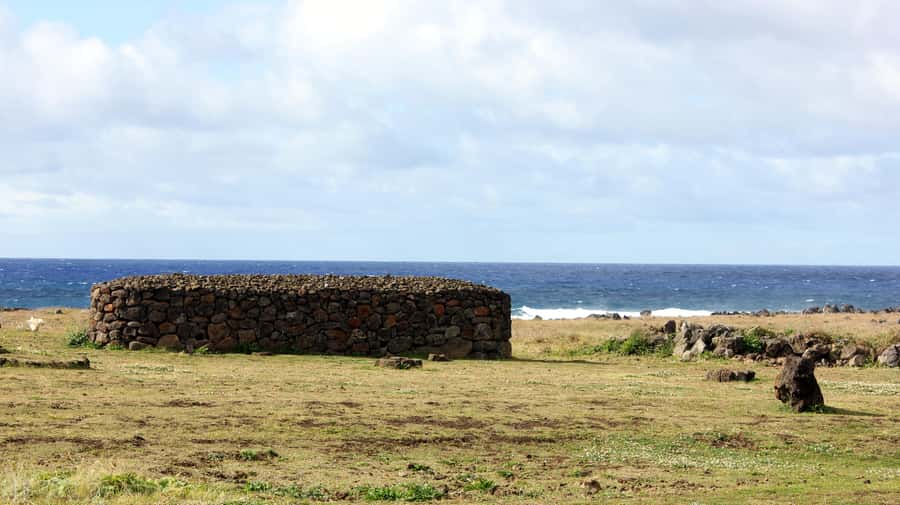
Akahanga adds another layer to the story. Here you see toppled moai and remains linked with traditional Polynesian village life. The stop is less about one perfect view and more about reading the site as a former community, with ceremonial areas and everyday life connected in one place.
I find this kind of stop valuable because it prevents the tour from becoming a parade of statues. The moai were made by people who lived, worked, worshipped, and competed here. Akahanga helps connect the monumental stonework to the society that produced it.
Allow time for your guide’s explanation. The visual details may not be as instantly dramatic as Tongariki, but the context is important. You may also pause here for food, depending on the day’s arrangements. However, lunch is not included, and the published details do not promise a formal meal stop, so you should carry snacks and water rather than count on buying something.
One detailed account described a stop at Aka Hanga for lunch, while another warned that there was no reliable lunch stop or place to purchase food. Treat that difference as a reason to plan for yourself. A packed meal and a refillable water bottle are the safest choices.
Rano Raraku, the place where the moai began
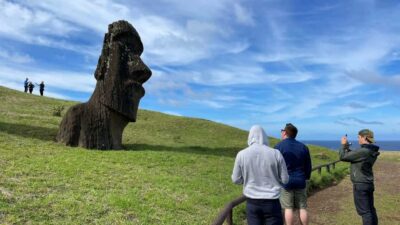
Rano Raraku is the day’s most important archaeological stop. This volcanic quarry is where the island’s famous moai were carved. You can see unfinished figures still attached to the rock, as if the workers put down their tools and walked away.
That unfinished work is what makes the site so powerful. At other locations you see the completed result. Here you can study the process: the stone face emerging from the slope, the scale of the bodies, and the steep ground from which the figures were cut.
Your guide’s explanation is especially useful here. Without context, the quarry can look like a collection of statues scattered across a hillside. With a good account of the carving process, you can picture the labor involved and appreciate why this place is central to the island’s story.
Rano Raraku is also a place where timing matters. The tour has five principal stops, so you will not have unlimited time at every location. One person specifically noted that the stone-carving site can be visited only once with the national park ticket. That makes it worth staying with your group and using your time carefully.
You should have your national park ticket ready, along with your passport or ID if requested. The park admission is not included in the $70 tour price. Ask about current ticket arrangements before setting out, since access rules matter at several major sites.
A few more trips around Chile worth a look
- Small-Group Cajón del Maipo Full-Day Tour and Picnic
★ 4.5 · 2,277 reviews - Piedras Rojas, Altiplanics Lagoons & Salar Full-Day Tour
★ 4.7 · 592 reviews - From El Calafate: Torres del Paine Full Day Tour
★ 4.6 · 434 reviews - Punta Arenas: Full-Day Whales, Penguins, and Glaciers Tour
★ 4.9 · 325 reviews
Tongariki and the island’s signature view
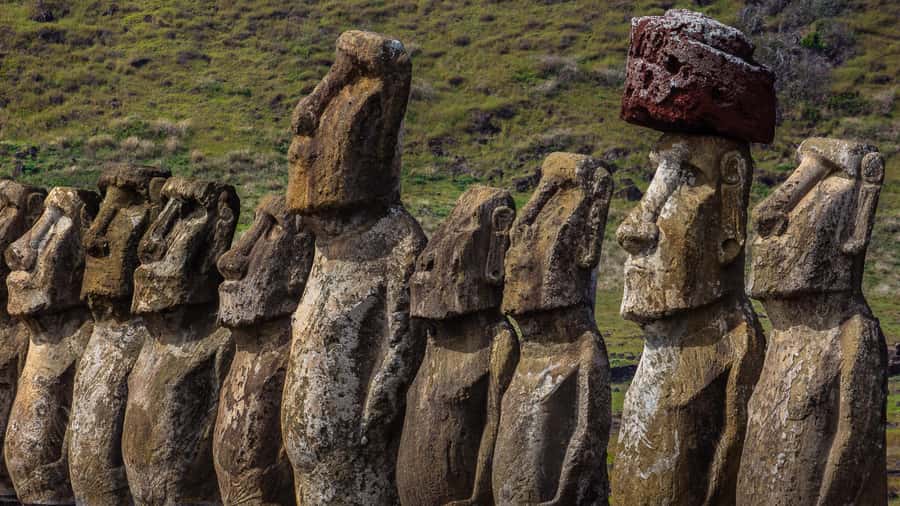
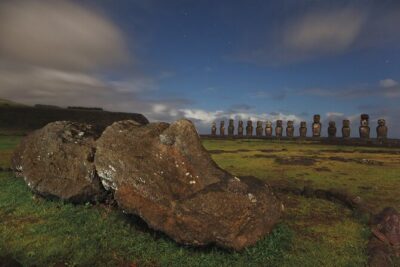
Tongariki is the visual high point. Fifteen moai line the ceremonial platform with the Pacific Ocean behind them. The scale is hard to grasp in photographs, and the broad setting gives you room to step back and see the full row.
This is the spot for your classic Easter Island photograph, but try not to spend the entire visit behind your phone. Look closely at the differences between the figures, the platform beneath them, and the way the row relates to the coast.
Tongariki also rewards a guide’s story. The statues are not just arranged for symmetry. Their placement connects to ceremony, community, and the long process of restoration. The supplied tour details do not promise a particular sunrise or sunset visit, so expect a daytime stop within the full-day schedule.
Some people want more time at Tongariki and Rano Raraku, the two most visually striking places. Others appreciate the wider route. Your time at each stop will depend on the group, the guide, and the day’s pickup schedule. If you care strongly about photography, tell your guide early that you would like a few quiet minutes at the best viewpoints.
Te Pito Kura and the final stop
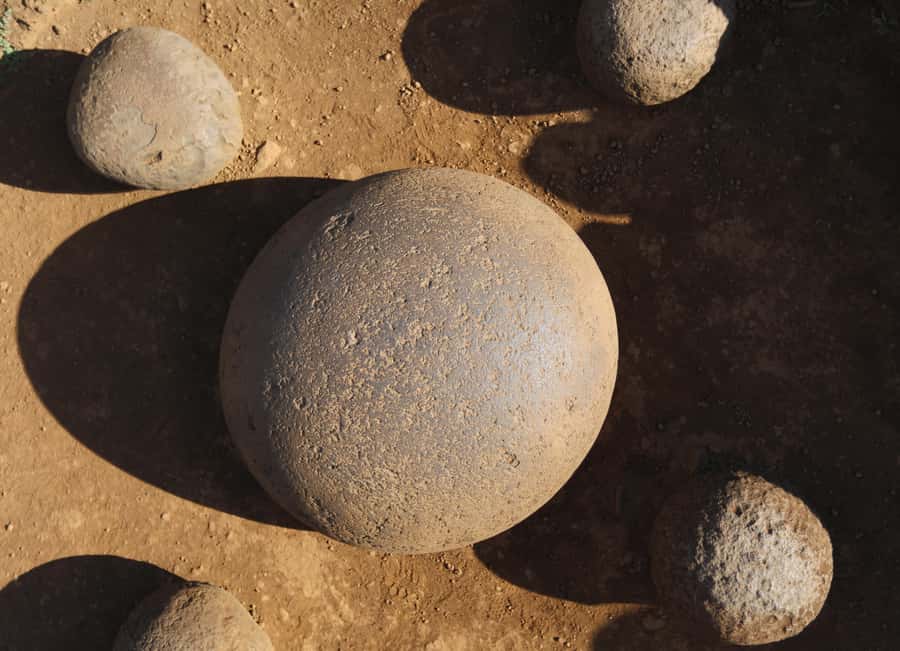
Te Pito Kura brings together archaeology, local belief, and geology. The site is associated with the idea of the navel of the world and includes a notable rounded stone that has long attracted stories about magnetic qualities.
The stone is interesting partly because it shows how physical places gather meaning over time. You get a cultural explanation as well as a natural feature, which makes this a good closing stop after the heavier archaeological sites.
Descriptions of the tour differ on the exact finish. The main route names Te Pito Kura as the final destination, while some accounts describe ending at Anakena Beach, with time to swim or have a drink. Do not assume a beach stop is guaranteed unless your operator confirms it for your date.
That point matters. One person enjoyed ending at a beach, while another had not brought swimwear and spent more than an hour waiting while others used the water or nearby bars. If a beach stop is part of your day, pack a swimsuit and towel. If you do not want to swim, bring a book, snack, or other small way to pass the time.
Guides, language, and the pace of the day
The tour includes a live guide in English and Spanish. The best match for you will be a guide who can explain clearly without turning every stop into a long lecture. Past guide names attached to strong experiences include Hiva, Ata, Fernanda, Enzo, Javi, Pocho, Gabriel, Kainoa, Angel, and Simon.
The praise is not limited to facts. Guides were also appreciated for answering questions, helping with group needs, driving the day at a comfortable speed, and staying calm when someone delayed departures. That matters on an eight-hour outing with several stops.
The pace is generally described as steady rather than exhausting. You get short walks and some steps, with time at each site. Still, one person felt the visits were too quick and that two hours at the beach reduced time at the archaeological sites. If you want a slow study of every stone, a private guide or a separate site visit may suit you better.
The tour is a bilingual experience, so explanations may alternate between English and Spanish. A guide such as Ata was praised for especially clear English, but language comfort can vary by guide. If detailed English interpretation is essential, mention that when booking or ask which guide is scheduled.
Transport, food, and what to carry
Hotel pickup and drop-off make this a practical option, but be ready for a broad pickup window. One person was told to expect collection at 9:45 a.m. and was not collected until 10:20 a.m. Since another pickup followed, keep your phone available, wait outside, and allow extra time.
The vehicle is a small minivan. It is described as mechanically sound, and the driver was praised for handling rough roads and avoiding potholes. The downside is simple: seating is not guaranteed. One person who boarded last was placed in the middle without a window, which made photography difficult.
Take these items:
- Passport or ID card
- National park ticket
- Water and snacks
- Sunscreen and a hat
- Comfortable shoes
- Swimsuit and towel if a beach stop is confirmed
- A light layer for changing weather
Lunch is not included. The most useful advice is to pack enough food for the day. Bathroom stops may be limited, so use facilities when they are available rather than waiting for the next site.
Is $70 good value?
At $70 per person, this is not the cheapest way to see Easter Island, and one person directly called it pricier than some local guide options. The price becomes easier to justify if you value hotel transport, a bilingual guide, a small group, and a route that reaches the island’s major eastern and southern sites in one day.
You are also paying for simplicity. You do not need to arrange separate transport to Vaihu, Akahanga, Rano Raraku, Tongariki, and Te Pito Kura. You get a guide who can explain what you are seeing, and you return to your accommodation afterward.
Remember to add the national park ticket and your own lunch to the budget. If you already have transport and prefer to explore at your own pace, hiring a local guide directly may offer better flexibility. If this is your first day on the island and you want the main sights covered efficiently, $70 is a fair working price.
Who should book this tour?
I would choose this trip if you have limited time on Easter Island, want the major moai sites in one outing, or prefer not to drive unfamiliar roads. It also suits people who value historical explanation more than independent wandering.
It is a good fit for couples, solo visitors, and small groups who want a social but manageable day. The group cap of 14 is far more personal than a large coach, though your experience depends on the final group size.
I would think twice if you need a window seat, want long quiet periods at each monument, or dislike fixed schedules. You should also reconsider if you expect lunch to be provided or want a guaranteed swim at the end.
Should you book it?
Book this tour if you want an efficient first look at Easter Island and appreciate a guide who can connect the moai with the people and work behind them. The route is strong, the main guides have earned praise for clear English and careful pacing, and hotel transport removes much of the day’s friction.
Skip it in favor of a private arrangement if you want complete control over timing, meals, seating, and beach time. For most first-time visitors with one open day, though, this is a sensible way to see the essential sites. Pack food, confirm the park ticket, arrive early for pickup, and bring swimwear only if the beach finish is confirmed.
FAQ
How long does the Easter Island sightseeing tour last?
The tour lasts eight hours. Check the available start times when booking.
Which sites are included?
The route includes Vaihu, Akahanga, Rano Raraku, Tongariki, and Te Pito Kura. Some day descriptions also mention Anakena Beach as a possible ending, so confirm that detail for your departure.
Is hotel pickup and drop-off included?
Yes. Transportation, pickup from your accommodation, and return drop-off are included.
How large is the group?
The tour is described as a small-group experience with a maximum of 14 participants. Some departures may be smaller.
Which languages does the guide speak?
The live guide speaks English and Spanish. Guide clarity may vary, so ask about the scheduled guide if you have specific language needs.
Is the national park ticket included?
No. The national park ticket is not included in the tour price.
Is lunch included?
No. Lunch is not included. Bring water and snacks because food stops and buying opportunities may be limited.
What should I bring?
Bring your passport or ID card, national park ticket, water, snacks, sun protection, and comfortable shoes. Bring a swimsuit and towel if a beach stop is confirmed.
Can I cancel the booking?
You can cancel up to 24 hours in advance for a full refund. The tour also offers reserve now and pay later booking.
Just added around Chile
- 4 TOUR IN ATACAMA IN 3 DAYS★ 4.6 · 12 reviews
- Atacama Desert: Horseback Adventure with Scenic Views★ 4.7 · 42 reviews
- Santiago: City Highlights Walking Tour★ 4.2 · 51 reviews
- Puerto Varas: Peulla Day Trip★ 4.5 · 57 reviews
- Santiago: The Essentials City Tour & Optional Concha y Toro★ 3.4 · 40 reviews
- Horseback Trailride Excursion★ 5.0 · 48 reviews
- Horseback Private Wine Tour and Country Grill from Santiago★ 5.0 · 52 reviews
- Traditional City Tour★ 5.0 · 58 reviews
Easter Island Tours, compared.
Browse the lists this tour appears in