
Reviewed · EASTER ISLAND & MOAI TOURS
Easter Island: Half-Day Archaeology Tour
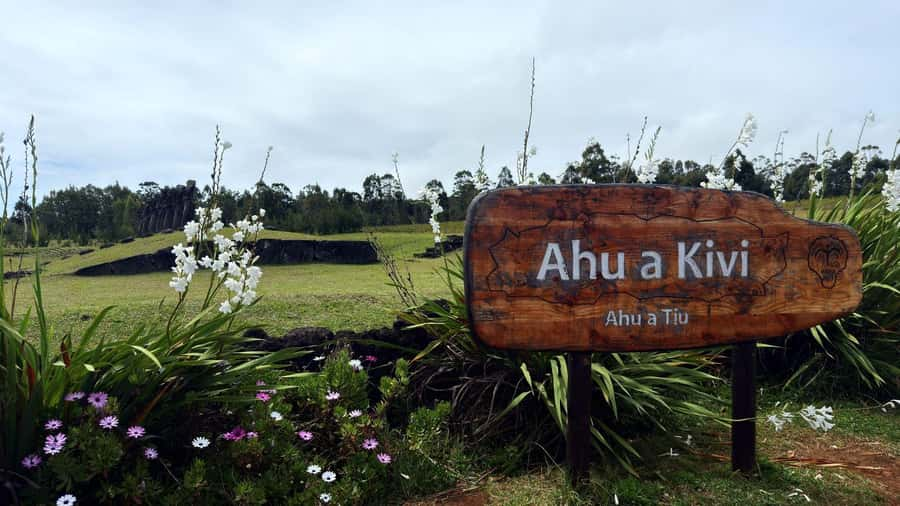
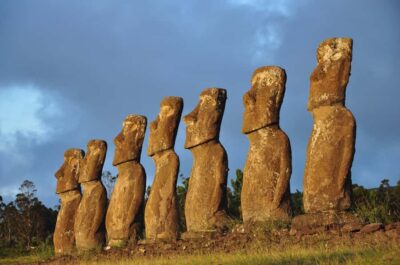
Rapa Nui’s great mystery comes into focus at Ahu Akivi, where seven huge moai face the ocean instead of turning their backs to it. This compact tour links that unusual site with the red-stone quarry at Puna Pau and several ceremonial platforms, giving you a useful first look at Easter Island’s archaeology.
I like the small group of up to 15 and the hotel pickup, which make a short visit easy to manage. I also like the route’s variety: you see a lone moai by the coast, unfinished-looking red pukao at their quarry, seven sea-facing figures, and an inland platform tied to farming.
The main consideration is cost. The tour is $91 per person, but the Rapa Nui National Park entrance fee is another $100, making the outing a much larger investment than the advertised tour price alone.
Key points to know before you book
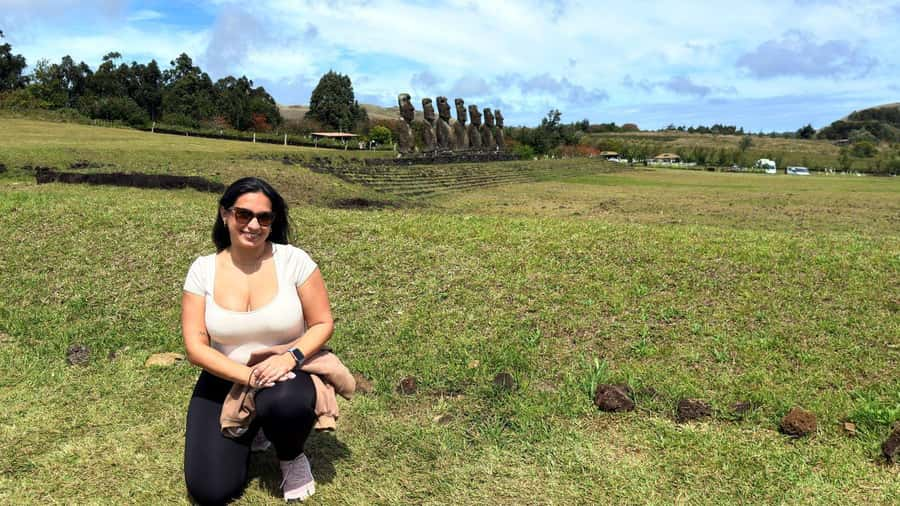
- Seven moai with an unusual view: Ahu Akivi’s statues face toward the ocean, unlike most moai, which face inland.
- The source of the red topknots: Puna Pau is the red scoria quarry where about 30 pukao remain in or near the site.
- A short route with four main stops: Expect Ahu Tahai, Puna Pau, Ahu Akivi, and Ahu Huri A Urenga within three hours.
- Hotel pickup in Hanga Roa: Transport is included for hotel-based visitors, with English and Spanish guiding.
- The national park fee is extra: Budget about $191 per person if the listed $100 entrance fee applies separately to each participant.
- An inland ceremonial site: Ahu Huri A Urenga is one of roughly 25 ahu away from the coast, set near an agricultural area.
Why this three-hour Rapa Nui route works
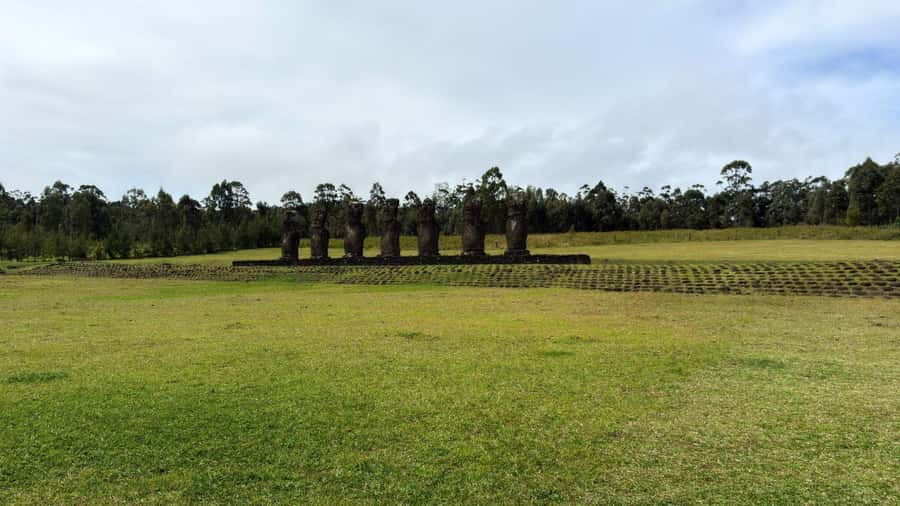
Rapa Nui National Park covers most of Easter Island and protects about 900 moai, along with around 300 ahu, the ceremonial platforms built for these stone figures. In three hours, you cannot cover the whole island, but you can see several types of site and begin to understand how the moai fit into island society.
The tour starts with pickup from your Hanga Roa hotel. You are asked to wait in the lobby 10 minutes before the scheduled time, and the driver will wait no longer than five minutes after pickup. That makes punctuality important, especially if several hotels are on the route.
I see this as a good orientation tour rather than a complete Easter Island visit. You get a guide, transport, and a focused selection of places, but the short duration means each stop is likely to feel brisk. If you have only a small window on the island, that tradeoff makes sense. If you have several days, use this as a first introduction and allow separate time for the larger archaeological sites.
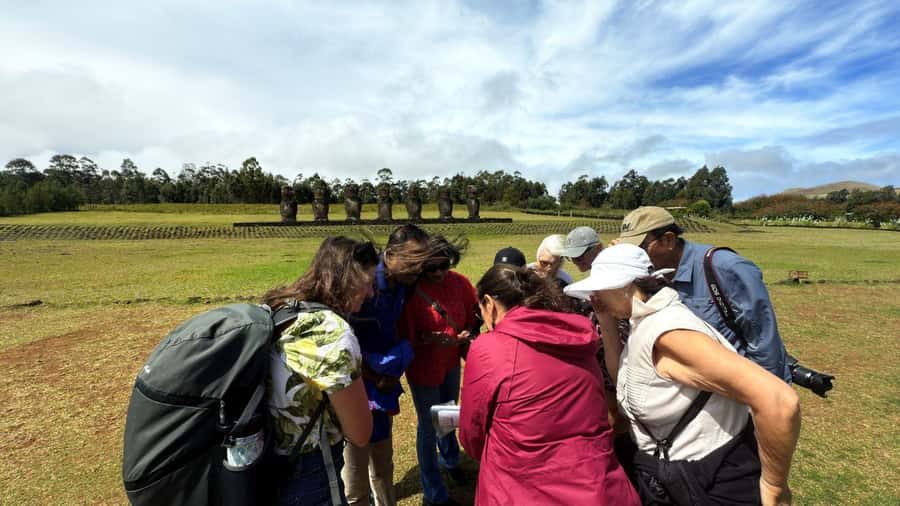
The guide speaks English or Spanish. The small-group limit of 15 people is helpful here. A guide can explain the meaning of an ahu and a moai without the group becoming unwieldy, while you still retain the social feel of a shared excursion.
More moai and Rapa Nui trips around Hanga Roa
- From Hanga Roa: Rapa Nui Culture Sightseeing Tour
★ 4.6 · 307 reviews - From Hanga Roa: Easter Island Highlights 2-Day Tour
★ 4.3 · 205 reviews - From Hanga Roa: Journey from Orongo to Ana Te Pahu
★ 4.3 · 75 reviews
Ahu Tahai and the lone coastal moai
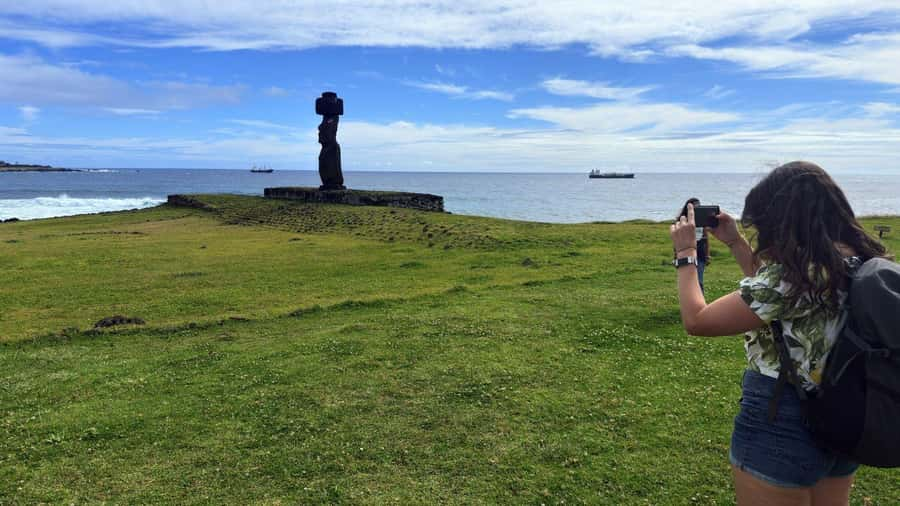
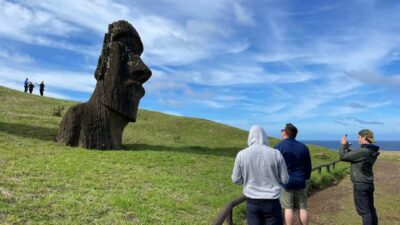
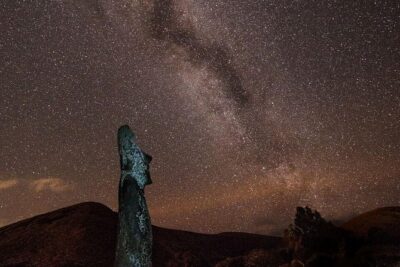
Ahu Tahai is the first major stop described on the route. Its most distinctive feature is a single moai that rises more than 13 feet above the ceremonial platform. The figure is protected by its size and isolation, making it an easy place to grasp the scale of Rapa Nui sculpture.
This is a useful beginning because the moai are not presented as random statues scattered across a field. They were placed on ahu, platforms connected to ceremony, community, and ancestral identity. The figures are carved from solidified volcanic ash and are believed to represent ancestors and high-ranking members of tribal groups.
Look closely at the relationship between statue and platform. The moai is the eye-catching object, but the ahu gives it its setting and purpose. Your guide can help you see the site as a ceremonial complex rather than as a simple row of stone figures.
Ahu Tahai is also a practical stop for a short tour. You get an immediate sense of the scale of the statues without spending a long time walking between separate sites. The drawback is that a brief visit may leave you wanting more time to study the platform and ask questions, especially if you are deeply interested in archaeology.
Puna Pau, where red pukao were shaped
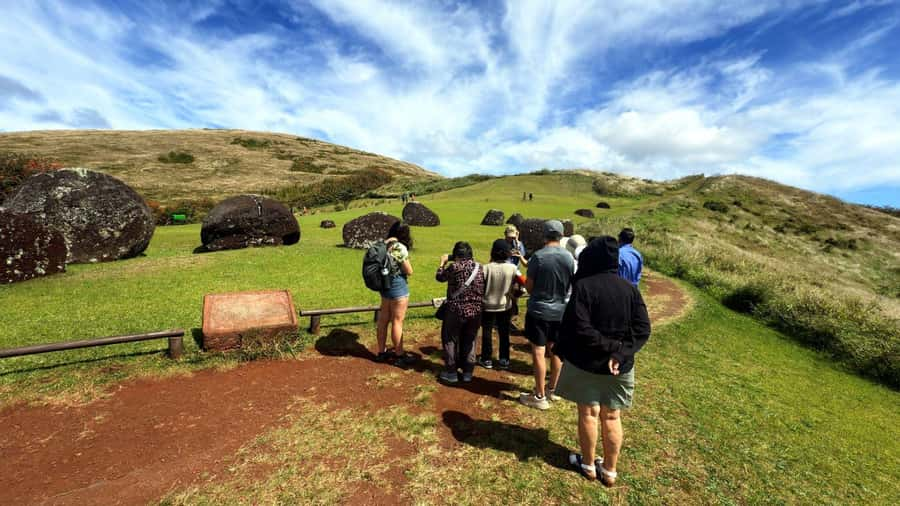
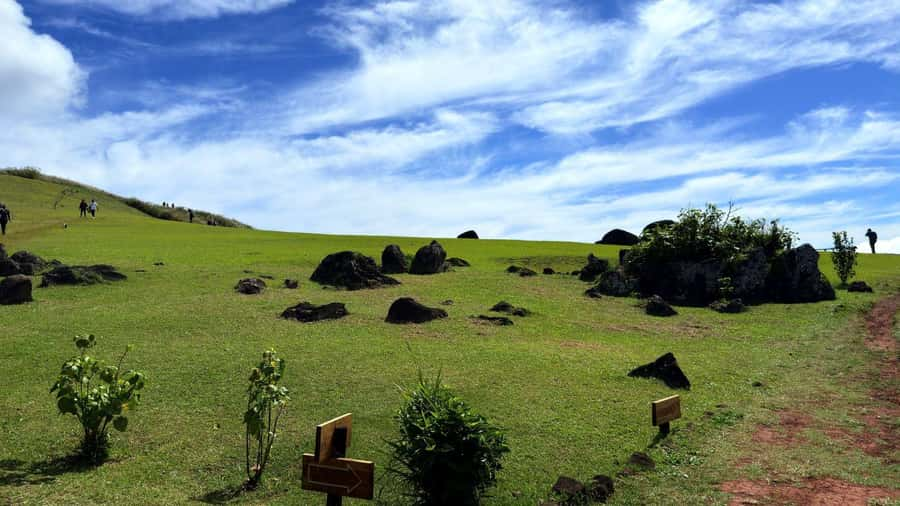
At Puna Pau, the subject changes from the moai themselves to the stone topknots called pukao. These reddish pieces were made from red scoria, a volcanic rock quarried at or near this site. About 30 pukao remain in or near the quarry.
The color creates a sharp contrast with the darker gray stone of many moai. You can see why the topknots changed the appearance of the figures and may have been used to impress rival tribal groups. They were not small decorations. The size and color helped give certain statues an added visual force.
Puna Pau is especially useful if you have wondered how the island’s builders handled different types of volcanic stone. The main figures were carved from solidified volcanic ash, while the pukao came from red scoria. Seeing the source of the topknots gives you a more practical sense of the work involved.
This stop may appeal to you if you like understanding how ancient monuments were made, not just photographing the finished result. It is less immediately dramatic than a line of complete moai, so your guide’s explanation matters here. Pay attention to the quarry remains and the unfinished or displaced stone forms rather than expecting a polished monument.
Ahu Akivi and seven figures facing the sea
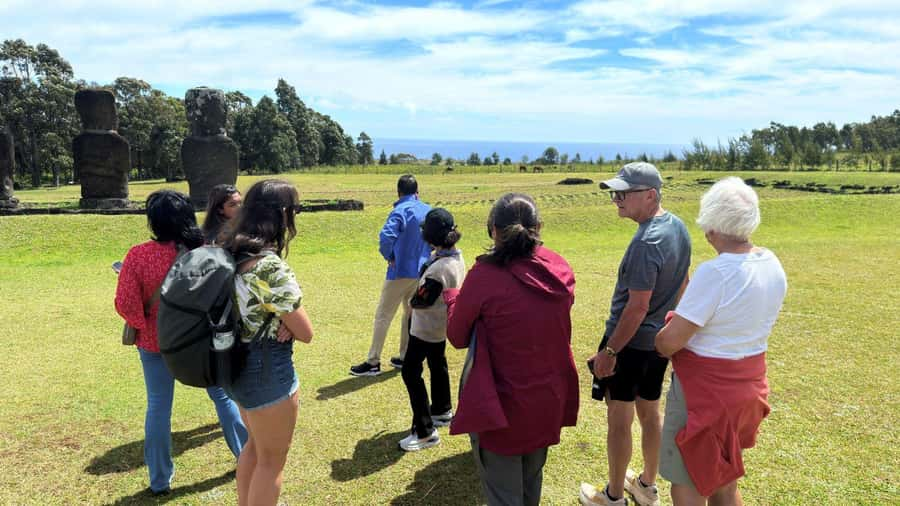
Ahu Akivi is the tour’s most memorable stop for many people. Seven moai stand in a line, each about 16 feet tall and weighing roughly 18 tons. Their position is unusual because they face toward the ocean.
Most moai at coastal ahu face inland, with their backs toward the water. Ahu Akivi reverses that pattern, and the reason remains tied to interpretation rather than simple certainty. One theory says the seven figures represent seven explorers sent by a chief from the Polynesian homeland of Hiva to find Rapa Nui.
Under that theory, the statues look back toward the direction from which the explorers came. It is a compelling explanation, but you should treat it as a theory, not a settled fact. That uncertainty is part of what makes the site interesting. The moai invite questions about migration, memory, and how communities chose to represent their origins.
The scale is hard to judge from photographs. Standing near figures that reach 16 feet and weigh about 18 tons gives you a better sense of the labor behind them. You may also appreciate the symmetry of the line, with the figures arranged together rather than isolated across the coast.
Ahu Akivi is inland rather than directly on the shore, so the setting differs from the familiar postcard image of moai beside the sea. That difference is useful. It shows you that Rapa Nui ceremonial sites were not limited to one type of location or one visual arrangement.
A few more trips around Hanga Roa worth a look
- Ahu Vinapu, Rano Kao and Orongo City Half-Day Tour
★ 4.6 · 20 reviews - Santiago Half-Day Walking Tour with Hotel Pick up & Brunch
★ 4.7 · 148 reviews - Half-Day Small-Group Panoramic Santiago Tour
★ 4.0 · 89 reviews - Half-Day Tour to Laguna Cejar
★ 5.0 · 54 reviews
Ahu Huri A Urenga and the island interior
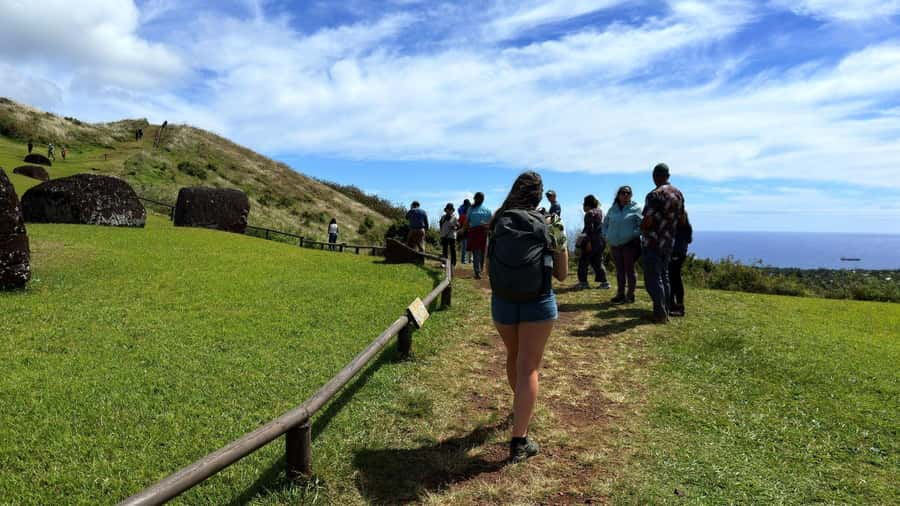
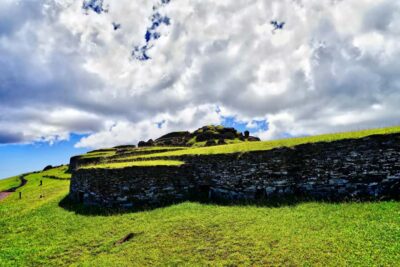
The final stop is Ahu Huri A Urenga, one of about 25 ahu located inland rather than along the coast. Its setting corresponds to an agricultural area, which broadens the usual picture of Easter Island archaeology.
The coast gets most of the attention because the moai are so dramatic there. An inland ahu reminds you that ceremonial life was also connected to the island’s working interior. The placement of a platform near agricultural land suggests a relationship between ritual activity, settlement, and food production.
This stop may feel quieter than Ahu Akivi or Ahu Tahai. That is not a weakness if you want a wider understanding of the island. It gives your guide a chance to explain how the ahu system extended beyond the shoreline and why location mattered.
The supplied highlights also identify a ceremonial site called Ahu Vianpu, while the detailed route names Ahu Tahai, Puna Pau, Ahu Akivi, and Ahu Huri A Urenga. Since the stop list is not perfectly consistent, confirm the exact sequence when booking if Ahu Vianpu is important to you. Do not assume it replaces one of the four named stops.
What the $91 price really covers
The tour price is $91 per person. That includes hotel pickup and drop-off at Easter Island hotels, a live guide in English or Spanish, and transport between the sites. The group is limited to 15 people, which gives the price more value than a large coach trip would, especially at archaeological sites where a clear explanation makes a major difference.
The important extra cost is the Rapa Nui National Park entrance fee of $100. If that fee applies separately to each participant, your basic total is about $191 per person before any other personal spending. That is not a cheap half-day outing, so I would compare the tour with your entire island budget, not just the advertised booking price.
Still, the value depends on what you need. If you want a guide to put the moai, ahu, pukao, and migration theories into context, the package can make sense. If you already have transport and strong archaeological knowledge, the guided portion may feel less essential.
The three-hour length also has value. You can see four important sites without giving up an entire day. That suits you if you are combining this with other island plans or if you prefer a short, focused excursion rather than a full-day schedule.
Who will enjoy this tour most
I would recommend this tour to a first-time visitor staying in Hanga Roa who wants a clear introduction to Rapa Nui National Park. The route offers enough variety to help you compare coastal and inland ahu, complete moai and quarry stone, and ordinary statue placement with the unusual orientation at Ahu Akivi.
It also suits you if you prefer organized transport. Easter Island sites are spread across the island, and hotel pickup removes the need to arrange your own route for this half-day visit. The small group makes it more personal than a large sightseeing bus, though it is still a shared tour rather than a private guide.
History and archaeology fans will appreciate the range of questions raised by the stops. You can ask about ancestral figures, the movement of red pukao, the possible identity of the seven figures at Ahu Akivi, and the connection between inland ahu and farming areas.
This is less suitable if you need wheelchair access, since the activity is not suitable for wheelchair users. It is also not designed for cruise ship passengers. The activity specifically applies to visitors staying in hotels, so do not book it as a shore excursion if you are arriving by ship.
Practical advice for a smoother visit
Wear comfortable shoes. The tour involves visits to outdoor archaeological sites, and practical footwear will make it easier to focus on the guide rather than your feet.
Leave luggage and large bags at your hotel. Baby strollers are not allowed, and alcohol and drugs are prohibited. Since the tour lasts only three hours, bring only what you need for the outing.
Give yourself enough time to reach the hotel lobby before pickup. Waiting 10 minutes early is sensible because the driver will wait only five minutes after the scheduled pickup time. A missed pickup could be especially frustrating on a short tour.
The activity offers free cancellation up to 24 hours in advance for a full refund, and you can reserve now while paying later. Those terms are useful if your Easter Island plans are still changing, but they do not remove the need to check the exact starting time before booking.
Should you book this Easter Island tour?
Book it if you want a compact, guide-led introduction to Rapa Nui’s major archaeological ideas. Ahu Akivi gives you the unusual seven-figure alignment, Puna Pau explains the red pukao, Ahu Tahai introduces the scale of a ceremonial moai, and Ahu Huri A Urenga adds an inland agricultural setting.
I would skip it if you already have a full private itinerary covering these same sites or if the extra $100 park fee pushes the total beyond your budget. I would also confirm the Ahu Vianpu detail before paying if that site is a priority.
For a first visit, the route is sensible and varied. Just treat it as an introduction, not the complete Easter Island experience, and judge the value using the combined tour and park fees.
FAQ
How long does the Easter Island archaeology tour last?
The tour lasts three hours. Starting times vary, so check availability when booking.
What sites are included?
The detailed route includes Ahu Tahai, Puna Pau Quarry, Ahu Akivi, and Ahu Huri A Urenga. The activity highlights also name Ahu Vianpu, so confirm its inclusion and the exact stop sequence before booking.
Is hotel pickup included?
Yes. Pickup and drop-off are included for hotels in Hanga Roa. You should wait in the hotel lobby 10 minutes before pickup, and drivers wait no more than five minutes after the scheduled time.
Is the Rapa Nui National Park entrance fee included?
No. The park entrance fee is listed separately at USD 100.
What languages are available?
The live guide is available in English and Spanish.
Can cruise ship passengers join the tour?
No. The activity is intended for passengers staying in hotels and is not suitable for cruise ship guests.
What should I bring, and are there restrictions?
Bring comfortable shoes. Baby strollers, luggage or large bags, alcohol, and drugs are not allowed.
Just added around Hanga Roa
- Volcanic Refuges: Excursion to Underground Civilization★ 4.7 · 8 reviews
- Two days of Full Day Tour of Rapa Nui + Sunrise in Tongariki★ 4.8 · 55 reviews
- Sunrise Tongariki: Sunrise at Tongariki Park Private Tour★ 4.5 · 47 reviews
- Rapa Nui: Polynesian Massage★ 4.8 · 5 reviews
- Rapa Nui: 3 Excursions with Hotel Transfers★ 4.3 · 6 reviews
- Rapa Nui Highlights Program: 3 incredible tours to discover!★ 4.8 · 18 reviews
- Rapa Nui Dreams: Experiencie Pack 3 Days★ 4.7 · 32 reviews
- Hanga Roa: Full Day Moai and Mistery★ 4.4 · 22 reviews
Easter Island & Moai Tours, compared.
Two days of Full Day Tour of Rapa Nui + Sunrise in Tongariki
Read our review →
Browse the lists this tour appears in