
Reviewed · EASTER ISLAND & MOAI TOURS
Easter Island: Moai Full Day Private Tour
Easter Island’s great moai are only part of the story. This private day takes you from the precisely built wall at Ahu Vinapu to the 15 statues at Tongariki, then into Rano Raraku, where unfinished moai still sit in the volcanic stone. I like the route because it mixes famous sights with quieter stops such as One Makihi and Ovahe. I also like the private format, which gives your guide room to shape the day around your needs, as Enrique did for one recent guest.
The main drawback is cost. At $219 per person, this is not a bargain outing, especially since park admission and food are extra. Still, hotel pickup, private transport, a seven-hour route, and a guide in your choice of English, French, or Spanish make it a sensible choice if you want a focused day without sharing the vehicle with a large group.
Key points at a glance
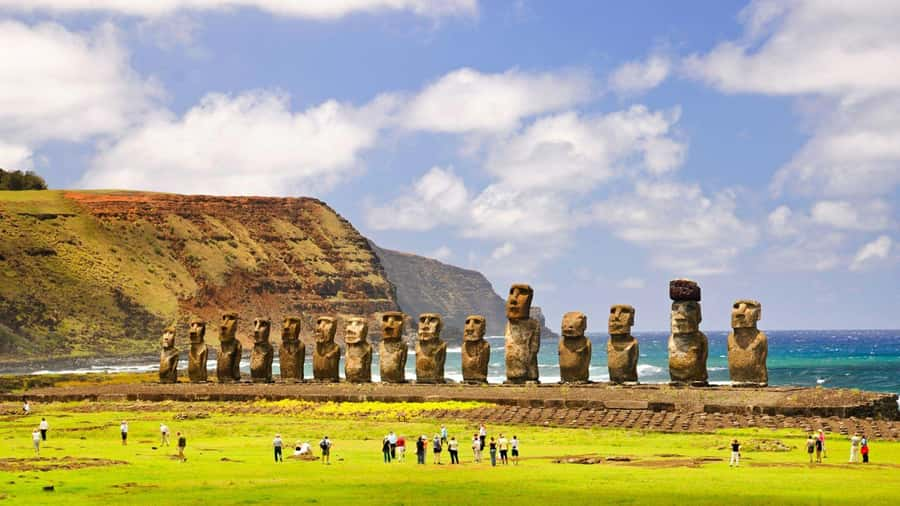
- Ahu Tongariki has 15 moai: This is the tour’s grand visual moment, with the largest group of statues on the island.
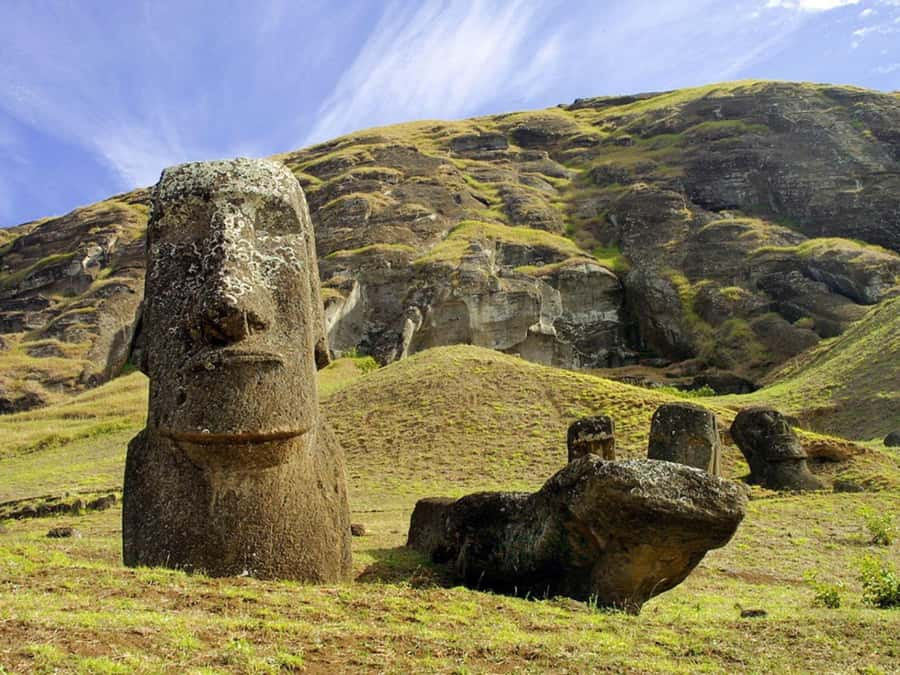
- Rano Raraku is the moai-making site: You walk among statues still in various stages of construction.
- The route includes less familiar places: One Makihi, Ahu Ahahanga, and Ovahe add quieter and more unusual stops.
- A private guide can adjust the day: Enrique tailored the tour to one guest’s needs, a useful advantage for couples and families.
- Anakena ends the outing on a softer note: You have time for the beach, views, and possible water activities.
- Bring money for extras: Food and national park entry are not included, while hotel pickup and bottled water are.
Why this private route works well
A seven-hour private tour is a good match for Easter Island because the major sites are spread across the island. Instead of spending the day trying to connect distant places on your own, you follow a planned loop with a guide who can explain what you are seeing at each stop.
The private setup matters most at places that need context. A row of stone figures can be striking on its own, but the meaning of their placement, the work involved in making them, and the difference between a finished statue and an unfinished one give the stops more weight. With an English-, French-, or Spanish-speaking guide, you can ask questions as you go rather than simply collect photographs.
I would think of this as a history-heavy day with a beach finish. Most of the schedule centers on ceremonial platforms, carved figures, and sacred sites. Anakena and Ovahe provide a change of pace, but this is not primarily a beach excursion.
Pickup and return to your hotel are included. You are asked to wait in the hotel lobby 10 minutes before the scheduled pickup, a small detail that helps the day start cleanly. A personal bottle of water is included, but plan separately for lunch, snacks, and park admission.
More moai and Rapa Nui trips around Easter Island
- From Hanga Roa: Rapa Nui Culture Sightseeing Tour
★ 4.6 · 307 reviews - From Hanga Roa: Easter Island Highlights 2-Day Tour
★ 4.3 · 205 reviews - From Hanga Roa: Easter Island Sightseeing Full Day Tour
★ 4.5 · 189 reviews
Ahu Vinapu and the island’s early puzzles
The first major stop is Ahu Vinapu, known here for a wall that resembles construction associated with the Incas. That comparison is one of the tour’s more intriguing talking points, and it gives your guide a natural way to discuss the skill and precision behind Rapa Nui stonework.
This is a good opening stop because it sets up a question rather than handing you a simple answer. You are looking at a ceremonial site and a carefully made wall, then hearing why its construction has attracted attention. The value is in the explanation. Without a guide, you might see only large blocks fitted together; with one, you can focus on how the wall was made and why it matters.
Do not expect Vinapu to be a quick substitute for Tongariki’s dramatic row of statues. Its appeal is more archaeological and puzzling. If you prefer big monuments right away, the first stop may feel quieter. If you enjoy details and unanswered questions, it is a strong start.
Ahu Ahahanga and moai in their original positions
The tour continues to Ahu Ahahanga, where you can see moai in their original position, raised and placed on a ceremonial platform. This stop helps you understand that these statues were not simply scattered around the island as isolated works of art. Their setting on an ahu, or ceremonial platform, is part of what gives them meaning.
I like this part of the route because it puts the statues in a formal setting before you reach the largest and most photographed sites. Your guide can explain the importance of the moai to Rapa Nui culture and help you notice the relationship between the figures and their platform.
The wording about original position is important for expectations. This is not the same experience as seeing unfinished figures at Rano Raraku or the toppled remains associated with other sites. The stop is about placement, ceremony, and the way the moai were presented.
Te Pito Kura and one of the island’s largest moai
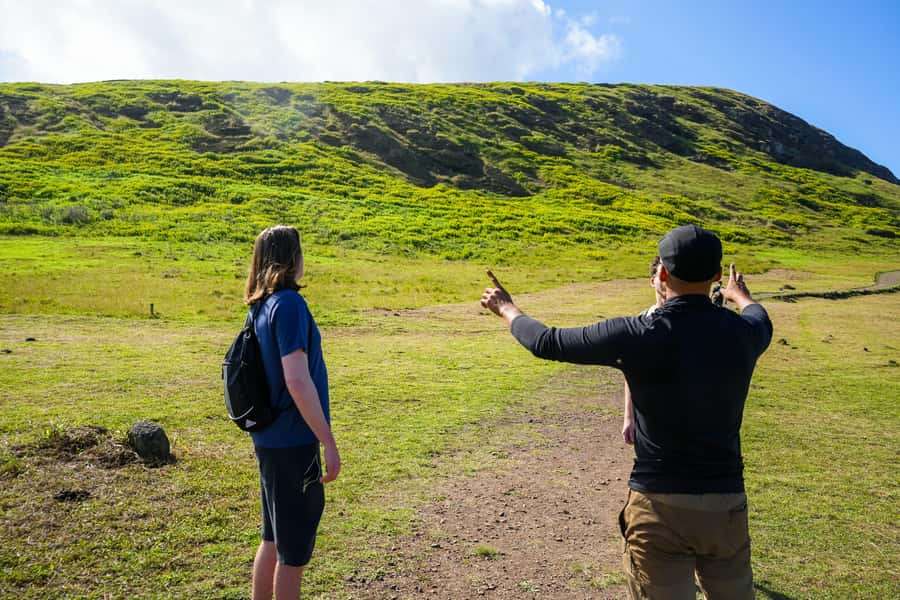
At Te Pito Kura, the focus shifts to a sacred place with one of the largest moai on the island. The exact impact of the visit depends on your guide’s explanation, so this is another point where a private tour earns its keep.
The statue’s scale is the headline, but the sacred setting gives the stop more meaning. You are not just counting how tall or broad a moai appears. You are considering why such figures were made and what they represented to Rapa Nui culture.
This stop also gives the day a useful rhythm. After looking closely at stonework and ceremonial platforms, you encounter a figure that makes the size and ambition of the moai tradition easier to grasp. Keep your attention on the surroundings as well as the statue. The tour is built around the relationship between place, ritual, and sculpture.
A few more trips around Easter Island worth a look
- Full day tour – DREAM
★ 5.0 · 86 reviews - Two days of Full Day Tour of Rapa Nui + Sunrise in Tongariki
★ 4.8 · 55 reviews - Easter Island: Full-Day Tour to Anakena
★ 4.7 · 27 reviews - Hanga Roa: Full Day Moai and Mistery
★ 4.4 · 22 reviews
One Makihi, a small stop with a different view
Before Ahu Tongariki, the route pauses at One Makihi. Here you see an old ahu and a finely chiseled moai in a supine, or lying-back, form.
One Makihi is not promoted as the tour’s largest or most famous stop, and that is exactly why it can be useful. It adds variety before the grand scale of Tongariki. You see a statue presented differently, then move on to a site where a full line of moai dominates the view.
I would not skip this stop simply because it sounds less familiar. A private itinerary can include places that a rushed group schedule might pass by. The description does not give a long stop time, so expect it to be a brief interpretive pause rather than a major visit. Its value is the contrast.
Ahu Tongariki and 15 moai in one powerful line
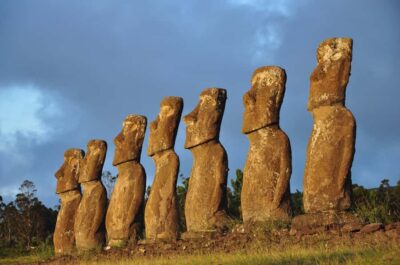
Ahu Tongariki is the visual center of the day. It is the largest group of moai on the island, with 15 imposing statues on their original site.
This is the moment when the route delivers its broadest sense of scale. Instead of studying one figure at a time, you see an entire ceremonial group. The line of moai gives you a chance to compare their shapes and sizes while your guide explains their history and meaning.
Bring patience here. A site this impressive invites quick photographs, but the explanation is what turns the stop into more than a picture break. Ask your guide to point out details among the 15 figures and to explain how the group fits into the wider story of Rapa Nui.
Tongariki is also where a private tour can feel more comfortable than a rigid group outing. You can spend more time looking if the site captures you, or move on when you have had enough. The exact flexibility depends on the day and the guide, but the private format creates room for that conversation.
Rano Raraku, the moai factory
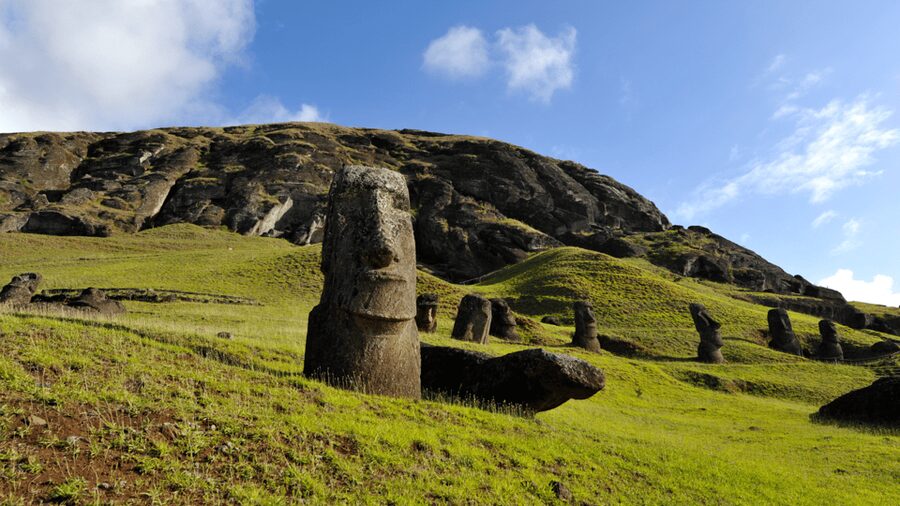
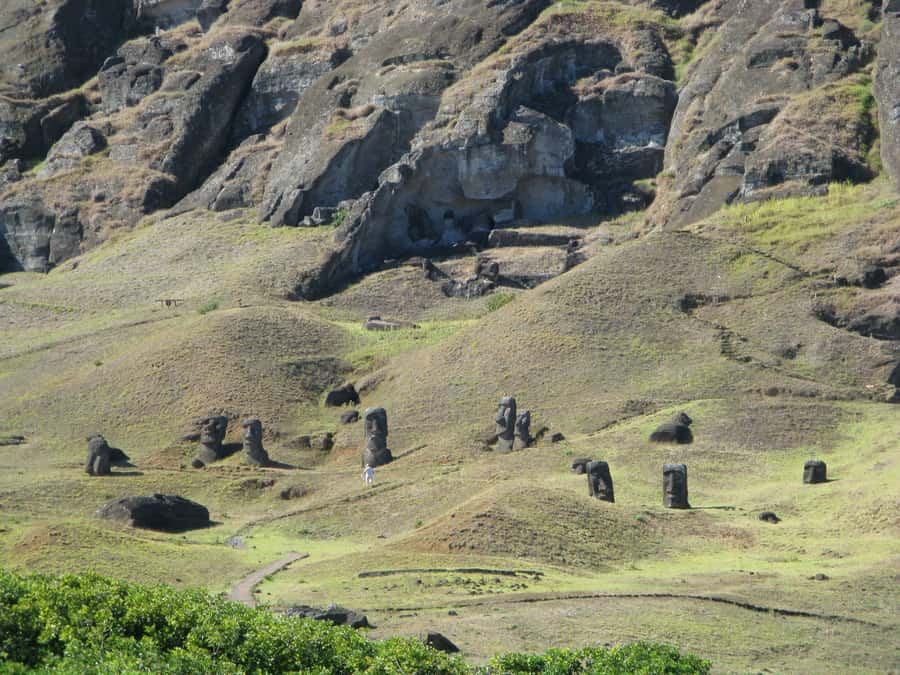
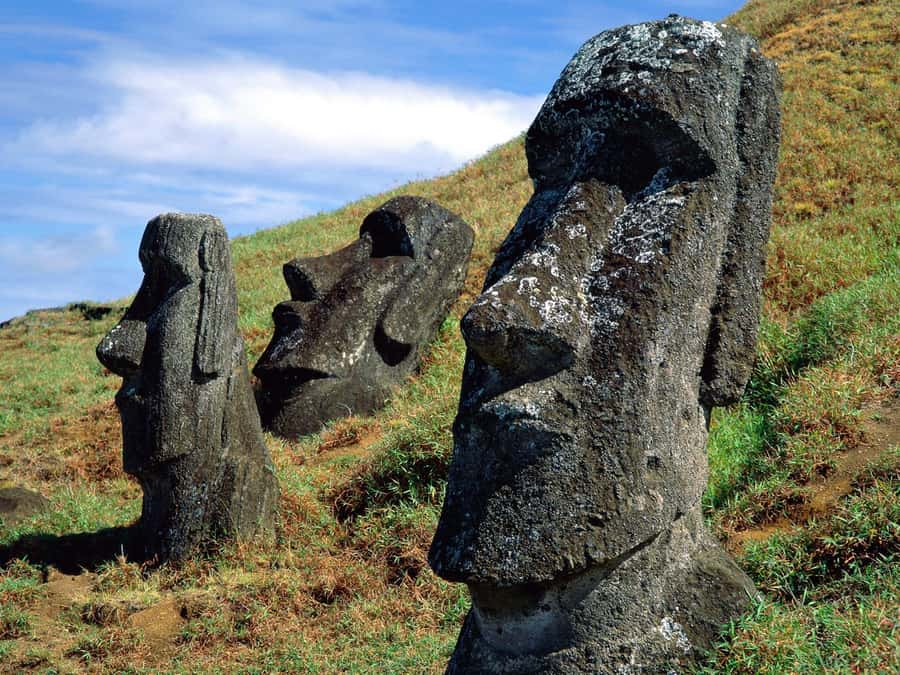
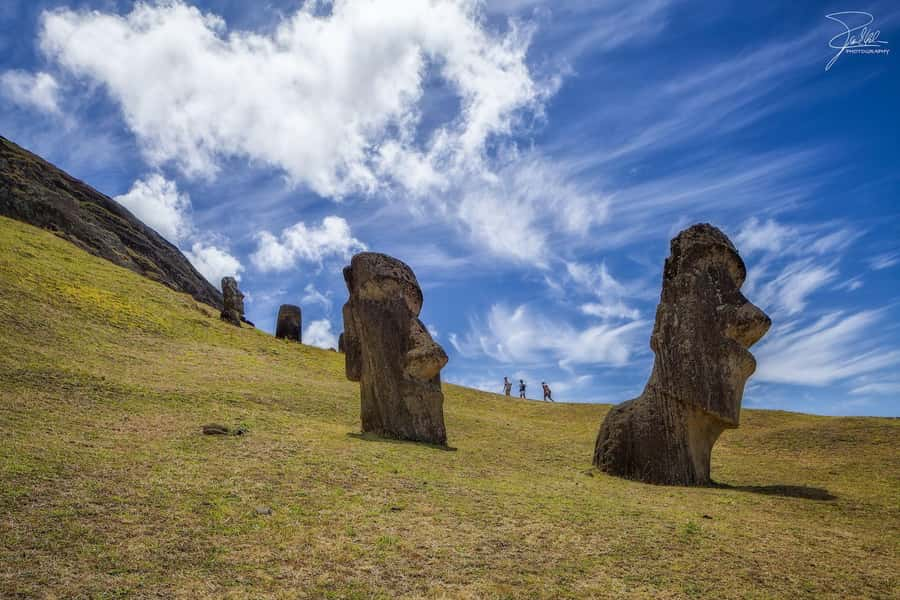
The tour then reaches Rano Raraku, the volcanic site known as the moai factory. This is where the statues were built, and you can walk among moai still in the process of being made.
For many people, Rano Raraku will be the most revealing stop. A finished moai at a ceremonial platform tells you what the final product looked like. An unfinished figure in the volcanic stone shows the work before completion. Seeing both ends of that process gives you a clearer sense of how the statues were created.
The phrase moai factory is memorable, but do not take it to mean an organized modern workshop. The appeal is the concentration of unfinished figures and the chance to see carved forms in different stages. Your guide’s explanation is especially useful here because the site can raise as many questions as it answers.
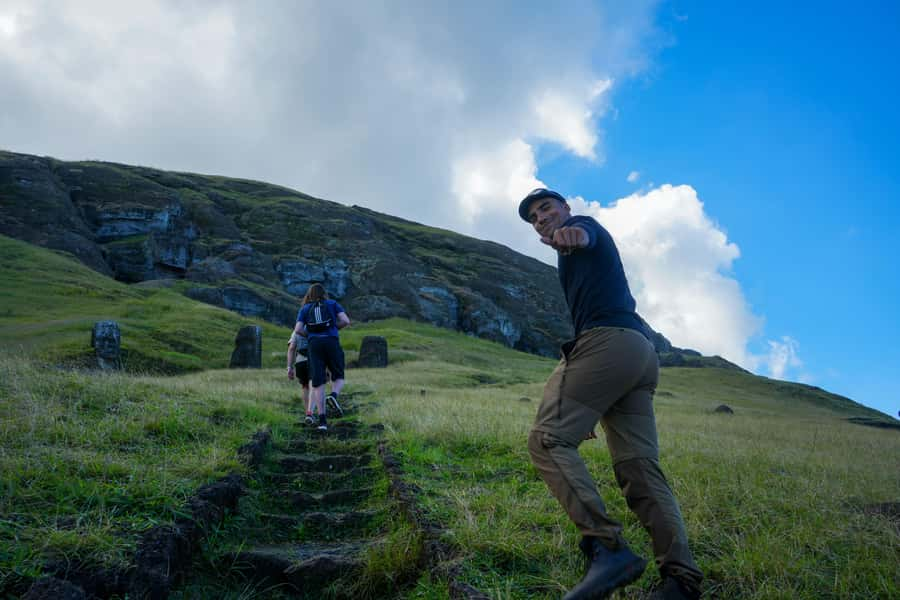
Wear comfortable footwear and allow yourself time to look carefully, though the tour lasts seven hours overall and the schedule includes several more stops. The provided information does not specify trail conditions or the length of the walk, so ask the operator if you need exact details before booking.
Ovahe and Anakena, from rose sand to clear water
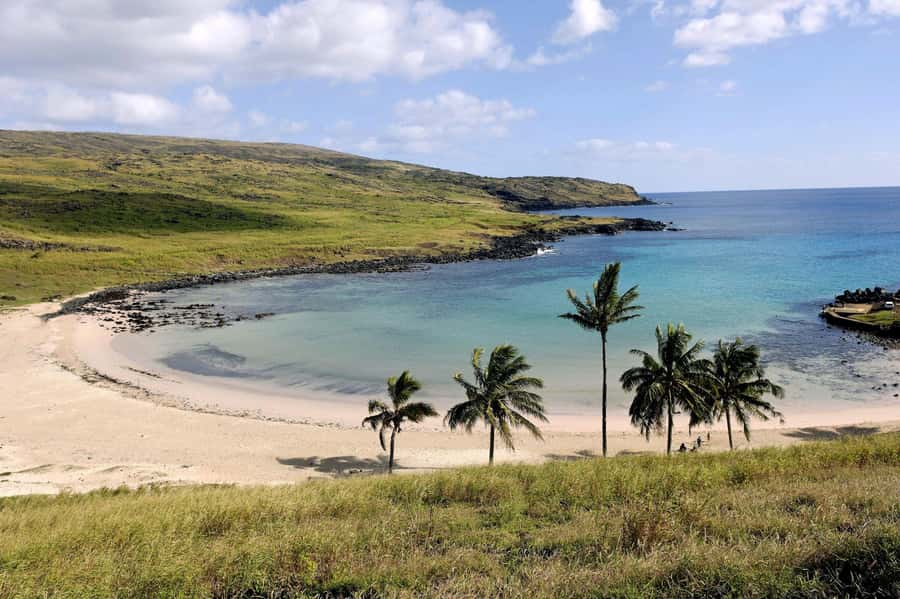
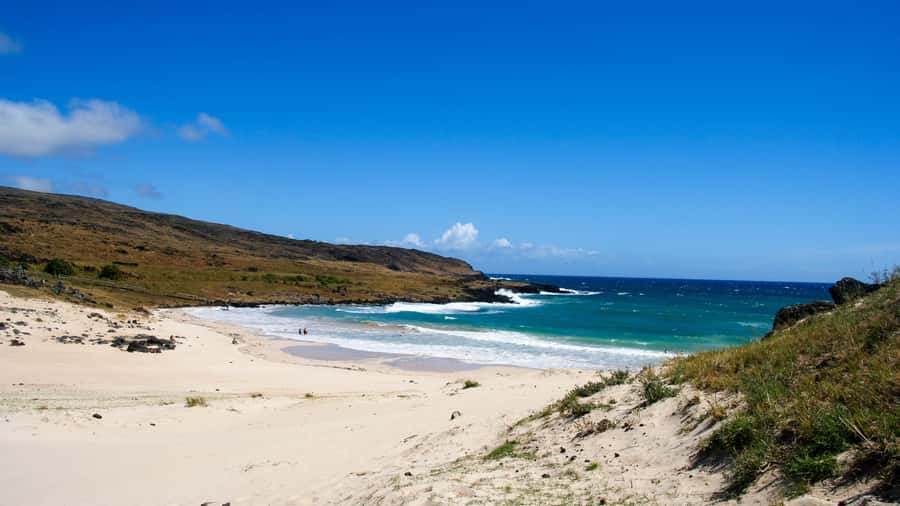
After the archaeological sites, the route heads to Ovahe beach, noted for its rose-colored sand. This is a welcome visual change after a day centered on stone and ceremony.
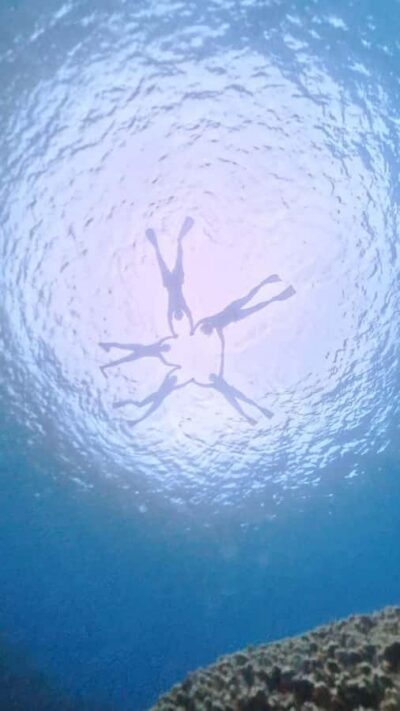
The final stop is Anakena beach, with clear water and a range of water activities such as snorkeling. You can relax here, enjoy the views, and have a picnic outdoors. Food is not included, so bring or purchase what you need according to the arrangements available to you. The tour information does not state that snorkeling equipment or any other activity gear is supplied, so confirm that point if water time is important to you.
Ending at Anakena makes practical sense. The day moves from the island’s most significant moai sites toward a place where you can slow down. It also means the tour is not one long sequence of archaeological stops. You get a final chance to rest and take in Rapa Nui from a different angle.
Keep your expectations measured. Anakena is included as a beach stop, but the tour does not promise a dedicated snorkeling session, equipment rental, or an extended swim. Think of water activities as possible options, not guaranteed components.
What the $219 price buys you
The listed price is $219 per person. That is a substantial amount for seven hours, and you should add the cost of park admission and food because neither is included.
The value improves if you care about privacy and interpretation. You receive hotel pickup and return, a dedicated private group, a live guide, and a route covering several of the island’s most important sites. You also avoid arranging separate transport between distant stops.
The price is harder to justify if you only want to see Tongariki and Rano Raraku, or if you already have transport and prefer to explore independently. In that case, paying for a private full-day route may be more than you need.
For couples, families, or small groups who can share the cost, the private format may make more sense. It also helps if English, French, or Spanish is your preferred tour language. The single review available highlights Enrique’s ability to tailor the day to a guest’s needs, which is a meaningful advantage when your priorities differ from a standard schedule.
Who should book this tour
I would recommend this experience if you want the major moai sites in one organized day and prefer explanation over simply being dropped at viewpoints. It suits first-time visitors who want a broad introduction to Rapa Nui, as well as returning visitors who want to focus on lesser-known stops such as One Makihi and Ahahanga.
It is also a good fit if you value a private vehicle and hotel pickup. The seven-hour duration is long enough to cover a lot, but not so long that the day becomes an open-ended expedition.
You should pause before booking if your budget is tight. The $219 price does not cover park entry or meals, and the beach portion may be shorter than you expect because the moai sites are the main purpose of the outing. Ask about the precise pickup time, park admission arrangements, walking involved at Rano Raraku, and what you need for snorkeling.
The experience has a 4.8 rating from five reviews, so the score is encouraging but based on a small sample. The clearest personal detail available is that Enrique tailored the route to one guest’s needs. If flexibility and a personal guide matter to you, that is a strong reason to consider it.
Should you book it?
Book this tour if you want a private, guide-led introduction to Easter Island’s most important moai sites, with unusual stops and a beach finish. Its strongest features are the breadth of the route, the private format, and the chance to understand places such as Rano Raraku and Tongariki rather than just photograph them.
Skip it if you are mainly seeking a low-cost beach day or if you already have transportation and a plan for the sites. Before paying, budget for admission and food, then confirm the details of your preferred language and any beach activities. For a visitor who wants one well-filled day with personal attention, this is a solid, if costly, choice.
FAQ
How long is the Easter Island Moai Full Day Private Tour?
The tour lasts seven hours.
What sites does the tour visit?
It visits Ahu Vinapu, Ahu Ahahanga, Te Pito Kura, One Makihi, Ahu Tongariki, Rano Raraku, Ovahe beach, and Anakena beach.
Is the tour private?
Yes. The experience is offered for a private group.
Which languages are available?
The live guide is available in English, French, and Spanish.
Is hotel pickup included?
Yes. Pickup and return to your hotel are included. You should wait in the hotel lobby 10 minutes before the scheduled pickup time.
Is food included?
No. Food is not included. You can plan for a picnic at Anakena, but you must arrange the food separately.
Is park admission included?
No. Entry to the parks is not included in the price.
Is water included?
Yes. Each participant receives an individual bottle of water.
Just added around Easter Island
- Volcanic Refuges: Excursion to Underground Civilization★ 4.7 · 8 reviews
- Two days of Full Day Tour of Rapa Nui + Sunrise in Tongariki★ 4.8 · 55 reviews
- Half Day Tour in Rapa Nui★ 5.0 · 48 reviews
- Ride to the highest point on the island for sunset★ 5.0 · 40 reviews
- Rapa Nui Stargazing★ 4.5 · 62 reviews
- Tongariki Sunrise: Half Day Private Tour★ 3.8 · 9 reviews
- Easter Island: Private Full Day History Of The Moai★ 4.6 · 12 reviews
- Sunrise Tongariki: Sunrise at Tongariki Park Private Tour★ 4.5 · 47 reviews
Easter Island & Moai Tours, compared.
Two days of Full Day Tour of Rapa Nui + Sunrise in Tongariki
Read our review →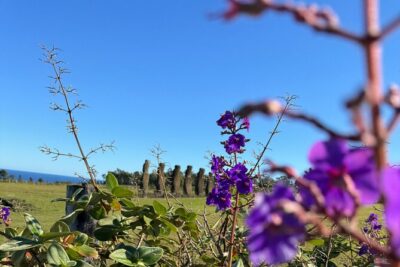
Browse the lists this tour appears in