
Reviewed · EASTER ISLAND TOURS
From Hanga Roa: Easter Island Highlights 2-Day Tour
The moai are only half the story on this Rapa Nui tour. You also see where the statues were carved, how their red topknots were made, and how island communities used caves, platforms, beaches, and volcanic craters. Rano Raraku and Ahu Tongariki are the major visual rewards, but the local guides give the sites their meaning.
I like the pickup from your accommodation and the small group, limited to 14 people. I also like the chance to hear the island’s story from native Rapa Nui guides such as Jeremías, Zoe, Roberto, and Enerike. The main drawback is that the two days are not perfectly equal: the first day is fuller and better paced for some people, while the second can feel rushed, especially when commentary is given in both English and Spanish.
Key points to know before booking
- The first day covers the island’s biggest moai sites, including Vaihu, Akahanga, Rano Raraku, Tongariki, Te Pito Kura, and Anakena.
- Local guides add cultural context, explaining island life, moai theories, traditions, and the meaning of sites in English or Spanish.
- Day two includes Orongo, Vinapu, Puna Pau, Ana Te Pahu, and Ahu Akivi, with a stronger focus on archaeology, caves, and sacred places.
- Lunch is not included, and day two may have no proper meal stop, so carry substantial snacks.
- The $170 price is strong for a two-day overview, but entrance fees, meals, and personal expenses are extra.
- The group may be bilingual, so explanations can take longer when English and Spanish are both used.
Why this two-day route works well on Rapa Nui
Rapa Nui is not the kind of place you understand by ticking off statues from a car window. The important questions are simple but hard to answer alone: Where did the stone come from? How were the moai shaped? Why were some toppled? What do the platforms, caves, and topknots tell you about island society?
This tour gives you a useful structure. On the first day, you follow the southern and eastern shore, then reach the quarry and finish at Anakena. On the second, you visit ceremonial sites, a red scoria quarry, caves, and the unusual inland group at Ahu Akivi.
I think two days is a sensible length for a first visit. You get the major sites without having to organize transport, track opening arrangements, or work out which sites need a guide. The minibus keeps the long road sections easy, and pickup at your accommodation removes one more chore.
The experience is sold for $170 per person. That is a fair price for two full touring days, transport, and guiding, especially if you want the archaeological background rather than only photographs. Keep your budget honest, though. Lunch and site entrance fees are not included.
More moai and Rapa Nui trips around Chile
- From Hanga Roa: Rapa Nui Culture Sightseeing Tour
★ 4.6 · 307 reviews - From Hanga Roa: Easter Island Sightseeing Full Day Tour
★ 4.5 · 189 reviews - From Hanga Roa: Journey from Orongo to Ana Te Pahu
★ 4.3 · 75 reviews
Day one: moai, quarry stone, and Anakena Beach
The first morning begins with pickup from your accommodation. The exact start time depends on availability, and pickup can take time when several people are staying in different places. One person reported a pickup window that lasted close to an hour and a half on the larger second-day group, so do not plan a tight appointment immediately afterward.
You travel in a spacious minibus. With a maximum of 14 people, the group is small enough for questions and conversation, though the experience can feel less personal when the vehicle is full.
Vaihu and Akahanga
Vaihu is an atmospheric opening stop. Ancient moai lie near the coast, and the setting shows how much of Rapa Nui’s archaeology remains open to the weather, grass, and sea air. This is not a polished museum display. The fallen figures make the site feel quiet and serious.
At Akahanga, toppled moai sit among the remains of an old ceremonial area. Your guide can explain what is known about the platforms and the changes that affected the statues over time. I would pay close attention here, since a local guide can help you see the difference between a random pile of stones and the remains of a planned ceremonial site.
The ground at these outdoor stops can be uneven. Wear shoes that you can walk in for several hours, and do not assume every stop will offer shade.
Rano Raraku, the moai quarry
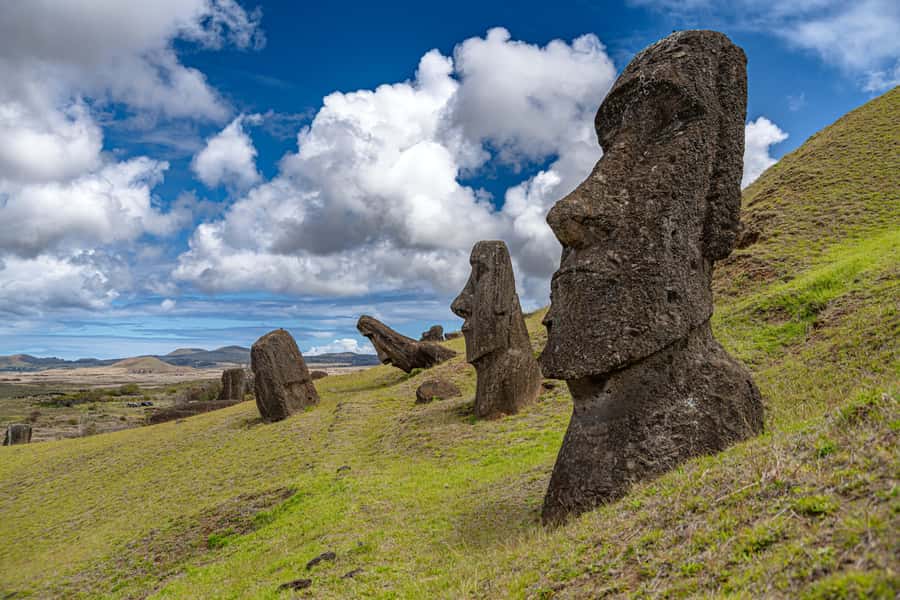
Rano Raraku is the day’s essential stop. This volcanic quarry is where many of the island’s famous statues were carved from tuff, a soft volcanic rock. You see moai at different stages of production, including figures that remain connected to the quarry stone.
The unfinished statues are especially useful for understanding the work behind the finished figures. At Tongariki, you see the formal result. At Rano Raraku, you see the process, the scale, and the strange sense that the work stopped suddenly.
The quarry also offers one of the better places for the guide’s theories and explanations. Jeremías has been praised for explaining moai theories and everyday Rapa Nui culture in a clear way. Enerike is also noted for his pride in the island and its past. The best guides here do not pretend every mystery has one certain answer. They separate established facts from competing ideas.
Lunch arrangements need some planning. There may be a cafe stop near the quarry, but it can be busy. On one schedule, the group continued rather than wait and ate at Anakena later in the afternoon, around 4:30. Bring food if you do not want to risk a late meal.
A few more trips around Chile worth a look
- Santiago: 2-Day Hop-On Hop-Off Bus Ticket and Cable Car
★ 4.3 · 162 reviews
Ahu Tongariki and Te Pito Kura
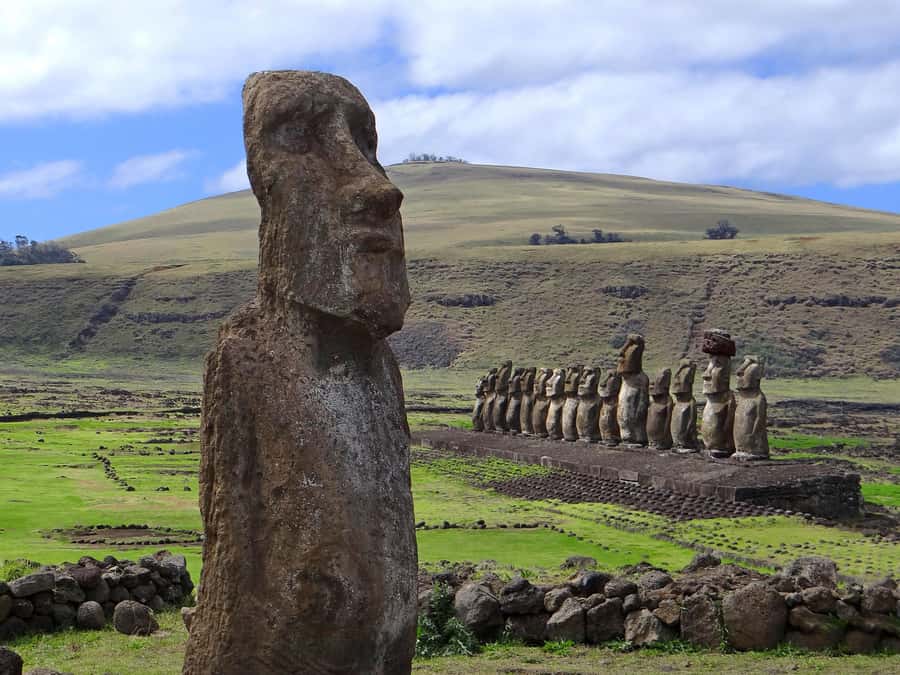
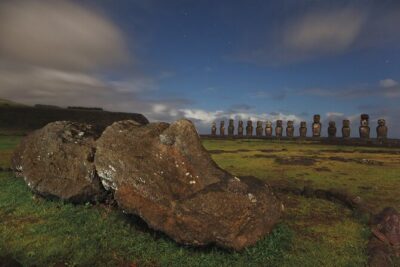
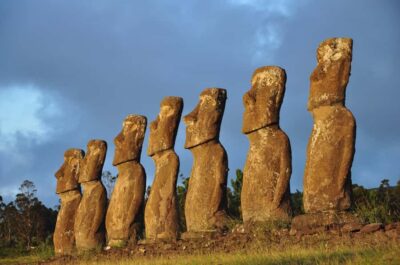
Ahu Tongariki is the signature photo stop: 15 moai lined up on a huge ceremonial platform with the Pacific behind them. The scale is hard to grasp until you stand in front of the row. Take time to look at the different shapes and expressions rather than treating all 15 as identical.
The site also helps you understand the effort involved in rebuilding and preserving the platforms. Your guide can place the statues within the wider story of Rapa Nui rather than leaving you with only a striking image.
Te Pito Kura adds a more legendary side to the day. The site is associated with sacred traditions and stories, and your guide can explain how oral tradition fits alongside archaeology. I like this contrast. Rapa Nui is not only a collection of stone monuments. It is also a living culture with its own memory and interpretation.
Anakena Beach
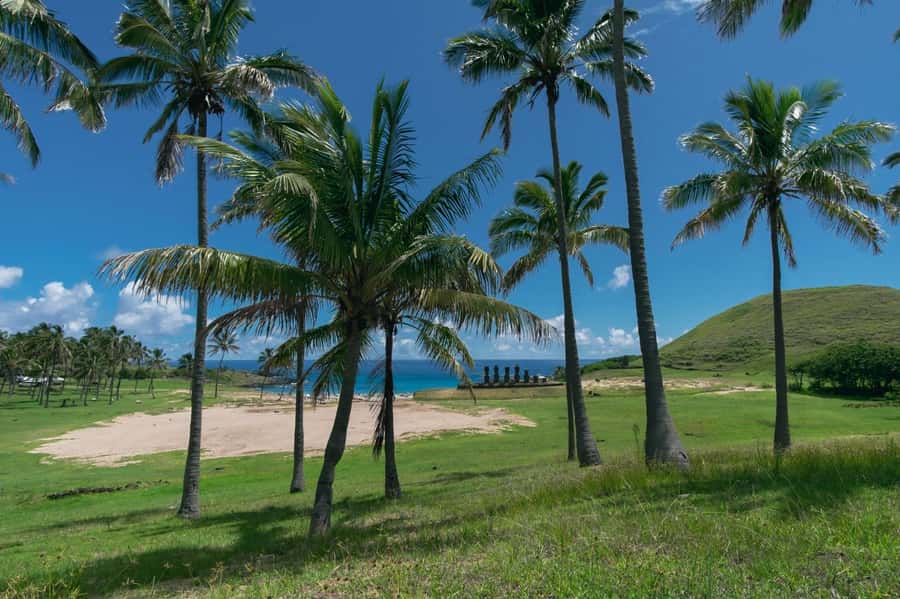
Anakena gives the first day a change of pace. Palm trees, sand, and the sea replace the quarry and fallen platforms. The beach is also connected to moai sites, so you can enjoy a scenic break without leaving the island’s cultural story behind.
The late timing matters. If lunch is delayed until Anakena, you may arrive hungry but still have time to relax for about an hour. Carry water and snacks so the beach feels like a pleasant final stop rather than a much-needed rescue.
Day two: Orongo, red stone, and the cave network
The second day covers several important places, but it is often shorter. One schedule ended around 3 p.m., while the first day ran from roughly 9:30 a.m. to 6 p.m. That difference can make day two feel compressed, especially with a full minibus and bilingual commentary.
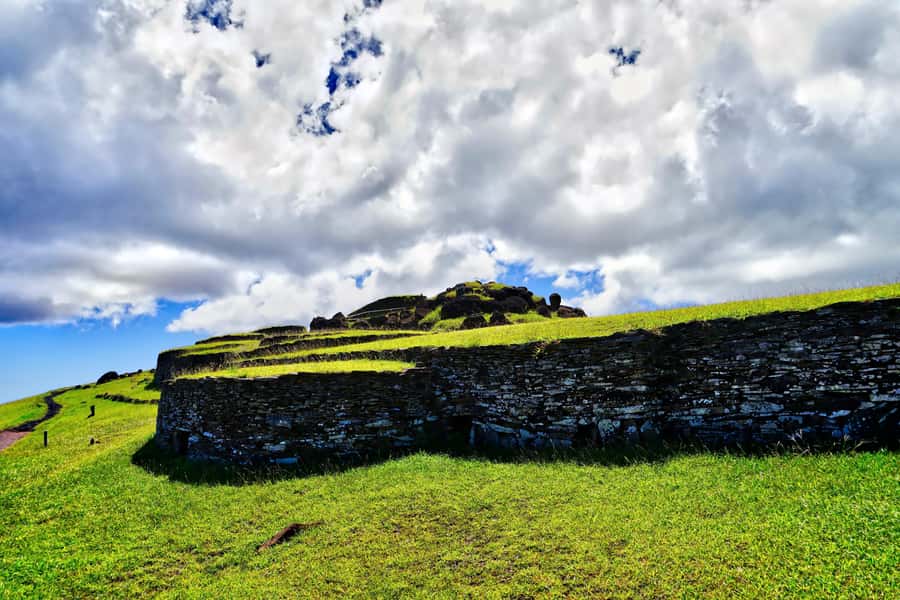
The route begins at Orongo, a village perched near the crater of Rano Kau. It is often the strongest stop of the second day because it combines dramatic scenery, ceremonial buildings, and the island’s birdman tradition. The crater views are broad and striking, but the cultural details are what make the visit worthwhile.
A guide such as Zoe can add a personal connection by explaining traditions and ancestral stories alongside the archaeological evidence. Her ability to adjust the route during rain was especially useful, including sheltering in caves away from the usual path. Do not count on that exact detour, but the example shows why a flexible local guide matters when weather changes.
Vinapu and Puna Pau
Vinapu is known for carefully fitted stonework. The walls invite comparison with masonry traditions elsewhere in South America, but this is also a place where you should listen carefully to how much is proven and how much remains debated.
Puna Pau is the quarry for the red scoria topknots, or pukao, placed on some moai. The red stone gives you another piece of the statue-making process. After seeing the figures and their quarry at Rano Raraku, this stop completes the picture by showing where the head ornaments came from.
These visits are shorter and more focused than the first day’s major stops. If your guide is speaking in two languages, each explanation may be repeated, leaving less time for wandering. That can be frustrating if you speak only one language, but it also makes the tour workable for a mixed group.
Ana Te Pahu
Ana Te Pahu is a cave network with chambers and ancient markings. This is one of the more unusual stops because the experience shifts from open volcanic scenery to a confined underground setting.
Lanterns are provided for the cave visit. Rain capes are also available, a useful touch on an island where weather can change quickly. You should still wear practical clothing and shoes, since a cave visit is less comfortable in beach sandals.
The caves offer a glimpse into how island communities used spaces away from the main ceremonial platforms. Your guide can connect the physical setting with Rapa Nui customs and spiritual ideas. This stop may be especially rewarding if you have already seen several open-air moai sites and want a different side of the island.
Ahu Akivi
Ahu Akivi is the final listed stop. Seven moai face toward the ocean, unlike the more common arrangement in which statues face inland over their community. That unusual orientation gives the guide an easy starting point for discussing theories about the figures and their purpose.
After two days of sites, Ahu Akivi can feel like a quieter ending. It is less about one overwhelming view and more about putting the pieces together: quarry work, ceremonial platforms, sacred places, caves, and the continuing role of moai in Rapa Nui identity.
Guides make the difference
The strongest feature of this tour is the guiding. Past guides have included Jeremías, Javier’s Hucke, Enerike Hey, Zoe, Roberto, Simon, and Franko. Names and assignments can change, but the important point is that the tour uses local guides with a connection to the island.
Jeremías is praised for clear explanations of moai theories and daily life. Zoe brings family and cultural perspective into her storytelling and has shown flexibility during bad weather. Roberto is known for adding songs and ukulele to the day. Simon even helped arrange a drop-off near Ahu Tahai for a sunset after the formal touring ended.
That last detail is worth noting, but do not treat special drop-offs or songs as guaranteed. The reliable benefit is having someone explain what you are seeing and answer questions in context.
The guiding can also be a limitation. The group may combine English and Spanish speakers, and the explanation is repeated in both languages. If you understand only English, some of the second day can feel slow. On the other hand, the bilingual format lets couples, families, and mixed-language groups tour together.
Food, weather, and the practical details
Lunch is your responsibility. The first day may include a stop near Rano Raraku or Anakena, but timing can shift. The second day may have no meal stop until the tour ends, so I would pack more than a small snack.
Sun protection is just as important. Much of the day is spent outdoors with limited shade. Bring sunscreen, a hat, water, and sunglasses. The operator provides rain capes, which helps when showers arrive, but weather protection should not stop with one borrowed layer.
Drones are not allowed. Pickup from your accommodation is included, and the minibus is intended to make the long touring days easier. The activity is listed as wheelchair accessible, though the outdoor ruins and cave portion may require you to confirm the exact conditions before booking.
You can cancel up to 24 hours before the activity for a full refund, and the reserve-now, pay-later option keeps your plans flexible. Those policies are useful on an island trip where flights and weather may affect your schedule.
Is $170 good value?
For a two-day tour, I think the price works well. You receive transport, pickup, a small group, bilingual guiding, cave lanterns, and rain capes. You also cover nearly every major site named in the route.
The value is highest if you are visiting Rapa Nui for the first time. A motorcycle or independent vehicle can give you freedom, and one person who did both found that the two approaches complemented each other. But independent touring does not replace the explanations at Rano Raraku, Orongo, Vinapu, and Ahu Akivi.
Add the entrance fees and two days of meals to your budget. Also allow for the possibility that the second day will be shorter and less relaxed than the first. If you want long, quiet visits at every site, a private arrangement may suit you better.
Should you book this Rapa Nui tour?
Book it if you want the most efficient first look at the island, value local voices, and prefer not to organize transport between scattered archaeological sites. The combination of Rano Raraku, Tongariki, Anakena, Orongo, and Ana Te Pahu gives you a broad picture of Rapa Nui, not just a parade of moai.
Think twice if you need a strictly English-only tour, dislike repeated explanations, or want every meal and entrance fee included. Pack snacks, protect yourself from the sun, and expect the first day to feel fuller than the second.
For most first-time visitors, I would choose this two-day option, then use any extra time for a slower visit to a favorite site or a sunset at Ahu Tahai. The tour gives you the essential framework, while the local guides help turn remarkable stones into a place you can begin to understand.
FAQ
Where does the tour begin?
Pickup is provided directly from your accommodation in Hanga Roa.
How long does the tour last?
The experience lasts two days. The exact starting times depend on availability.
How many people are in the group?
The tour is a small-group activity with up to 14 participants.
Which languages are available?
Live guiding is available in English and Spanish. A group may include speakers of both languages, so some explanations can be repeated.
Is lunch included?
No. Lunch is not included, and you choose and pay for your own food. Stops may be arranged during the day, but the second day may have no meal stop before the tour ends.
Are entrance fees included?
No. Entrance fees to the sites are separate from the tour price.
What is provided for the cave visit?
You receive a personal set of lanterns for exploring the caves. Rain capes are also provided for sudden showers.
Are drones allowed?
No. Drones are not allowed on the activity.
Can I cancel the booking?
Yes. You can cancel up to 24 hours in advance for a full refund. You can also reserve now and pay later.
Just added around Chile
- 4 TOUR IN ATACAMA IN 3 DAYS★ 4.6 · 12 reviews
- Walking Tour Valparaiso, History & Art – Private Optional★ 4.5 · 59 reviews
- Atacama Desert: Horseback Adventure with Scenic Views★ 4.7 · 42 reviews
- Santiago: City Highlights Walking Tour★ 4.2 · 51 reviews
- Puerto Varas: Peulla Day Trip★ 4.5 · 57 reviews
- Santiago: The Essentials City Tour & Optional Concha y Toro★ 3.4 · 40 reviews
- Horseback Trailride Excursion★ 5.0 · 48 reviews
- Horseback Private Wine Tour and Country Grill from Santiago★ 5.0 · 52 reviews
Easter Island Tours, compared.
Browse the lists this tour appears in