
Reviewed · EASTER ISLAND & MOAI TOURS
Easter Island: Tropical Diving
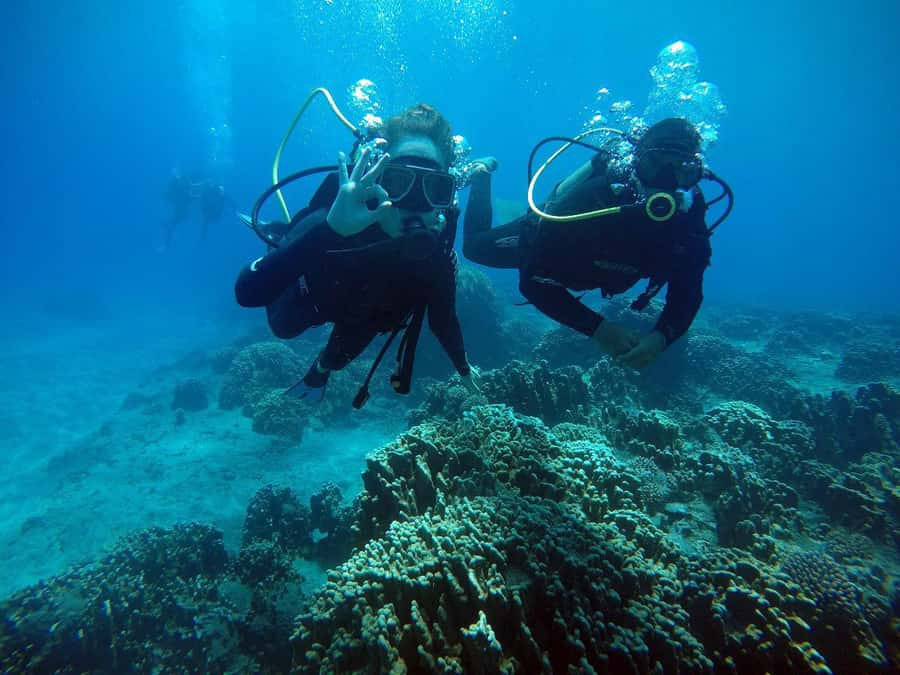
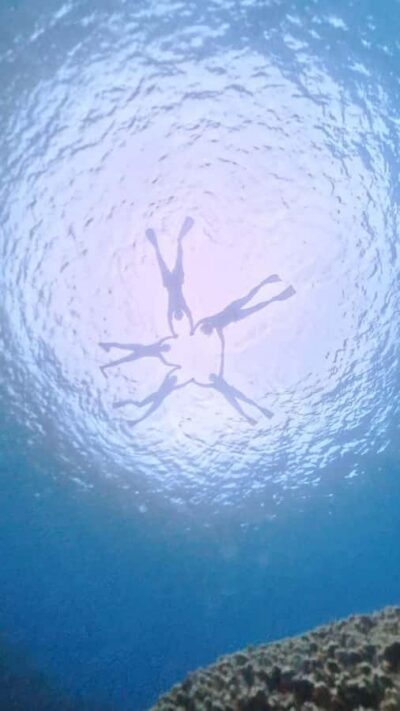
Rapa Nui’s underwater world has its own surprise: alongside coral, tropical fish, and turtles, you may reach a submerged moai. The session begins at Hanga Piko with a careful briefing, then moves by boat or vehicle to a site chosen for sea conditions. I like the clear water and the small group of up to 10, which gives the instructor room to stay close. I also like that photos and video are included, a useful record of a first underwater experience. The main drawback is timing. One session ran about an hour late, so this can eat into a good part of your day.
I especially like the practical care shown by the team. Joaquin and Carla have helped with equipment, and the instructors have worked patiently with both first-timers and certified participants. You do not need to know how to swim, but medical restrictions and the 12-hour flight rule matter. Do not schedule this activity within 12 hours of flying.
Key points before you book
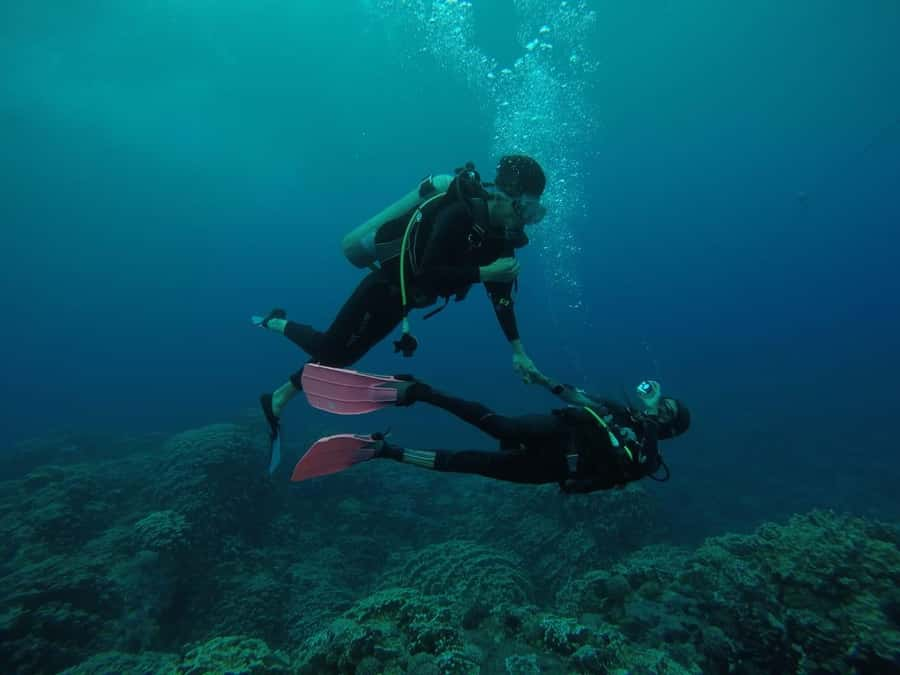
- A submerged moai may be part of the route: Reaching it requires scuba certification and enough underwater ability, so it is not available to every participant.
- The site changes with sea conditions: You may travel from Hanga Piko by boat or vehicle to the safest suitable location.
- Beginners receive a 30-minute briefing: The instructor stays with you in a personalized way throughout the underwater session.
- The full session lasts 150 minutes: Allow time for instruction, transport, and about one hour in the water.
- Photos and video are included: Bring a USB drive, memory card, or cable for transferring files to an Android phone or iPhone.
- The group is capped at 10: English and Spanish instruction is available.
Rapa Nui beneath the Pacific
Rapa Nui is famous for its stone moai, but the sea adds another chapter to your visit. The waters around the island can offer clear views of coral, tropical fish, turtles, and underwater rock formations. The appeal here is not only the chance to use scuba gear. It is the contrast between the island’s stark volcanic setting above water and its colorful marine life below.
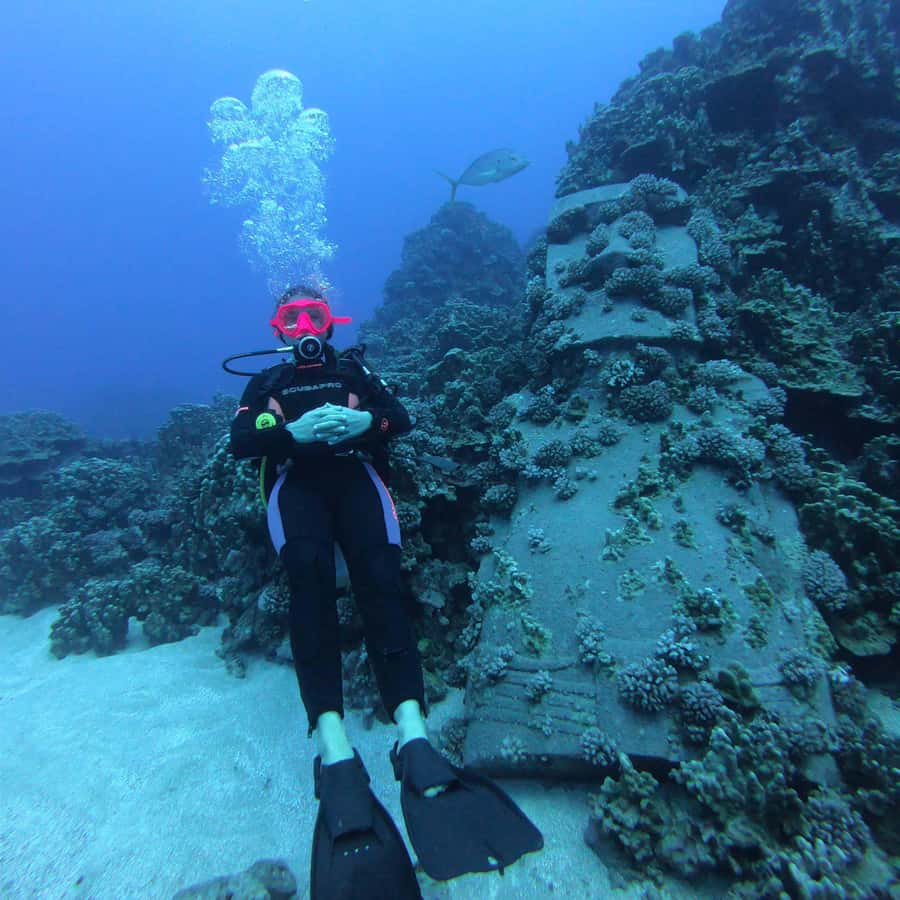
The underwater moai is the detail that catches most people’s attention. You should understand what it is before booking, though. You need scuba certification to reach it, and you cannot simply swim down to the statue without the proper training. If you are a beginner, your session can still be rewarding, but your route and depth may not include the moai.
The activity costs $139 per person. That is a fair price if you value a small group, equipment rental, instruction, transport from Hanga Piko to the water site, and the photo and video package. It is less compelling if you mainly want a quick look at fish, since a snorkeling option may suit you better. One couple who became ill was able to switch from scuba to snorkeling, though that should not be treated as a guaranteed alternative for every booking.
More moai and Rapa Nui trips around Hanga Roa
- From Hanga Roa: Rapa Nui Culture Sightseeing Tour
★ 4.6 · 307 reviews - From Hanga Roa: Easter Island Highlights 2-Day Tour
★ 4.3 · 205 reviews - From Hanga Roa: Journey from Orongo to Ana Te Pahu
★ 4.3 · 75 reviews
Starting at Hanga Piko
Your meeting point is Hanga Piko, a cove used as the starting place for the activity. The exact meeting details are provided 48 hours before the session, and transportation to the meeting point is not included. Plan to check your messages and arrange your own way there.
The first scheduled part is a 30-minute safety briefing. This is more than a quick explanation of how to put on a mask. You receive an introduction to the equipment, basic underwater procedures, and the practical rules for the session. For a first-time participant, this is the part that turns a strange set of straps and hoses into something manageable.
I would use this time to tell the instructor about your experience level and any concerns. Certified divers should also say so clearly. One certified participant expected a more advanced outing but was accommodated by the team. That flexibility is useful, though the standard format is an introductory session.
The staff can provide instruction in English or Spanish. You should expect personal attention rather than a large class atmosphere, since the group limit is 10 people. The guide accompanies you throughout the experience, which matters when you are still getting used to breathing underwater.
The transfer from the cove to the water site
After the briefing, the group spends about 30 minutes traveling to the underwater site. The transfer may use a boat or a vehicle, depending on maritime conditions. This is an important feature of the outing, not just a way to fill time. The team selects the site according to what the sea allows on the day.
The tradeoff is predictability. You may have a smooth, well-timed transfer, or you may face a delay before leaving. One participant had an appointment at 11 a.m. but reached the site about an hour later. If you have a packed schedule, do not place a museum visit, flight, or timed meal immediately afterward.
The trip also means the exact underwater setting is not fixed in advance. Your site may be selected for safety and conditions, so the most photographed location is not guaranteed. That is sensible in a sea activity. Safe water and good visibility matter more than forcing a particular stop.
About one hour underwater
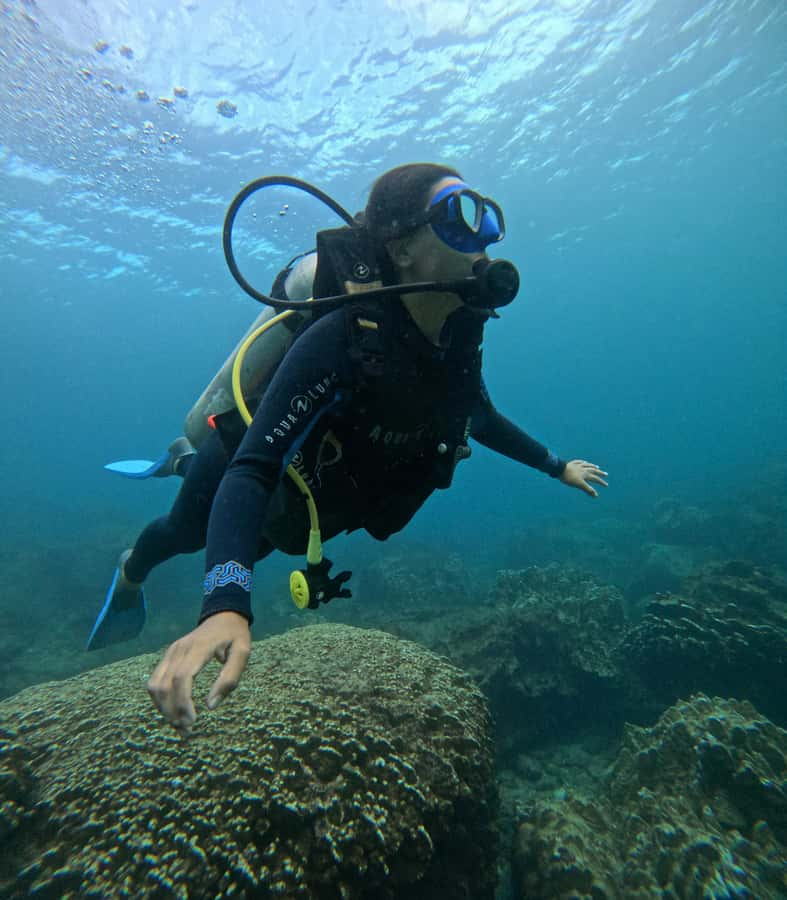
The main session lasts about one hour. For beginners, this is long enough to get a proper introduction without turning the day into a full training course. You can focus on breathing, moving calmly, looking after your equipment, and noticing what is around you.
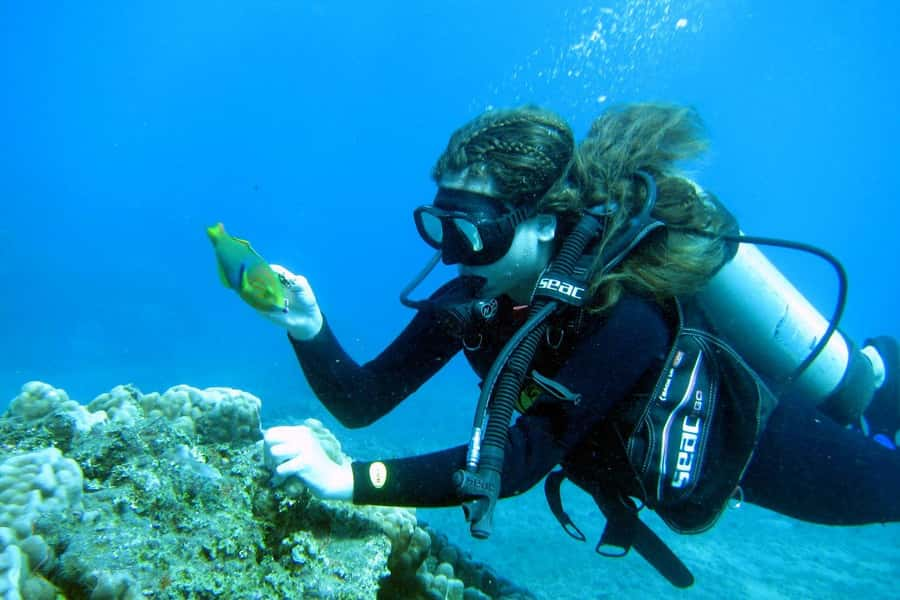
The water is known for strong visibility, which can make a major difference to a new scuba participant. Clear conditions give you more time to look around instead of struggling to see through the water. You may encounter tropical fish, coral, and turtles. The exact animals and underwater views will depend on the site and conditions.
The water may feel warmer than expected, but you still wear a suit. A November session was comfortable in a diving suit, and the participant found the water surprisingly warm. That does not mean you should skip the suit. Full equipment rental is included, with the suit, mask, fins, buoyancy vest, and tank provided.
The instructor’s role is central here. You are not sent off to figure things out alone. The staff stays with you in a personalized way, and the strongest praise for the company focuses on careful safety procedures and patient support. That makes this a sensible first underwater activity for someone who wants to try scuba without committing to a certification course.
If you already hold a certification, set your expectations before you arrive. The standard program is introductory, not an advanced technical outing. Still, the staff has accommodated certified participants, so your experience level may be taken into account within the limits of the scheduled activity.
Same base, a different sort of day:
- Two days of Full Day Tour of Rapa Nui + Sunrise in Tongariki
★ 4.8 · 55 reviews - Sunrise Tongariki: Sunrise at Tongariki Park Private Tour
★ 4.5 · 47 reviews - Rapa Nui Dreams: Experiencie Pack 3 Days
★ 4.7 · 32 reviews - Easter Island: Full-Day Tour to Anakena
★ 4.7 · 27 reviews
The submerged moai and what it really means
The underwater moai is an exciting possibility, but it needs a clear explanation. You cannot reach it through ordinary swimming or snorkeling. A certified scuba participant may be able to visit it, while a beginner should not expect to go to the same depth.
This distinction is important because the moai can sound like the guaranteed centerpiece of every session. It is better to view it as a possible highlight for qualified participants, not as a promise for everyone. The outing still offers marine life and underwater scenery if you do not have certification.
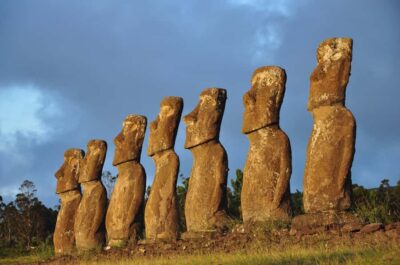
The moai also gives the session a sense of place that a standard pool introduction cannot match. You are learning a new activity in the waters of Rapa Nui, near an island known for monumental stone figures. Even if your route stays among fish and coral, the setting adds a strong local connection.
Equipment, photos, and practical value
The $139 price includes the main items you would otherwise need to rent: suit, mask, fins, buoyancy vest, and tank. It also includes the instruction and the water transfer connected with the activity. Photos and video are included as well.
Bring a USB drive, memory card, or suitable cable so you can transfer the files to your Android phone or iPhone. This small detail is easy to miss. If you arrive without a way to receive the images, you may not be able to take the photo package home in the most convenient form.
The photo and video inclusion adds real value for a first session. You are busy concentrating on breathing, equipment, and instructions, so you will not be taking your own underwater pictures. The images give you something to share and help preserve what you saw.
The value is strongest for beginners who need the entire setup. Certified participants who already own equipment may find the price less of a bargain, but the small group, guide support, and included media still have practical worth.
Who should book this Rapa Nui activity
This experience suits adults and children aged 12 or older who want a guided introduction to scuba in an unusual setting. You do not need to know how to swim, according to the activity information, but you should be comfortable following the instructor’s directions and using the equipment.
It is especially suitable if you want:
- A first taste of scuba without taking a certification course
- Clear water and close views of marine life
- A small group rather than a crowded class
- English or Spanish instruction
- Photos and video included in the price
- A chance to ask about the submerged moai if you are certified
It is not suitable for children under 12, people with heart problems, people with altitude sickness, or people with high blood pressure. Alcohol and drugs are not allowed. These are firm safety points, not minor booking preferences.
The 12-hour flight restriction deserves extra attention. You cannot take part if you will fly within 12 hours of the session. That rule affects both your arrival and departure plans, so check your schedule before paying for the activity.
Timing, flexibility, and the small-group tradeoff
The advertised duration is 150 minutes: 30 minutes for the briefing, 30 minutes of transport, about one hour underwater, and another 30 minutes of return transport. In practice, delays are possible. Sea conditions can affect the transfer, and one participant lost nearly half a day because of a late start.
I would leave a generous buffer around this activity. Do not book it on a day when you need to reach the airport soon afterward, and avoid stacking it tightly against another paid excursion. The 150-minute schedule describes the planned program, not a guarantee that every stage will run to the minute.
The small group helps offset the occasional uncertainty. A maximum of 10 participants gives the instructor a better chance to notice when someone needs help. It also makes the session feel less like a conveyor belt, though the precise amount of individual attention can vary with the group’s experience levels.
You can cancel up to 24 hours before the start for a full refund. A reserve-now, pay-later option is also available, which helps if your plans around Rapa Nui are still shifting. The meeting point is supplied 48 hours before the activity, so watch for that information.
Safety and the role of the instructors
Safety is the strongest reason to choose a guided session rather than trying to arrange equipment independently. You receive a full briefing, use supplied gear, and remain with an instructor during the underwater portion.
The staff has received particularly strong praise for careful procedures and communication. Joaquin and Carla have also helped with assembling and carrying equipment to and from the boat. Those hands-on details matter when you are nervous or unfamiliar with the gear.
The experience is not risk-free simply because it is introductory. You need to follow instructions, disclose relevant health concerns, and respect the flight rule. If you have a heart condition, high blood pressure, or altitude sickness, this activity is not suitable.
The information says swimming ability is not required. That may make the experience more accessible, but you should still discuss any personal concern with the instructor before entering the water. The guide can explain what the session involves and how closely you will be supported.
Should you book it?
Book this if you want an approachable first scuba experience in Rapa Nui, value close instruction, and like the idea of seeing tropical fish, coral, and perhaps a turtle in clear Pacific water. The included equipment, media, and small group make $139 reasonable for a full 150-minute program.
Think twice if your schedule is tight, you are expecting guaranteed access to the submerged moai, or you are a certified scuba participant seeking an advanced route. For a qualified diver, confirm what the team can offer. For everyone else, treat the moai as a bonus and the guided underwater session as the main event.
FAQ
Where does the activity begin?
It begins at Hanga Piko.
How long does the activity last?
The scheduled duration is 150 minutes.
How much time is spent underwater?
The scuba session lasts about one hour.
Is a safety briefing included?
Yes. The safety briefing lasts 30 minutes.
How do I reach the underwater site?
You are transferred from Hanga Piko by boat or vehicle, depending on maritime conditions.
Is equipment rental included?
Yes. The rental includes a suit, mask, fins, buoyancy vest, and tank.
Are photos and videos included?
Yes. Bring a USB drive, memory card, or cable to transfer the files to an Android or iPhone device.
Do I need to know how to swim?
No. The activity information says swimming ability is not required.
Can beginners take part?
Yes. The professional instructors provide an introductory session and support participants throughout the experience.
Can I see the submerged moai without scuba certification?
No. Reaching the submerged moai requires scuba certification.
What languages are spoken?
Instruction is available in English and Spanish.
Who should not take part?
The activity is not suitable for children under 12, people with heart problems, people with altitude sickness, or people with high blood pressure.
How soon can I fly after the activity?
You cannot take part if you fly within 12 hours. Check your flight schedule carefully.
Can I cancel for a refund?
You can cancel up to 24 hours in advance for a full refund.
Just added around Hanga Roa
- Volcanic Refuges: Excursion to Underground Civilization★ 4.7 · 8 reviews
- Two days of Full Day Tour of Rapa Nui + Sunrise in Tongariki★ 4.8 · 55 reviews
- Sunrise Tongariki: Sunrise at Tongariki Park Private Tour★ 4.5 · 47 reviews
- Rapa Nui: Polynesian Massage★ 4.8 · 5 reviews
- Rapa Nui: 3 Excursions with Hotel Transfers★ 4.3 · 6 reviews
- Rapa Nui Highlights Program: 3 incredible tours to discover!★ 4.8 · 18 reviews
- Rapa Nui Dreams: Experiencie Pack 3 Days★ 4.7 · 32 reviews
- Hanga Roa: Full Day Moai and Mistery★ 4.4 · 22 reviews
Easter Island & Moai Tours, compared.
Two days of Full Day Tour of Rapa Nui + Sunrise in Tongariki
Read our review →
Browse the lists this tour appears in